Sunday, September 17, 2023
Spirit of Hope Lutheran Church, Lincoln, NE
Sixteenth Sunday after Pentecost (narrative lectionary)
watch this service online (readings start around 23:07; children’s sermon starts around 27:12; sermon starts around 33:25)
Reading: Genesis 18:1-15; 21:1-7
In the children’s sermon before the main sermon, we talked about impossible things. I talked about learning to crochet for the first time — as a lefty, I found it impossible to learn until my teacher brought in the mother of one of my classmates, an accomplished crocheter who was also left-handed. Watching her do it, things suddenly clicked for me; and learning to crochet opened up a whole new world of creativity for me. I asked the kids if they had ever faced impossible things or impossible situations and what that was like. And we talked about how, in our bible reading, God does something impossible for Sarah and Abraham by sending them a child in their old age. This story gives us hope that even the things we find impossible are possible with God.
I come from a family that has a long history of cancer. In fact, cancer was kind of the catalyst behind some of my earliest childhood memories. I remember many, many road trips to go see my maternal grandmother, who was diagnosed with ovarian cancer when I was only a few years old. My mom’s whole side of the family is from the Quad Cities area way on the other side of Iowa. But my mom was really close with her mom, so we made the drive out to see my grandma at least once or twice a month. That is not exactly a short drive for an adult – and with three very small children in the car, it was an eternity. It’s why I’m pretty sure I have been inside every single truck stop along the whole stretch of I80 in Iowa. (lol)
My grandma ended up passing away when I was five. And it was awful, but not completely surprising, when two months later, my mom was diagnosed – with breast cancer. Those were some very hard years. My mom’s always had a very resilient spirit – so even when things really started getting serious, she was determined to keep on laughing. Her hair all fell out from the chemo, so she started a collection of fun wigs (my favorite was this lime green baseball cap someone gave her that had a long, blonde ponytail coming out the back). She did her best to stay upbeat and positive for my siblings and me, even after undergoing a single mastectomy, and even while dealing with radiation treatments that left her with deep burns on her skin.
But even after she endured all that, the cancer just kept hanging on. And by this point, her doctors were starting to run out of treatments. So Mom got referred to an experimental cancer study being done somewhere out in Virginia. She was gone for weeks. But then even that wasn’t having the kind of effect on her cancer that we had hoped. And gradually it started to seem like Mom might not actually get better. It started to seem like winning this battle with cancer might be impossible.
Our reading for today is a story about impossible things: this story about Sarah and Abraham. God has been making Abraham the most extraordinary promises – promising him a new homeland, promising him that he would be the father of a great nation, with descendants as numerous as the stars. But Abraham has yet to see much evidence that this will actually happen. And in the meanwhile, he is acutely aware that he is old – very old – literally Paul later describes Abraham in his letters as a person “as good as dead.” And Sarah’s not exactly a spring chicken either.
So these three men show up at their door… err… tent flap… Abraham and Sarah rush to receive them, offering them all kinds of good food and a comfortable place to rest. The men sit and talk a while with Abraham. And from the tent, Sarah overhears them talking about her – she hears them saying that within a year, Sarah herself will give birth to a son. And in disbelief over this, Sarah laughs.
In Sarah’s defense, neither she nor Abraham probably had any idea that this was God they were receiving (we only know it’s God because the author of Genesis told us so, right at the beginning of the chapter!). The reason they show these three strangers hospitality is most likely because of how deeply hospitality was embedded in their culture. They lived in an era long before there was anything like our modern idea of hotels or truck stops or what-have-you; so it was kind of part of the social contract that you show hospitality to strangers and trust that that hospitality will also be shown to you in turn.
And even if Sarah did suspect something divine about these visitors, her laugh of disbelief also makes sense when you consider where Sarah is coming from. The bible doesn’t really give us a whole lot of detail about her or Abraham’s early lives, but we can guess at some of it from context. For women, children and family were absolutely central (especially since they didn’t exactly have a lot of career opportunities). Women who were unable to have children were often considered to be cursed or unclean in some way. No doubt there was a weight of shame and stigma that Sarah carried. In fact, we get a glimpse of it earlier in the narrative – when Hagar treats Sarah with contempt when she sees that she is able to conceive a child and Sarah is not.
And beyond the social stigma, I just imagine Sarah growing up dreaming of a family and longing to have children of her own… and I imagine her hope slowly dwindling year after year as she remains childless.
By the time we join the story today, Abraham and Sarah are many decades past any hope of having their own children. Obviously, Abraham still has the option to father children with younger women (which he does). But Sarah has no hope at all. For her, it is impossible. So Sarah laughs.
And yet, despite laughing it off, I imagine that that promise of a son gets lodged somewhere, in some corner of Sarah’s heart, and it starts raising her hopes despite herself. And slowly but surely, over the following months, Sarah starts to notice changes. And month by month, her hope grows. And before the year is out, Sarah finally experiences the pain of childbirth and the joy of motherhood. She finally gets to cradle her own tiny son in her arms – flesh of her flesh and bone of her bone.
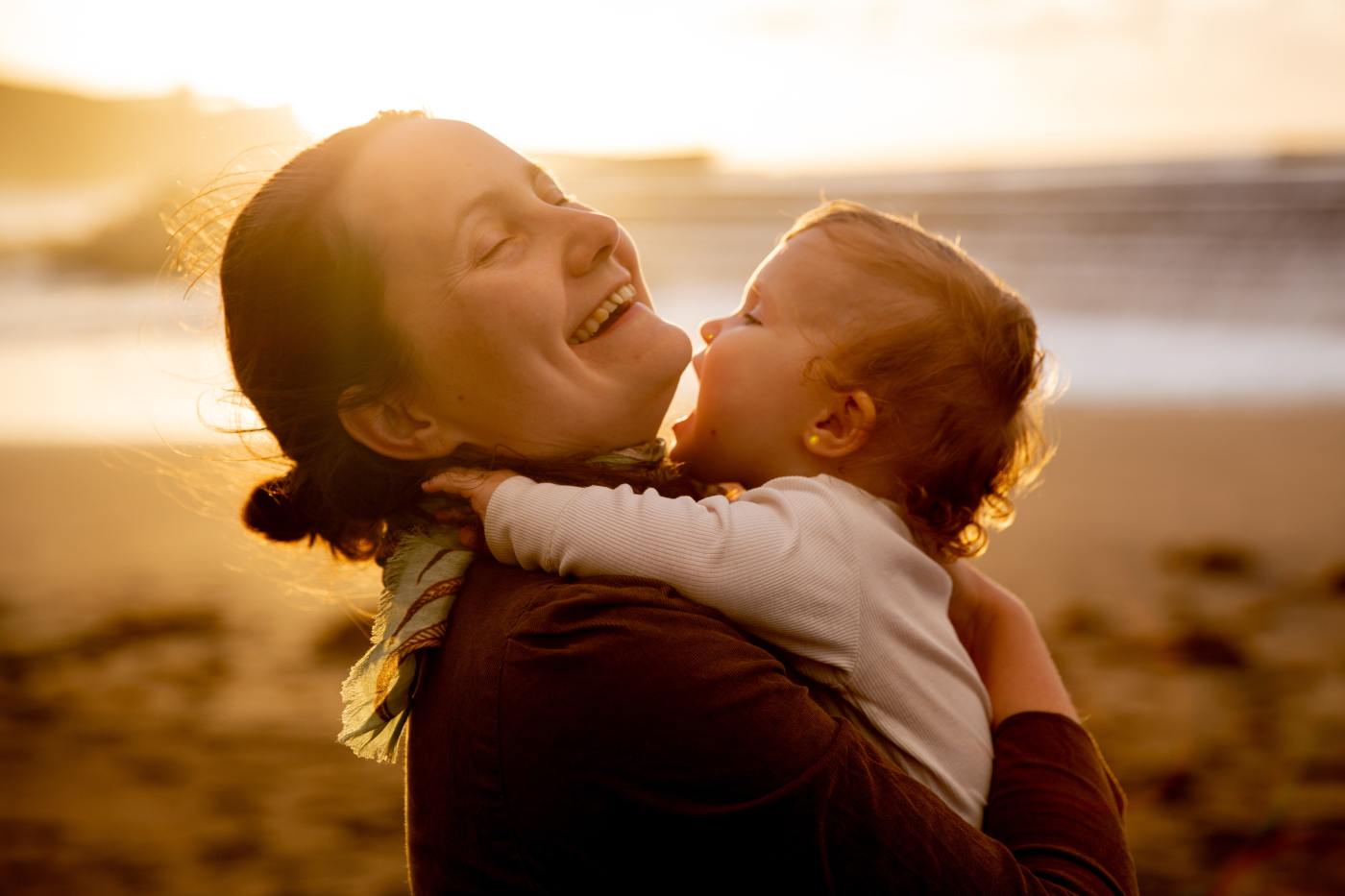
Sarah’s laughter of disbelief becomes laughter of joy. And that joy and laughter are infectious, spreading to everyone around her, and filling them with hope – with wondrous hope – because God has been faithful to God’s extraordinary promise. For Sarah and Abraham, God has done the impossible.
As for my mom, her fight against cancer ended up dragging on for over three years. And as much as I would like to tell you that her story ended in a similar way – with her making a full recovery, overcoming impossible odds and laughing with joy like Sarah – I can’t. My mom ended up losing her battle with cancer and passed away at the age of 41, when I was only nine.

.
I fully realize what a strange, strange choice it must seem to pair this miraculous story of Sarah becoming a mother with the tragic story of me losing mine. It might seem to undercut the whole hopeful message here – but I do have a couple of reasons for sharing it.
One reason is that, as a preacher, I find it hard sometimes to stand up and preach about God making impossible things possible without context – because even though it’s what I genuinely believe, I know what kind of terrible things people have to live through. I know what it’s like to pray desperate prayers with all your heart – believing that God will make it possible – only to end up disappointed. And glossing over that reality can make God seem unfaithful or uncaring, which is not what God is like at all.
And that’s the other reason I chose to share this story: because it gets at an even deeper hope that lies beneath the surface of Sarah’s story. What I see in Sarah’s story is a foretaste of things to come: a foretaste of the resurrection. God brings life. Even in circumstances where life is absolutely impossible, God brings life. What we see in this story is that the boundaries of what humans are able to do – the boundaries of what we believe is possible – are boundaries that do not apply to God. Our hope is limited – but God’s faithfulness and power and love are limitless.
And this – this is where the story of God’s work of saving and redeeming humanity begins. This story of impossible joy sets a tenor of impossible hope for everything that follows after it. It’s a hope that will later be resoundingly reaffirmed in the life, death, and resurrection of Christ. And it’s a hope that remains steadfast for us today.
Whether it be Sarah’s longing for a child, our own prayers for peace and equity in a world of injustice and violence, or even a literal matter of life and death, nothing is impossible with God. We are never too far gone for hope. Even when it seems as though our stories are coming to an end, for God, the story is only just beginning.
No matter what comes, it is never too late for God to do impossible things. And so I hold on to that deep hope: that one day God will turn our mourning into dancing – that even our tears of sadness will one day become the laughter of joy.
 This is the Day