Sunday, November 26, 2023
Spirit of Hope Lutheran Church, Lincoln, NE
First Sunday of Advent
(narrative lectionary)
watch this service online (reading starts around 24:27; children’s sermon starts around 25:49; sermon starts around 33:53)
Reading: Jeremiah 33:10-18
In the children’s message today, I brought a brightly wrapped gift box and we talked about the anticipation of gifts under the tree. The brightly wrapped boxes are beautiful and mysterious, and we know that there’s something good inside, because they were placed there by people who love us. We think about them and wonder what’s inside – we wait with expectation and excitement to open them. This is the kind of waiting that we do during the season of Advent – except we are waiting for something much greater than a gift under a tree. Likewise in our reading, Jeremiah and his people are waiting for something – they are waiting for God to restore their kingdom. They don’t yet realize that what God has in store for them is a kingdom of peace and salvation for the whole earth! That’s what we are waiting for too.
Jeremiah began his career as a prophet during the reign of King Josiah. You might remember Josiah from last Sunday – he was the one good king after a whole string of terrible ones; after the rediscovery of the book of the law, he leads the whole people of Israel to repent and recommit themselves to the covenant. I imagine it was a pretty good time to be a prophet. I mean, not everyone was crazy about Jeremiah’s message – like most prophets, he preached that people needed to repent and turn back to God. But the king was clearly on board with what Jeremiah had to say, so not too many people are going to argue with that!
But then King Josiah dies, and things quickly take a turn for the worse. Josiah’s successors immediately revert back to the ways of the kings before him. They and the people of Israel go back to worshiping whatever they feel like worshiping and forget God all over again. They also ignore the advice of Jeremiah and other prophets regarding their precarious political situation. See, Israel was situated on this narrow strip of land, sandwiched between two powerful empires: Babylon to the northeast, and Egypt to the southwest. These two empires had been in contention with each other for quite some time. But instead of doing their best to steer clear of this conflict, the kings of Israel manage to step right in it. They make deals with both empires, trying to hedge their bets, and it eventually comes back to bite them in the butt, big time.
During this time, Jeremiah basically becomes a broken record, urging the people of Israel to repent and warning them about their impending doom. He argues with false prophets who go around assuring the people that everything is fine and nothing bad is going to happen. Eventually, Jeremiah’s persistence in delivering bad news ticks people off so much that he ends up getting thrown in a hole for his trouble. Literally, they throw him into a cistern and leave him to starve!
He is eventually rescued from the hole, but things don’t get much better for Jeremiah. He witnesses an army of angry Babylonians lay siege to Jerusalem for over two years. Things get so desperate that the king, Zedekiah, actually asks Jeremiah for advice – and Jeremiah tells him plainly that his only hope for getting out of this alive is to surrender to the Babylonians. But – to no one’s surprise – Zedekiah completely ignores Jeremiah’s advice and instead he goes to the Egyptians and attempts to make a deal for their help.
But it’s already too late. The Babylonians break through the outer wall and utterly destroy Jerusalem. They burn down the entire city and raze the temple to the ground. Zedekiah becomes the last king of Judah; the Babylonians force him to watch as his sons are executed, before they gouge out his eyes. He is then taken captive to Babylon; and most of the surviving people are taken with him.
It’s not an exaggeration in the passage we read today when it describes Judah and Jerusalem as a desolate waste. The kingdom has been destroyed, the covenant has been broken, and the people are gone. The once promised land has now become a place devoid of life or hope.
And it’s in this place that the journey of Advent begins. Not necessarily in Judah or Jerusalem specifically, but in this place of darkness and destruction and despair. Advent begins with a recognition of the deep, deep darkness that pervades our world.
It’s not an easy place for us to dwell, in all that darkness. And especially this time of year, the practice of Advent tends to put us at odds with the rest of our culture, which is all about the lights and the tinsel and the shopping and the shiny things. It’s tempting for us, too, to want to close our eyes to the darkness and just forget about our struggles for a while. I mean, after all, the city we live in is still standing.
But it’s impossible to ignore the darkness entirely. Especially when reading scriptures related to the fall and destruction of Jerusalem, it’s hard not to be reminded of the scenes of devastation we have seen in these days in Gaza and in southern Israel – or in Ukraine or Sudan or any of the many other places in the world where there is violence.
It’s hard not to notice the poverty in our community – the people begging on street corners, the struggles people are facing with homelessness and food insecurity – as well as broader struggles with mental health and access to adequate medical care. And I know I feel especially helpless and hopeless when our elected leaders seem to be much less focused on addressing these issues than they are on fighting culture war battles, raising money, or making life needlessly difficult for some of the most vulnerable people among us.
And each of us has our own struggles as well. We struggle with illness or loneliness or broken relationships. We struggle with the changes we face as our bodies age, and with the many kinds of brokenness that just seem to come with being human. Thousands of years after Jeremiah and his people lived, you still don’t have to look very far at all to find the darkness.
It feels impossible sometimes that this darkness will ever fully be lifted – doesn’t it? I imagine Jeremiah felt that way. It’s hard to imagine a world made right when things have gone so wrong. We long to live in a world without violence, a world in which creation is respected and cared for, a world where every single person lives in safety and dignity and comfort. We long for leaders capable of putting aside their egos to work together for the good of all, instead of dragging us further into division and conflict and chaos.
But it’s into exactly this kind of darkness that God speaks these words through Jeremiah:
“The days are surely coming, says the Lord, “when I will fulfill the promise I made to the house of Israel and the house of Judah. In those days and at that time, I will cause a righteous Branch to spring up for David, and he shall bring about justice and righteousness in all the land.”
Jeremiah 33:14-15
God is promising a new kind of leader, a new kind of king. And this king will devote himself to bringing about salvation and peace.
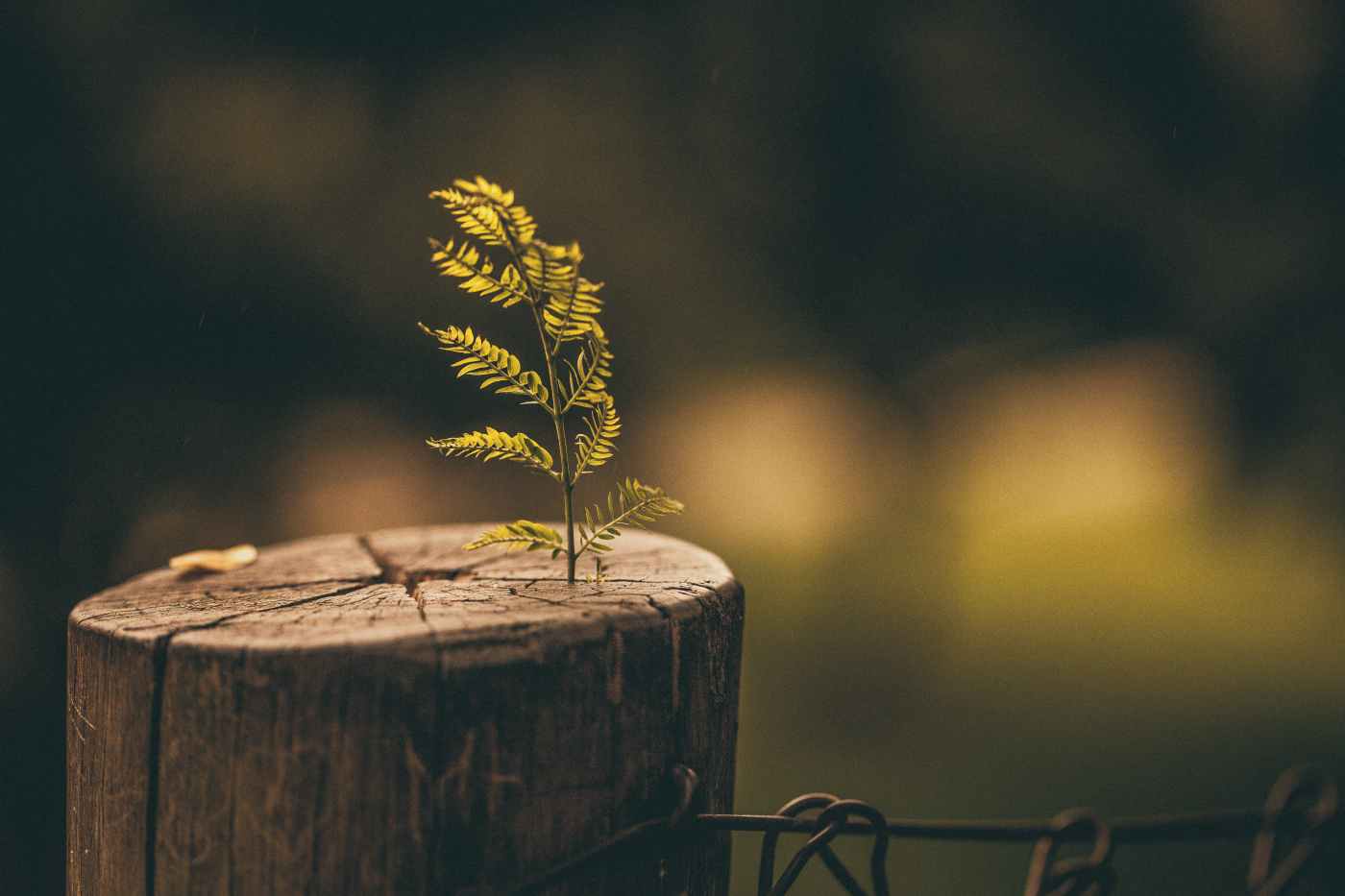
I won’t attempt to pronounce the Hebrew, but the word in this passage that is translated as “branch” can actually be translated a few different ways. Especially in this context, another way it can be read is “sprout” or “growth.” I find that image compelling, especially as the weather gets colder and the days get darker. Winter in Nebraska always seems to last a solid eight months, at least. But when spring finally gets close – when the snow melts and the ground starts thawing out – I find my eyes are constantly peeled, watching with expectation for the first green shoots to start poking up out of the earth. And even though it sometimes seems to take forever, that new life never fails to arrive.
Christ is our long-awaited spring. He is the Branch, the Sprout that God promised would spring up to bring new life. And now we look with hope for signs of his kingdom drawing near. Even in the midst of deep darkness and desolation and doubt, we can find the light of the kingdom breaking in, if we look for it. Like those little shoots of green poking up through the soil, Christ is our new life and our unfailing hope.
And so we watch. And we wait. And in the darkness of winter, we hope.
 This is the Day