
Sunday, November 24, 2024
Spirit of Hope Lutheran Church, Lincoln, NE
Reign of Christ Sunday
(narrative lectionary)
watch this service online (reading starts around 21:49; children’s sermon starts around 26:35; sermon starts around 33:35)
Reading: Jeremiah 36:1-8, 21-23, 27-28; 31:31-34 (Luke 22:19-20)
In the children’s sermon, we talked about what it means to be a leader, and what kind of qualities or actions it takes for someone to be a good leader. We talked about how today on Reign of Christ Sunday, we celebrate that God in Christ is our leader. Christ is merciful and forgiving and loving toward us and calls us to be the same kind of leaders in the world. Sometimes we can get frustrated or angry or sad when human leaders in this world act in ways that don’t look like Christ’s leadership at all. But today we remember that human institutions and human authority will pass away, but God’s kingdom of love will stand forever.
I’d like to start out the sermon today… with a pop quiz! (haha) Don’t worry, it’s not graded. I feel pretty confident guessing that most of us in here have been to at least a few worship services in our lives – which means you’ve all heard the words of institution we say during communion a time or two. But it’s one thing to hear it over and over again, and another thing to actually say it! So today I’m curious to find out how well you all remember the words of institution from memory. Ready?
On the night in which he was betrayed, our Lord Jesus took bread, gave thanks, broke it, and gave it to his disciples, saying, “Take and eat, this is my body given for you. Do this for the remembrance of me.”
Again, after supper, he took the cup, gave thanks, and gave it for all to drink, saying, “This cup is the new covenant in my blood, shed for you and for all people for the forgiveness of sin. Do this for the remembrance of me.”
Having just read this reading from Jeremiah, is there anything in these words that particularly grabs your attention?
For me, the phrase that most stands out this morning is “new covenant.” In our reading, Jeremiah writes, “The days are surely coming, says the Lord, when I will make a new covenant with the house of Israel and the house of Judah.”
What is a covenant? It’s not a word you hear all that often (aside from Sundays). What words come to mind when you think about a covenant? You probably think of a promise or a formal agreement – the kind of thing where you have to shake hands or sign a contract.
All that certainly applies. But in a biblical context, the process of making a covenant is a bit more… involved. And by “involved” I mostly mean gross. Really gross.
See, the ancient way of making a covenant involved sacrifice. You can actually read a bit about how it was done in Genesis 15, when God makes the covenant with Abraham. As God instructs him, Abraham brings a cow, a goat, a sheep, a dove, and a pigeon. He digs a shallow trough in the dirt, and then proceeds to cut each animal in half. And to be clear here, this wasn’t an across the middle cut; we’re talking a lengthwise cut from head to tail. Half of each animal was then laid on either side of the of the trough, allowing the blood to run down the middle.
Traditionally, the way that the covenant was made was that the two people making the covenant would each walk between the animal halves – right through the trough of blood. It was a way of sealing their agreement. Walking through the blood was essentially meant to say: May the same be done to me as to these animals if I should break this covenant.
Fun fact: this is actually literally where the phrase “cutting a deal” comes from!
In Abraham’s case, God actually knocks him out before he has a chance to walk through the blood. Instead, Abraham sees a fire pot and a torch pass through the pieces – both of which represent God. God passes through the blood twice, choosing to take on both sides of the covenant – both sets of consequences – on God’s own shoulders.
God assumes all the risk in this relationship. So it’s hardly a surprise that the new covenant Jeremiah talks about goes even further. No animals are harmed in the making of this covenant. Instead, Jesus chooses to sacrifice himself. He chooses to let his own blood be spilled to seal this covenant.
And likewise, what is promised in this covenant goes further. In the covenant with Abraham, as you may remember, God promises him that he will one day have a beautiful homeland, and descendants as numerous as the stars. But in Jesus, God promises even more. Jeremiah lays out the promises Jesus will make in the new covenant, writing:
“I will put my law within them, and I will write it on their hearts, and I will be their God, and they shall be my people. No longer shall they say to each other, ‘Know the Lord,’ for they shall all know me, from the least of them to the greatest… for I will forgive their iniquity and remember their sin no more.”
Jeremiah 31:31-34
Christ pours out his life in order to reconcile the whole world with God. He lets his body be broken so that our relationship with God might be healed.
It’s in this new covenant that we most clearly see Christ for who he is. He is the Son of God, the Sovereign of the whole universe, and yet he willingly gives himself away, holding nothing back from his people. He is loving and merciful and full of compassion. He cares for all of his people, from the least of them to the greatest. He does everything in his power to bring his people back into right relationship with God and with one another – and he never gives up on them nor abandons them, no matter what the cost.
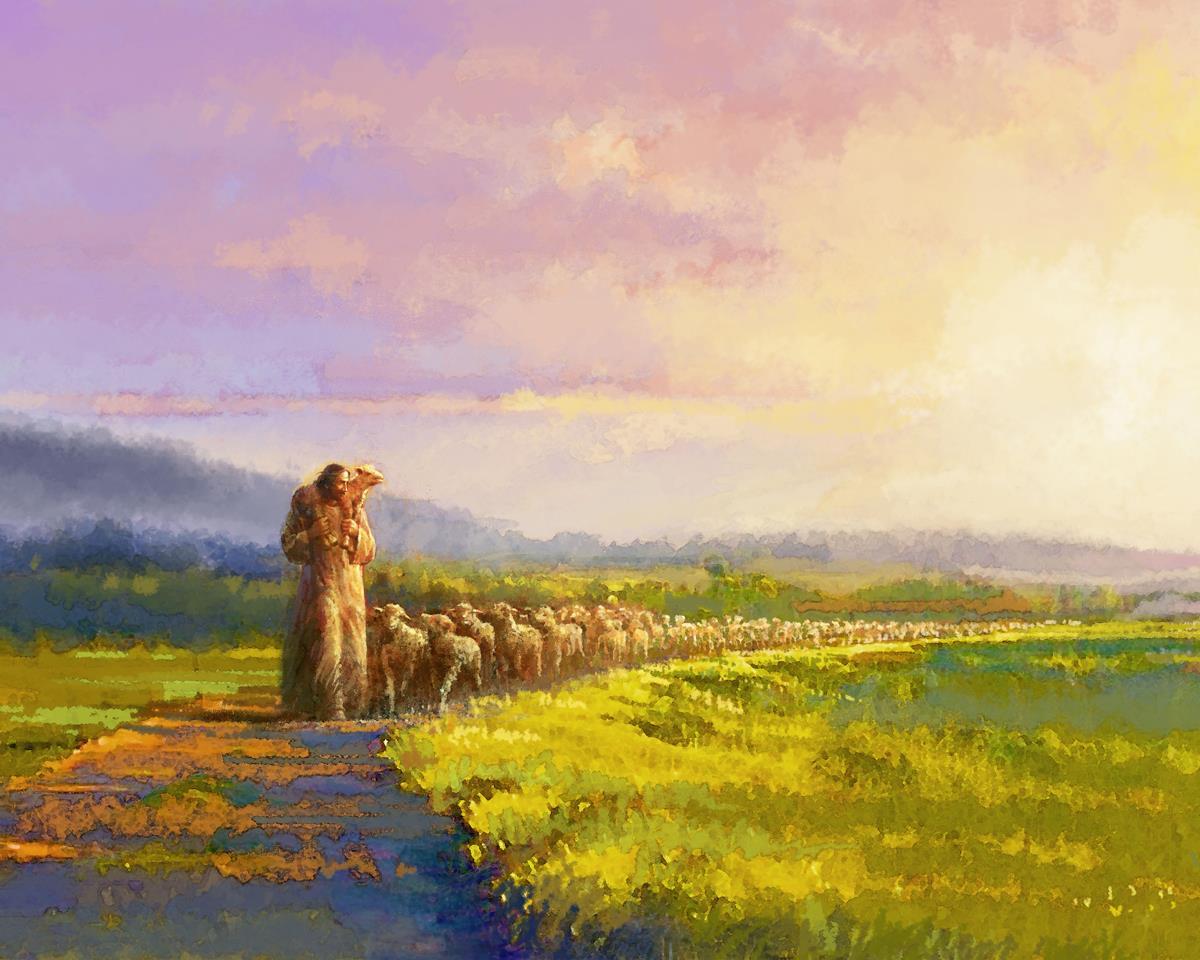
This is our Leader, our Sovereign, our King, whom we celebrate today – our Lord who will usher in his eternal kingdom of love and justice and peace.
So it’s kind of interesting that in this same reading from Jeremiah, we also have an example of leadership that is almost the exact opposite of Christ.
King Jehoiakim has a name that’s kinda fun to say – but that’s kinda where the fun stops. Jehoiakim was one of the last kings of Judah, and he was… not great. You might remember his father, Josiah, who was a righteous and faithful king. During his reign, his court officials rediscovered the scroll of the law, and Josiah was horrified to realize how far his nation had strayed away from what God had commanded. So he called the entire kingdom to repentance, and undertook a wide-reaching series of reforms to turn his whole people back to God.
Jehoiakim, on the other hand, has no interest in any of that. All he really cares about is holding onto power. So instead of trying to do what is pleasing to God and actually leading his nation in doing what is right, Jehoiakim does everything he can to look out for his own interests, currying favor and sucking up to the rulers of Egypt and Assyria in an effort to protect his position.
Jeremiah sends Jehoiakim this message as a wake-up call. He pleads with Jehoiakim to repent and change his ways – not just for his own sake, but for the sake of his people. His people need their king to set them the example, to let them know that they need to repent and be reconciled with God.
But Jehoiakim doesn’t care. Instead of heeding Jeremiah’s message, he casually cuts up the scroll and tosses it into a fire. He pushes it aside and buries it.
I keep imagining what Jehoiakim’s reign must have been like for the folks in Israel who were still faithful to God, like Jeremiah. It must have been incredibly painful to watch their own leaders leading their nation astray. Their kings like Jehoiakim and the few kings who followed after him led them straight into disaster and destruction and exile – while the people were powerless to do anything to stop it.
This is still a struggle we face as God’s people. You don’t need me to tell you that. In this world, we live under the rule of imperfect, human leaders – leaders who fall anywhere on a scale from ‘somewhat flawed’ to ‘overtly corrupt and terrible.’ We know what it’s like to have leaders who only care about preserving their own power – leaders who lie and abuse their positions, leaders who wouldn’t sacrifice so much as a goat for us, let alone lay down their own lives.
It’s a reality that can lead us to feel frustration and even despair about the direction the world seems to be heading.
But in those frustrating, hopeless moments, we have these words Jeremiah wrote down about God’s promise. It didn’t matter that a human king cut up the scroll and burnt it – God’s word still finds a way to get out.
And we can be encouraged by that, as I imagine Jeremiah’s people were encouraged. Today especially we remember that all earthly kingdoms and administrations and governments will come to an end. The systems and and the powers of this world will pass away, but God’s reign will stand forever. We are forever subjects of Christ, our Lord who shows us forgiveness and mercy; our Sovereign, who pours himself out for our sake; our Savior, who loves us eternally both in this life and the next.
 This is the Day
Leave a comment