Incarnate Goodness

And the Word became flesh and lived among us, and we have seen his glory, the glory as of a father’s only son, full of grace and truth.

John 1:14

I still remember the first time I saw the movie Hairspray.  The movie, based on a musical based on a movie, is set in the 60s and follows the adventures of Tracy Turnblad, an outspoken and overweight young woman in high school.  Tracy is mocked and bullied by other students, but she never apologizes for her size; instead, she wins a spot on a local teen dance show and uses her influence at the studio to fight for racial desegregation.  She insists on being accepted as she is, and she fights for a world in which no one is discriminated against because of what their body looks like.  And at the end of the movie, she makes out with Zac Efron – what more could you ask?

I think I saw this movie in theater maybe three or four times.  I cried every time.  I can’t begin to tell you how profoundly moving it was to see someone who actually looked like me – a bona fide fat actress, jiggly arms and all – up on the big screen, as the protagonist of a movie.  And while the movie does show Tracy and other fat characters struggling with the stigma against their weight, their stories are much richer than this one detail about them.  And watching them, watching this movie, I felt truly seen for the first time.  I felt like someone else finally thought a story like mine was worth telling.

Continue reading “Incarnate Goodness”

Lighting Up the World

This is an Advent reflection I wrote for last year’s December newsletter.

The people who walked in darkness
    have seen a great light;
those who lived in a land of deep darkness—
    on them light has shined. 

Isaiah 9:1

When I was in middle school, my family took a vacation to the Wisconsin Dells.  It was a blast – we went on the duck boats and ate delicious fudge and had a great time.  But one of the things I remember most from the trip was the visit we took to Crystal Cave. 

 I was a nerdy child with an interest in geology, so I was already excited to see the cave, which goes down over 70 feet below the surface of the earth.  When we got down to the deepest, darkest part of the cave, our guide told us to stand still where we were and warned us not to move.  Then he turned off the light.  In an instant, the whole world blinked out of view.  There was not a scintilla of light; it was darker than dark down there.  I couldn’t even see my own hand when I waved it inches in front of my face!  

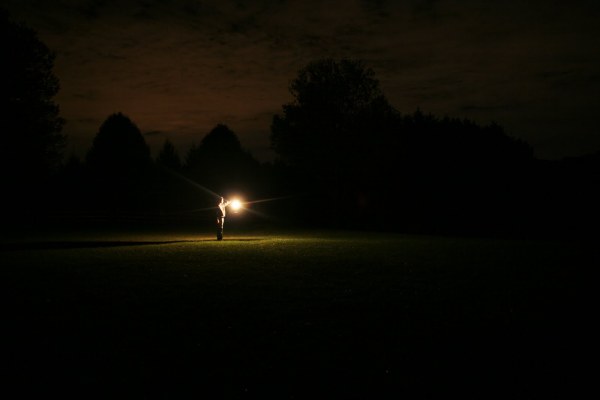
Then there was a rasping sound in the darkness, and suddenly light exploded into being, reflected and refracted by the thousands of crystals that festooned the cavern’s walls.  It was gloriously beautiful.  I looked to see where the light was coming from, and saw our guide holding it in his hand.  He had struck a single match.  That tiny light was enough to light up what felt like the whole world.

This, in a nutshell, is Advent.

Continue reading “Lighting Up the World”

Dancing Together

It occurred to me as I was working on an article for my congregation’s December newsletter that I could be more diligent about posting some of my non-sermon writings on here. A lot of what I write is still church-related, though not all. And I plan to start sharing more of it in the hopes that it will be meaningful for other folks to read.

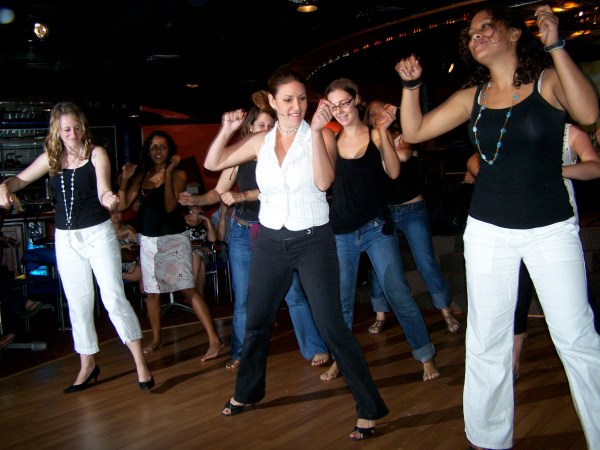
In that interest, here’s a post I wrote a couple of months ago for the Nebraska Synod’s blog — I was asked to write about the theme of “walking together.” Enjoy!


Continue reading “Dancing Together”

A Painfully Candid Lenten Reflection

CN – anxiety, depression

Christians around the world began their observation of Lent yesterday on Ash Wednesday.  Lent is a season of repentance and return to God. It’s a season in which we confess that we have not lived up to being the people God created, redeemed, and called us to be.  We have not loved our neighbor as ourselves.  We have been neglectful in our care of creation.  We have been selfish and have hardened our hearts to the suffering of the vulnerable around the world.

We read the words of the prophet Joel, who implored his people, “Return to the Lord your God, for God is gracious and merciful, slow to anger, and abounding in steadfast love.” We are called to turn back to God with our whole heart, to experience God’s grace and love anew – not unlike the prodigal son returning home to his father’s joyous welcome.

Continue reading “A Painfully Candid Lenten Reflection”

Exciting News!!!

This is the 100th post I have made on this blog, and it seems like a perfect opportunity to share some exciting news!

I received the official word this morning that the people of St. John’s Lutheran Church in Schuyler, NE, have decided to call me as their pastor — and I have accepted!!!  I am so excited for this call, which will start on August 1.  We’re still working on pinning down a date, but I anticipate being ordained sometime in the latter half of August!

I am so grateful to God for the privilege of this call and for the movement of the Spirit in bringing all this together.  I am grateful to all the people who have walked alongside me on this journey and helped form me to be the best leader in this church I can be.  And I am both stoked and humbled to get to serve the people of St. John’s — and looking forward with eager anticipation to the ministry we will do together!

God is good!!!

jesus-says-im-excited

Internship Project Report


30653340_10100110657514905_7582624182513434624_n

This is the report from my internship project, which I actually submitted a few months back, but there’s some good stuff in here, I think, and some resources that other folks might be able to use.  In a nutshell, the goal of my project was to start laying some of the groundwork for bilingual ministry at my internship congregation, Peace Lutheran in Las Cruces, NM.  Overall, it was very successful!

• • •

Continue reading “Internship Project Report”

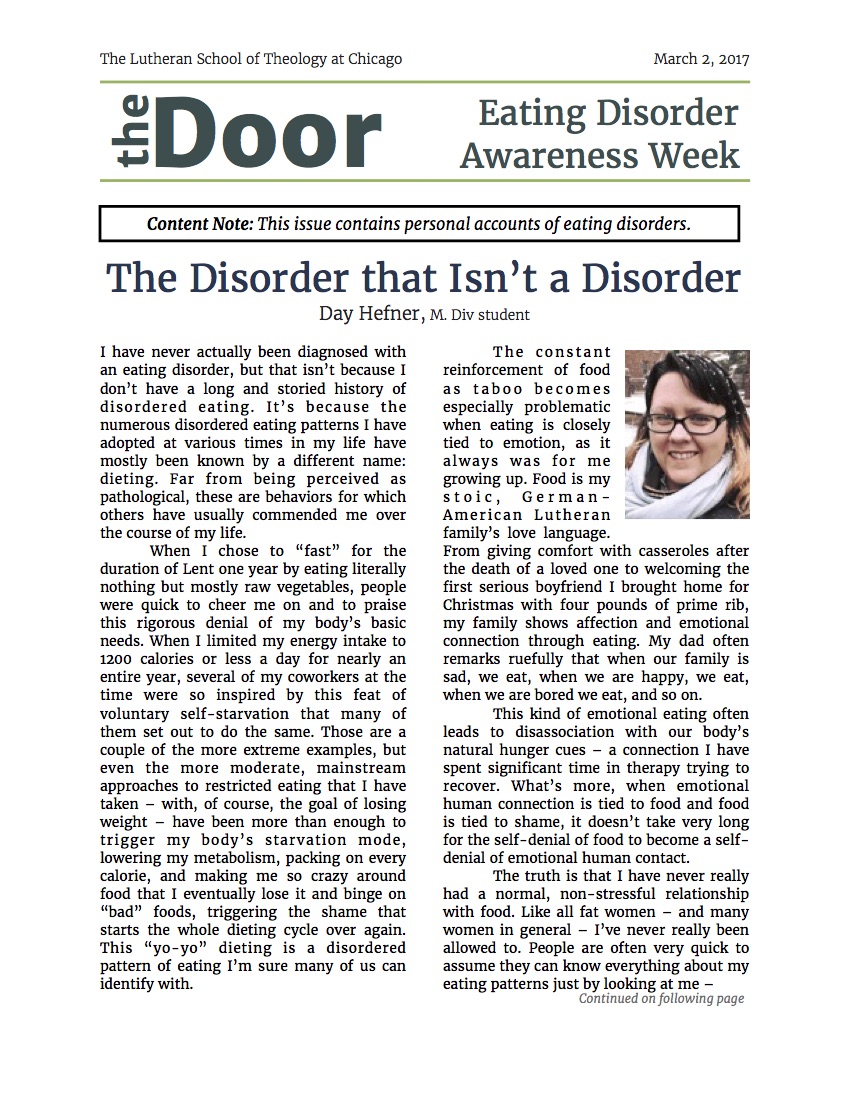
Exercise, Food, Your Body, and God

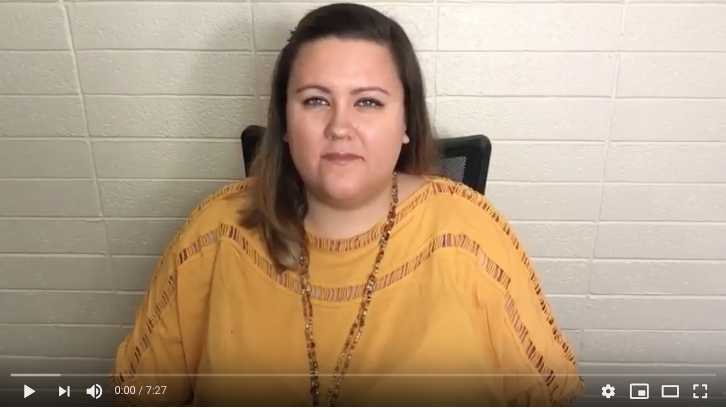
Long long ago, in a semester far away, I promised another intern — Kayla — that I would contribute a video to her internship project.  I have finally come through!  (Better late than never?)  Kayla has designed a really neat body positivity education series for her youth group, with five videos from different folks each themed around different aspects of bodies and theology.  Here is mine!  Text of the video is below the cut.  Enjoy!

Screen Shot 2018-04-07 at 9.12.32 PM.png

Continue reading “Exercise, Food, Your Body, and God”

Wells in the Wilderness

For about the last year, I have been worshiping with the community of St. Luke’s Lutheran of Logan Square — on the Sundays I haven’t been preaching elsewhere, of course.  I chose St. Luke’s because they are a vibrant and visionary community that had the courage to sell their building and open up shop in a storefront, and because of their deep commitment to social justice — and also, largely, to “low-key stalk” my dear friend Erin while she completed her internship year there.

hagar-ishmael-augo4Anyhoo, one of the neat things St. Luke’s does is to engage the congregation in a regular practice of testimony, often inviting laypeople to prepare testimonies from their own lives around a certain theme to read in worship.  This past Sunday was my last Sunday at St. Luke’s before I move to New Mexico for internship (by the way, I’m moving to New Mexico for internship — forgot to make that announcement!).  It seemed incredibly fitting that I should answer a question about experiencing God in the desert before embarking on a literal journey to a literal desert.

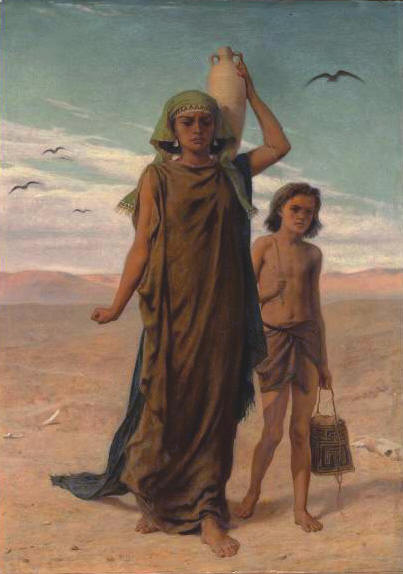
My testimony was related to the Hebrew Testament reading — Genesis 21:8-21 — in which Hagar and her son Ishmael are kicked out into the desert by Abraham’s wife Sarah.  I was asked to respond to the question, “When was a time when you experienced God/good news in a place of isolation, abandonment, death?”  This is what I wrote:

Continue reading “Wells in the Wilderness”

Waging Holy War with the DSM-5

CW: fatphobia, eating disorders, IWL/diet talk

Introduction

“Nothing tastes as good as skinny feels”; this was the oft-repeated mantra of the doctor who once helped me lose over 30 pounds (after having already lost 40) in a little under three months by dramatically restricting my diet. Her words are symptomatic of a larger trend that is deeply entrenched in the medical industry, namely, an underexplored and oversimplified conflation of health and wellbeing with weight. The automatic attribution of poor health to body size has led to an emphasis on reducing body mass, often to the detriment of health. By identifying fatness as a problem in and of itself, the medical industry has made itself a complicit player in the size-ism and weightism that run rampant in U.S. and other developed societies, lending professional credibility to the “fatphobic” attacks of the diet, fitness, and fashion industries on fat individuals. Eating disorders, particularly anorexia nervosa and bulimia nervosa, are a logical consequence of this rampant weightism and size-ism, a natural response to the medically reinforced notion that thin = good and that fat must be avoided at all costs.

The church has resources that can help heal our society’s disordered and unhealthy relationship to both food and body. These resources date back to the early centuries of Christianity; in particular, this paper will explore the relevance of the writings of Evagrius Ponticus, a fourth century Egyptian desert monk, and Gregory the Great, a sixth century Roman pope. Both of these Christian figures wrote extensively about the ancient church’s understanding of gluttony, and about how the relationship between self, neighbor, creation, and God is properly to be understood. Two other key tools in the ecclesial toolkit are a theological affirmation of the inherent goodness of creation, and a robust theology of incarnation. Together, these resources present a countercultural and life-giving alternative to our eating disordered society that is deeply rooted in God’s love and promises. Continue reading “Waging Holy War with the DSM-5”

Recovering Ancient Understandings of Gluttony

Book Review/Reflection for Class:
The God of Thinness: Gluttony and Other Weighty Matters by Mary Louise Bringle

Mary Louise Bringle lays out her book, The God of Thinness: Gluttony and Other Weighty Matters, after the fashion of a meal, titling her chapters “Apértif,” “First Course,” “Second Course,” and so on. I found it fitting, because this book was, indeed, a rich feast of reflection on the issue of gluttony and its relationship to the culture surrounding weight, food, and dieting in our society. I also appreciated that this book was suffused with Bringle’s own struggles with disordered eating and self-image; she conveys a gravity and emotional complexity around this issue which I also deeply feel. Bringle opens up the riches of Christian tradition, history, and theology to respond to this still current question of gluttony. She explores patristic and monastic writings for wisdom on how gluttony is rightly to be understood; I particularly found her discussion of Gregory the Great’s five kinds of gluttony to be clarifying and helpful. And she ultimately shows that gluttony is a matter of disordered priorities that idolize the goodness of creation above its Creator, resulting in damaged relationship to God, to neighbor, and to self. This book was published 25 years ago, but it continues to be extremely relevant.

Evagrius P Continue reading “Recovering Ancient Understandings of Gluttony”

Making Space for Mystics and Madness

Here’s another bit of writing from one of my classes this semester, this one from the Pastoral Care and Mental Illness course I’ve been taking.  This particular course has had some interesting overlap with another of my classes: Desert Discipleship, which explores the legacy of the desert fathers and mothers of the early centuries of Christianity.  In this assignment, which I conceived as an article for a church newsletter, I propose a connection between schizophrenia and the legacy of St. Anthony.  Enjoy!


st-anthony-the-great-3St. Antony, also known as Anthony the Great, was a Christian monk who lived in Egypt in the third and fourth centuries. He renounced the wealth left to him by his parents and chose to live an ascetic life in the desert, fasting and meditating on Christ. Antony became a wise and famous figure of Egyptian monasticism, but more than anything, he was known for his battles with demons.

St. Athanasius, the fourth century bishop of Alexandria, described these battles in The Life of Antony, which quickly became one of the most popular books in Christian history. Many modern readers will find these accounts more than a little odd, but there was something about Antony’s life and his battles with the demons that earlier generations undeniably found compelling. Athanasius describes how Antony withdraws further and further into the desert, at one point enclosing himself in a deserted barracks and receiving stores of food only twice a year. Athanasius writes:

Those friends who came to see him, since he would not allow them to come inside, often remained outside day and night. They heard what sounded like mobs of people creating a ruckus and crashing around inside, letting loose their pitiful voices and crying out, “Get away from what belongs to us! What are you doing in the desert? You will not be able to endure our connivings!” Those outside at first thought some people… had gotten inside by means of ladders… but when they knelt down to look through a hole in the wall, they did not see anyone. (Athanasius, 2003, p. 89)
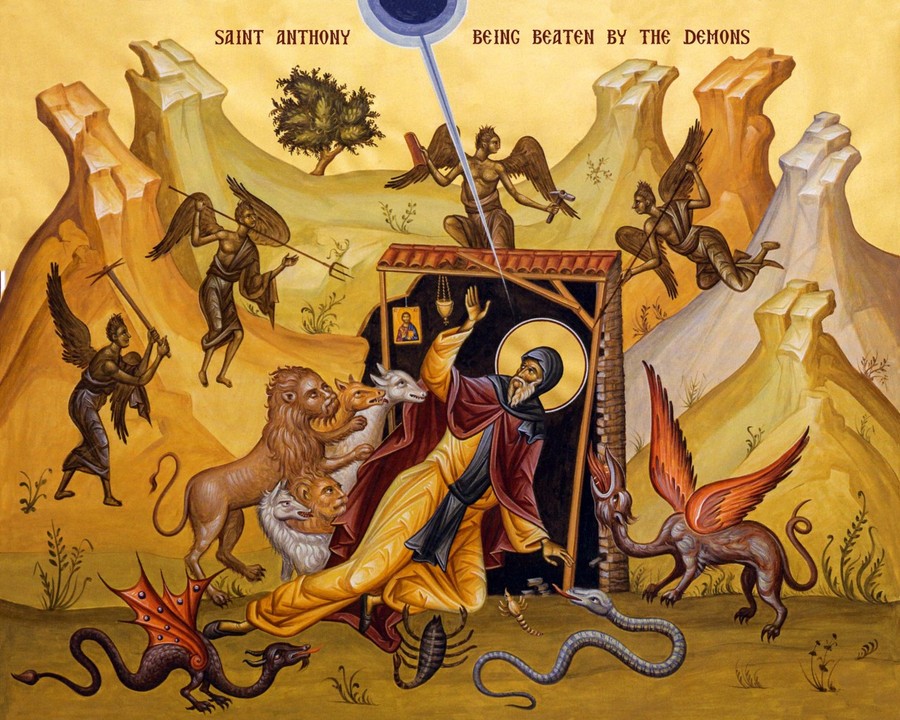
1an33__24635_1405404609_900_900Antony instructs his followers to be wary of these demonic voices, telling them that they fill one’s head with “filthy thoughts” and cause “apparitions,” that “they pretend to frighten us by changing their shapes and taking on the appearance of women, wild beasts, reptiles…” (Athanasius, 2003, p. 113)

Hundreds of people flocked to the desert to be taught by Antony, to the point that Athanasius writes that they “forcibly tore down his door and forced him to come out.” (Athanasius, 2003, p. 91) Reading this in the 21st century, I have a hard time imagining this happening in our day. Even though the Christian church has centuries of history and tradition of mysticism and mystery, I can’t imagine people rushing out to sit at the feet of anyone who heard voices and saw apparitions and warned others about demons putting thoughts into their heads today. Can you? If St. Antony lived today, many folks would probably be pretty quick to label him a schizophrenic. They would probably say that he was crazy. Continue reading “Making Space for Mystics and Madness”

Cancer, Evolution, and a Creation Stumbling Forward

I have been taking a particularly fascinating (and challenging!) course this semester called “The Epic of Creation: Scientific, Biblical, and Theological Perspectives on Our Origins.”  While many of our class sessions have been (to my mind) thickly scientific and technical and rather over my head, last Monday, we had a deeply engaging conversation about theological and pastoral perspectives on cancer as an evolutionary phenomenon.  Given my family history of cancer — most notably, my mother’s death from breast cancer in 1994 — this is a topic that is very near and dear to my heart.  I rushed home after class to write my reflections about all that we had discussed, and after re-reading what I wrote, I decided to share some of it here.  I hope it’s meaningful for others as it is for me.

Continue reading “Cancer, Evolution, and a Creation Stumbling Forward”

My Own Independence Day

CW: diet talk, weight loss, profanity, disordered eating

16807034_903765421345_7226968339658447082_n
Me rocking a new winter coat that actually fits well and looks nice

.

.

.

I quietly celebrated an important anniversary yesterday.  It’s been exactly one year since I gave up dieting and stopped trying to lose weight.  I had been resistant and afraid to do it, terrified that I would lose all control over my eating and constantly gorge myself on all the fatty, fried, and sweet foods I so desperately craved.  I felt like a crazy person around food and even thought that perhaps I was a food addict.  I used to hide my eating from those closest to me who I knew would disapprove: hiding candy in unlikely places (like my closet or behind books on a shelf), hiding myself in the bathroom to sneak my little treats.  I felt guilty and hungry and ashamed all. the. time.

A year ago, I was lying face down on my bed, sobbing uncontrollably, feeling like the most miserable life form in the universe.  I don’t even remember what set me off, if indeed, there even was anything.  I was so sick of dieting, so sick of constantly denying myself the pleasure of eating.  And most of all, I was just unbearably sad.  The ideal of the thin (or even the thinner) me seemed impossibly far out of reach, and getting further by the minute.  I had legitimately given it my best.  I have lost as much as 70lbs in a single go in my life, but without fail, it always comes back, and when it does, it brings along reinforcements. Continue reading “My Own Independence Day”

March 7 Resist Trump Tuesday

International Women’s Strike Chicago: Global Wage Justice
March 7, 2017

I was honored to be invited to speak at the March 7th Resist Trump Tuesday rally as a leader with Seminarians for Justice and The People’s Lobby, fighting for the global minimum wage movement and for the rights and dignity of women and workers everywhere.  Following are some photos of the event, a video of our multilingual call for global solidarity, and a video and manuscript of my speech.

This slideshow requires JavaScript.

Continue reading “March 7 Resist Trump Tuesday”

Folks and Yokes

Today was the last day for my friend Erin and me at our Ministry in Context — “MIC” — site.  We bid a fond farewell to the bilingual congregation we’ve been serving part-time in the western suburbs of Chicago for most of the last nine months.  Even though we only got to spend seven or eight hours a week in the church, we really started getting to know people and building relationships with members of the congregation.  It was bittersweet to leave when it feels like we’ve barely begun.

Probably my favorite moment of the day was a part of the special sending they did for us at each of the three services.  The pastor had congregants come forward and lay hands on us, while he prayed, blessed us, and anointed us with oil.  It never ceases to amaze me just how powerful the ministry of touch is.  Just as much as the very kind words of affection and affirmation that we heard from parishioners, the warm, loving touch of their hands on our backs and shoulders was a palpable sign of their care and blessing.

At one of the services, as I stood there before the altar, feeling the light pressure of their hands on my shoulders, I was suddenly reminded of Jesus’ words at the end of Matthew 11: “Take my yoke upon you, and learn from me; for I am gentle and humble in heart, and you will find rest for your souls. For my yoke is easy, and my burden is light.”  This is the vocation to which I have been called: to be “yoked” to the church, “burdened” with love for this community and for its Lord.  And I am so grateful for it.

Rule of Life

As I prepared to make my final oblation as an oblate of St. Benedict, back in November 2013, one of the things I was required to do was to write a rule of life, adapting the principles of the Rule of St. Benedict to my own life.  I was pleased to see that one of the final projects for a spiritual formation class I’ve been taking this semester was composing just such a rule!  So much in my life has changed since I composed my first rule of life, and it was refreshing to sort of lay out some of the tangled strings of my being and make lists of things I want and don’t want in my life.  As I did so, I began to see patterns emerge, and five major components or paths or whatever began to solidify — Time, Health, Joy, Relationship, and Responsibility — so I decided to organize my rule around them, as centering principles of how I want to live my life.  And because I’m a creative, artsy type, it felt truest to myself to draw it out!  So here it is.  Perhaps it will be inspiration for you to draw (or write, or whatever) your own rule of life!

One thing that I love about this activity is that, although there is no specific branch dedicated to “spirituality,” faith, or religion, I can see the way my own spirituality flows all throughout it:  sabbath time, dance, care and love for my body, creativity, worship, community organizing, and even study are all fertile soil for meaningful encounter with the divine.

Day Hefner Rule of Life

Wit and witness

I’ve been reading the book “Christianity After Religion” by Diana Butler-Bass — a book I highly recommend to anyone interested in religion or religious trends — and among the many things that have struck me so far is the following quote: “…some Christians are very comfortable defining themselves as adherents to a way of life modeled by Jesus rather than adherents to a particular doctrine or creed.”

It brings to my mind something I’ve alluded to previously but never really written about: my time with Jehovah’s Witnesses. I think it’s something I’m finally ready to start writing about. Despite the many, many issues I take with their theology, I think that there are many things about their religious community — and, more to the point, their way of life — really worth contemplating.

To give a brief bit of background, I encountered a group of JW missionaries during my years in the Dominican Republic. The small pueblo where I spent the first two years of my time there was home to a fledgling JW congregation being developed by a number of missionaries, mainly from the US and Canada, also England, Denmark, and perhaps another European country or two I’m forgetting now. Right off the bat, we found lots of common ground in our respective experience and worldviews and quickly became friends. I was already immersed in a personal study of the Bible and grew particularly close to two young women — one from Canada and another from England — who graciously offered to open their studies to me.

I was fascinated by the things they had to say and by the new perspectives they brought to the study of scripture. They encouraged me to consider scriptural passages and many of the basic ideas of faith I’d absorbed over the years in a very different light. The result was enlightening, unsettling, and even disturbing, and the questions the experience raised have taken me a long while to digest, but ultimately, I think that this sort of uprooting of my faith was beneficial to me, as it freed me to re-pot myself in much more fertile soil.

What most drew me to their community is something for which I still hold them in deep respect; namely, that they embodied precisely what Butler-Bass describes in the quote above: adherence to a way of life modeled by Jesus. (They are, of course, also adherents of a very strict set of doctrines and creeds, to a degree that becomes un-Jesus-like in its implementation. I wish to make clear that I am decidedly not a proponent of becoming a Jehovah’s Witness.) What I mean by this is that they take the Gospel very seriously. The message it contains of a new kingdom of love and salvation is one that — if allowed — must necessarily change the way we live and the way we see our place in the world. Continue reading “Wit and witness”

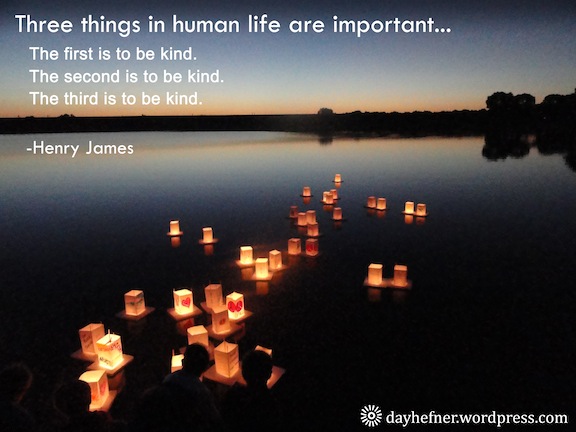
To be kind

three things

Inspired by Evi’s blog to do some images with quotes.

In the English conversation groups I facilitate throughout the week, I often have students draw questions out of a bowl in order to spark conversation and just have fun.  Everyone in the circle — including me — goes around and takes a turn to answer each question, which may be about their pets or their hobbies or about fun trips they took, and so on.  During one class, someone drew the question, “What is your philosophy of life?”  It certainly sparked a lively discussion, and while there were many interesting answers (some more profound than others), this was mine:  to always be kind.

History of the harvest

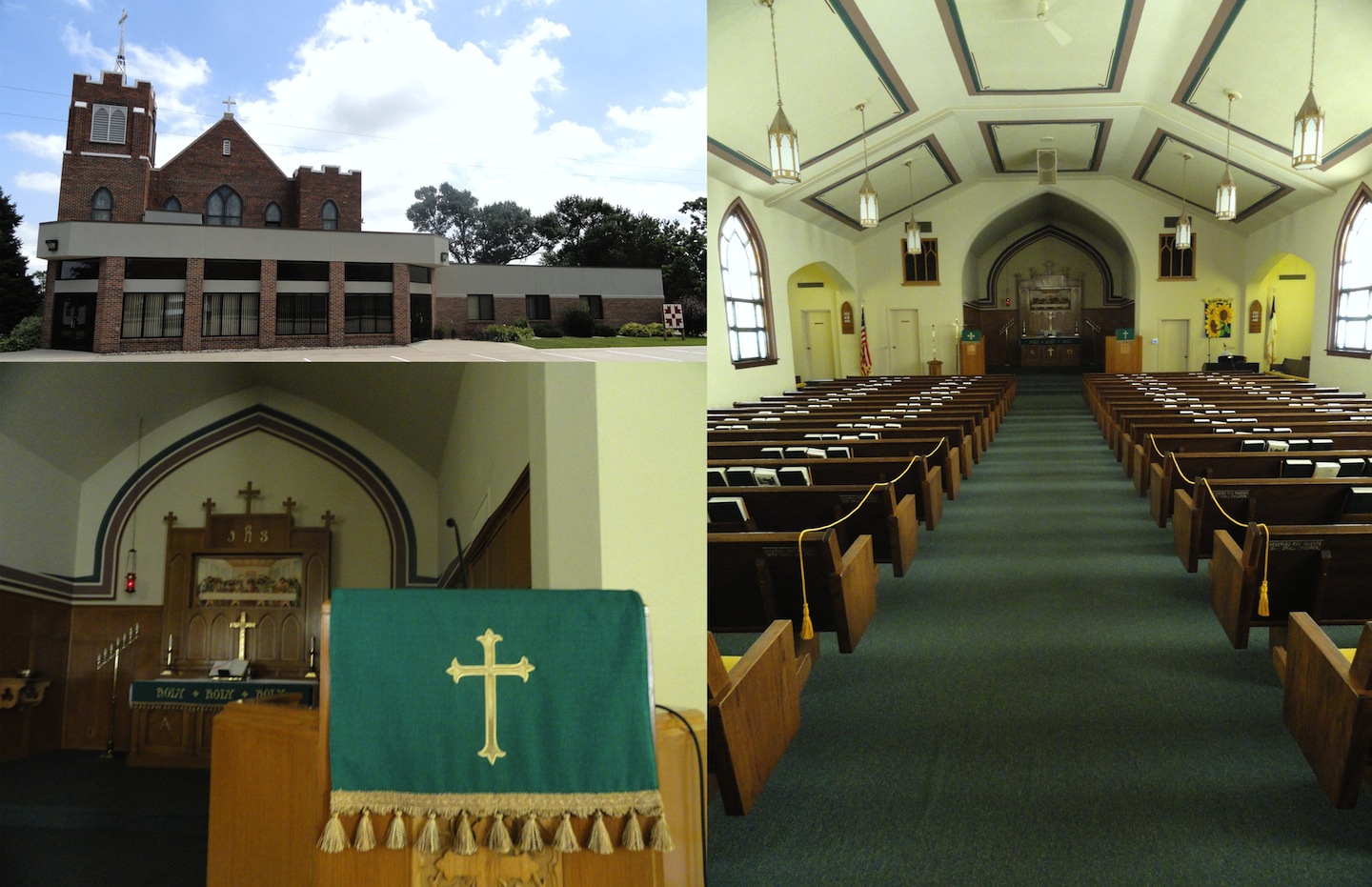
This past weekend was full of history — personal history — for me.  I went up and spent a few days in my hometown, Coleridge, in northeast Nebraska.  Saturday night was the all-class reunion they have periodically, and also my ten year high school reunion — it’s amazing to see how people change and where they end up.  It’s a blessing to me to look back and see the path my own life has taken since then.  How much has changed.

The other big reason I went home was actually to preach in my home church.  It was a little disconcerting at first to be standing on the other side of the pulpit I’ve been staring at for nearly three decades, addressing a congregation that’s known me since I was in diapers.  But it was thrilling, too, to be preaching in the very same church where my great-great-grandfather was pastor, and where generation after generation of my family has belonged since then.  Every time I set foot in that sanctuary, I feel the depth and richness of my own family history; and through it, I sense our connectedness to an even larger, older family — our Christian family through blood and faith.  Going home to Immanuel Lutheran always seems to ground me and helps me orient myself and find my place in the larger Christian story.

Even the text I preached on this weekend was a great reminder that the story is far from over.  We are still writing it, word by word, act by act.  In this weekend’s gospel reading, Jesus sent out the 70, commanding them to preach the good news of God’s kingdom come near, to pass along his peace and to heal the sick.  Jesus’s command doesn’t end with the 70 — he tells them, “the harvest is plentiful, but the laborers are few; therefore ask the Lord of the harvest to send out laborers into his harvest.”  We are the laborers.  When we go out in love, sharing the good things God has promised to us, we become part of this mission, this story, this history, too.

ILC pics

Why should I go to church?

I was sitting in the park knitting yesterday evening and having an imaginary conversation with a friend of mine.  I do this a lot, actually.  I’m not crazy or anything, but the conversations help me to sort of process my thoughts, and this conversation in particular is one I’ve more or less had — in reality — with a number of different people.

Anyhoo, this conversation was with a certain friend of mine — let’s call her… Cordelia?  Cordelia.  Like many of my friends and acquaintances, Cordelia isn’t a very religious person.  She may believe in something beyond the tangible world, but doesn’t necessarily buy into the organized religious aspect of spirituality.  In our conversation, she was a little uncomfortable and even semi-apologetic to me for this, knowing that I am very religious and somehow expecting that I would judge her or think less of her for not being “churched.”  I assured her that nothing could be further from the truth, and went on to observe that, in his letters, Paul lists faith among the different gifts of the Spirit, leaving open the suggestion that some (or many) people won’t have faith.  But we all have gifts and we are all moved by the same Spirit and I told Cordelia that I knew she had wonderful gifts, gifts I have personally seen her share with others to teach and nurture them and help them grow.  I told her that I believed that God created all of us and loves all of us no matter what we believe, and that nothing could be more pleasing to God than that God’s gifts be used for the good of others.  Then she asked me a question I didn’t know how to answer.  “Why should I go to church, then?”  Well… why should she go to church? Continue reading “Why should I go to church?”

Blog at WordPress.com.

Up ↑