Sunday, January 28, 2024
Spirit of Hope Lutheran Church, Lincoln, NE
Fourth Sunday after Epiphany
(narrative lectionary)
watch this service online (reading starts around 22:28; children’s sermon starts around 25:12; sermon starts around 36:16)
Reading: Mark 5:21-43
In the children’s sermon, we talked about what it feels like when we get really sick, and we tried to imagine what it might be like to be sick – and bleeding! – for twelve long years. We talked about ancient worldviews about sickness and ritual uncleanness and how lonely life must have been for this woman with the hemorrhages. She wasn’t supposed to be there with all the people in the crowd, and she manages to get close enough to touch Jesus without anyone seeing her. But Jesus sees her – really sees her, in all her suffering – and declares in front of everyone that she has been made well and whole. Whenever we are sick or suffering and feel like no one notices or cares, we can trust that Jesus sees us too – really sees us – and holds us in love.
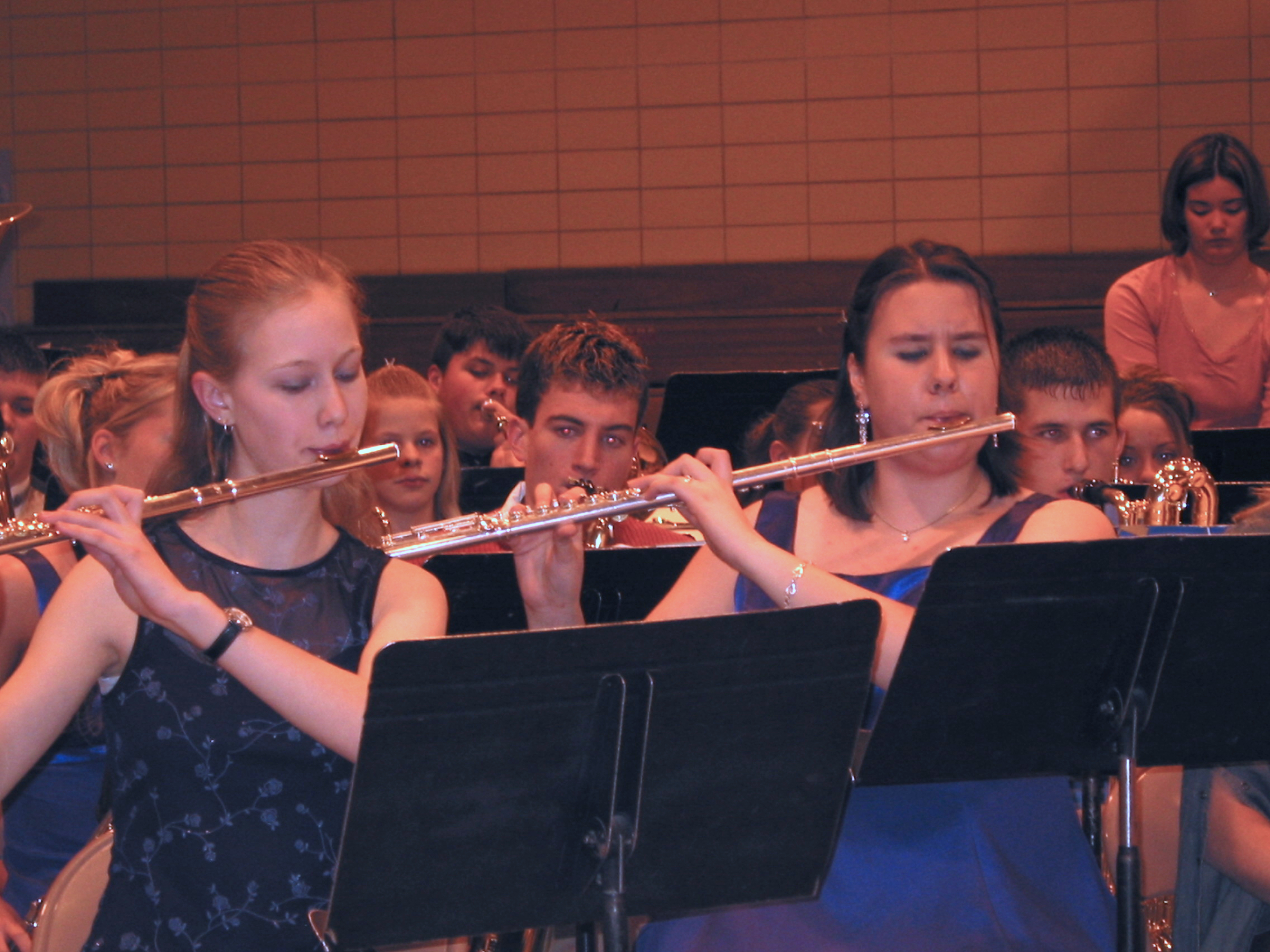
When I was in eighth or ninth grade, I started getting into a lot of honor bands and honor choirs. I was discovering that I really liked to sing, and it turned out that I was actually pretty decent at it! Plus, playing and singing in these honor ensembles gave me a great opportunity to get out of my tiny hometown for a while and meet some new people and see at least a little bit more of the world.
I got my first solo in an honor choir when I was only 14. I was so excited! There were a lot of people who auditioned for it, most of whom were upperclassmen – but I still came out on top. 😎 We had to wait until after lunch to find out who got the solo. When we came back to rehearsal, the director – who clearly didn’t know any of our names – stood up and announced that the solo would be performed by… “The young woman wearing the ‘Colorado’ shirt!” I remember kind of looking around and then finally looking down and realizing, “Holy crap, that’s me!!”
And for the whole rest of the event, everyone just knew me as “Colorado Girl.” And I loved it! Granted, it was kind of a weird thing for me to be called – I mean, not only have I never lived in Colorado; at that point my life, I’m pretty sure I had never even *been* to Colorado. I was wearing a hand-me-down t-shirt that, in retrospect, I think might have once been my dad’s. (lol)
But “Colorado Girl” was a whole lot better than the kinds of things that the kids I went to school with used to call me. They called me things to tear me down, names that reduced me to my weight, my glasses, my hand-me-down clothes. But being called Colorado Girl said to me that I had gifts, I had value. It reminded me that there were possibilities for my life beyond the narrow stories I had known up until then.
It’s amazing the power that names and stories have to define us – both the things that other people say about us and the things that we say about ourselves. They can open us up to a world of possibility and purpose and hope. But they can also reduce us down until one narrow little slice of life is all that we can see.
I see this happening to some of the people in our reading for today. And I actually noticed it as I was reading through a commentary on this passage earlier this week. The commentator described this as a story about “two suffering women” – and I had literally never thought about this story that way. In my mind, this has always been a story about one suffering woman and one very desperate dad. I’d never considered it from the perspective of Jairus’s daughter.
In my defense, it doesn’t help that the only people named in this story are men. The women are only identified by their illnesses. And in actuality, that is probably exactly how it would have been for them in real life. The only thing we know about Jairus’s daughter – besides the fact that her dad is Jairus – is that she is twelve years old and she is very sick. We know even less about the woman with the hemorrhages. We know that she has been bleeding for the better part of twelve years. We know that she has spent everything she had going to physicians, but has seen no improvement. And we can assume that she probably spent those twelve years isolated and cut off from the community because of the “uncleanness” of her condition.
The repetition of the number twelve in this passage probably sounds like just an odd coincidence – but you might remember from last week that when Mark chooses to include little details like that, it’s usually for a reason. In this case, in the numerology of the ancient Israelites, the number twelve signified completeness or the entirety of something – like how twelve tribes signified the whole people of Israel. The implication seems to be that this illness – like the little girl’s death – is all-consuming; it has a complete hold over this woman’s life. It has become her whole identity; we never learn her name or the names of anyone connected with her. She is just the woman with the hemorrhages – sick, outcast, destitute, and desperate.
If you’ve ever had to live with things like chronic illness or disability, I imagine you might find this story pretty relatable. I mean, hopefully no one here has been bleeding for twelve years or, you know, has *died* at any point in the past – but I would bet that most of us know what it’s like to get stuck in a single story about our lives. You know how grief or anxiety or illness or other people’s opinions and expectations can really narrow the horizons of your world – how all these negative things can even come to feel like they define who you are.
It happens with whole communities as well, with families, with congregations. We get stuck in these narratives of shame or scarcity or hopelessness. Most, if not all, congregations these days are struggling with many of the exact same issues: with pews that aren’t as full as they were before the pandemic, with demographic trends shifting away from organized religion, with rising expenses that keep outstripping giving, no matter how generous we are. And in response, it’s been easy for the church to get stuck in these narratives that say “We’re failing,” or “We’re doing something wrong,” or “We’re not doing enough,” or even “We’re dying.”
But something we see again and again in the stories of scripture is that our God is a God of surprises and plot twists. God sees possibilities and hope in our future that we may not yet be able to see ourselves. And sometimes even the challenges we face are really the birth pangs of a new story – signs that God is doing something new.
In our reading, this woman with the hemorrhages doesn’t yet see this broader perspective that God sees, even as she seeks out Jesus. I imagine she is beyond exhausted and that it is taking every ounce of energy she has just to focus on sneaking through the crowd, getting close enough to Jesus to briefly yank on his cloak, and then getting the heck out of there. After twelve years of being failed by physicians and healers, I imagine her expectations were pretty low that this would actually work.
But, to her shock, it does. She is healed instantly. And Jesus is immediately aware of her. He stops in his tracks and basically makes a whole scene, demanding to know who touched him. The woman is mortified; you can practically feel her fear and embarrassment come trembling through the text as she prostrates herself before Jesus and admits that she’s the one who touched him. She is clearly bracing herself for some kind of harsh rebuke or punishment. But instead – there in the sight of her entire community – Jesus gently says to her, “Daughter, your faith has made you well; go in peace, and be healed of your disease.”
Jesus declares her clean and righteous in front of this entire crowd of witnesses – he frees her to finally rejoin her community. And Jesus – being Jesus – goes still further. He says to her, “Daughter” – not “Woman,” but “Daughter, your faith has made you well.” This woman has known nothing but illness, isolation, rejection, and shame for well over a decade of her life. And with a single word, Jesus opens up to her a whole new identity, a new set of possibilities. He opens up to her a new story, one that speaks of love and tenderness and belonging, a story that tells her that she is precious in God’s sight.
In the case of Jairus’s daughter, her story is already over by the time Jesus gets there – a story that ended much too soon. Her parents’ desperate hope has already started turning into unimaginable grief. But Jesus is there to tell a different story – and we see that even in death, no story is too far gone for Jesus to bring salvation and life.
These stories bear witness that God can do much greater things than we expect or imagine or dare to hope. They remind us, even when we can’t see past our own narratives of hopelessness and scarcity and fear, that what God sees for us is hope and possibility. God has planned for us a future – and life – life that even transcends the boundaries of death.
Whatever narrative you are feeling stuck in today, know that that story is not all there is – because all things are in God’s hands. So listen to Jesus’ voice as he also says to you: “Do not be afraid; but believe.”
 This is the Day