
Sunday, June 7, 2026
Spirit of Hope Lutheran Church, Lincoln, NE
Second Sunday after Pentecost
Readings
watch this service online
For the children’s message, I showed the kids a sampling of “pet-shaming” memes and asked them if their pets ever did silly things like this. And we talked about how the people who make these memes aren’t really mad at their pets. They love them and understand that they’re just doing what animals do.
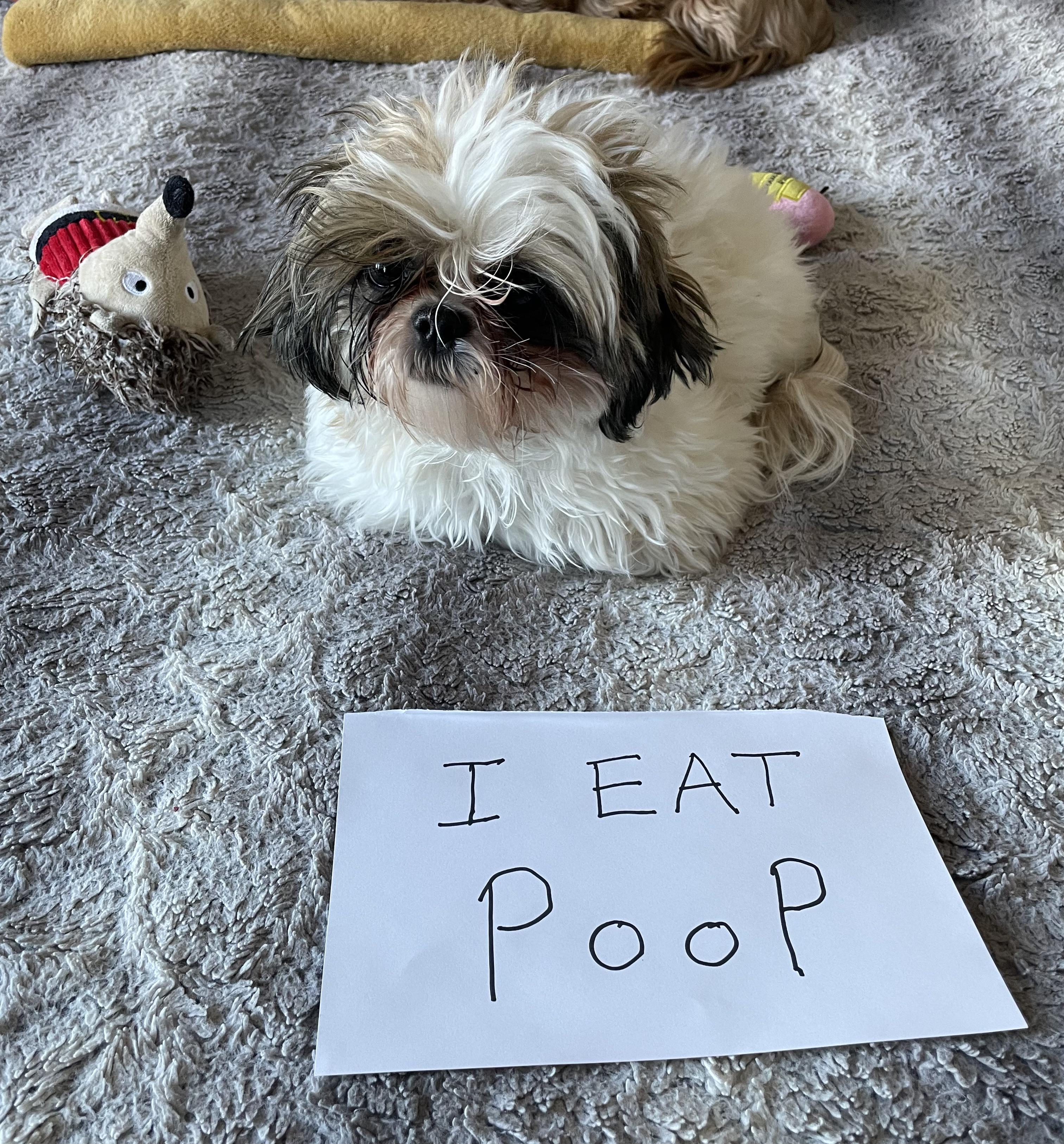

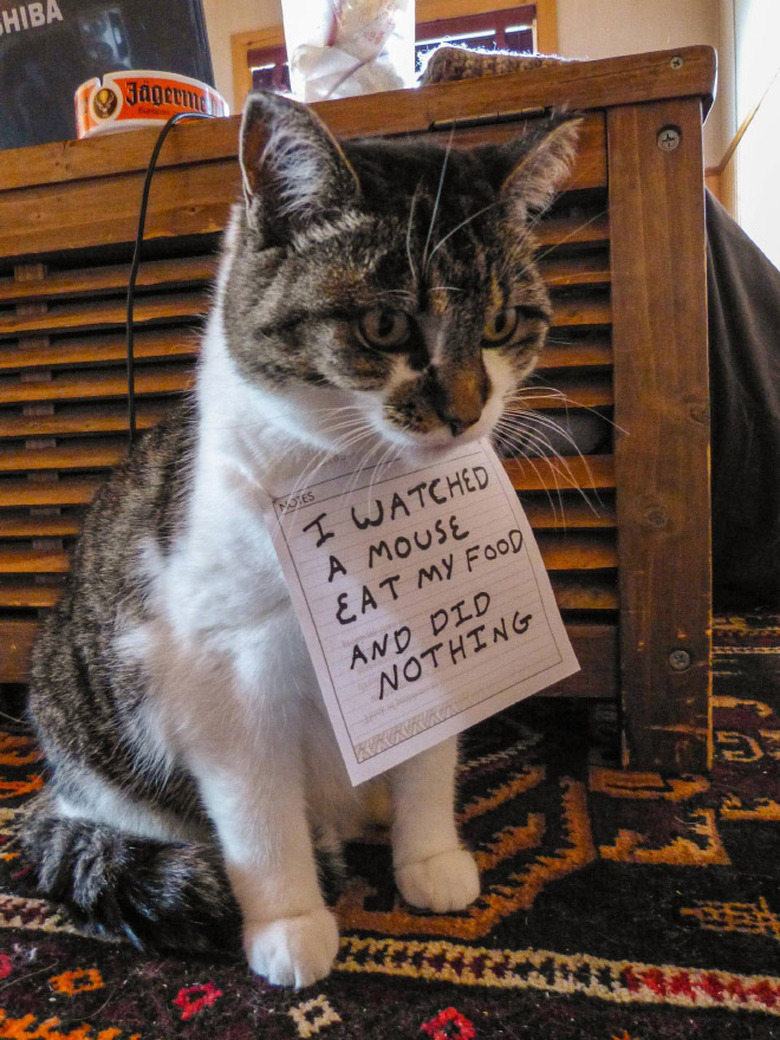

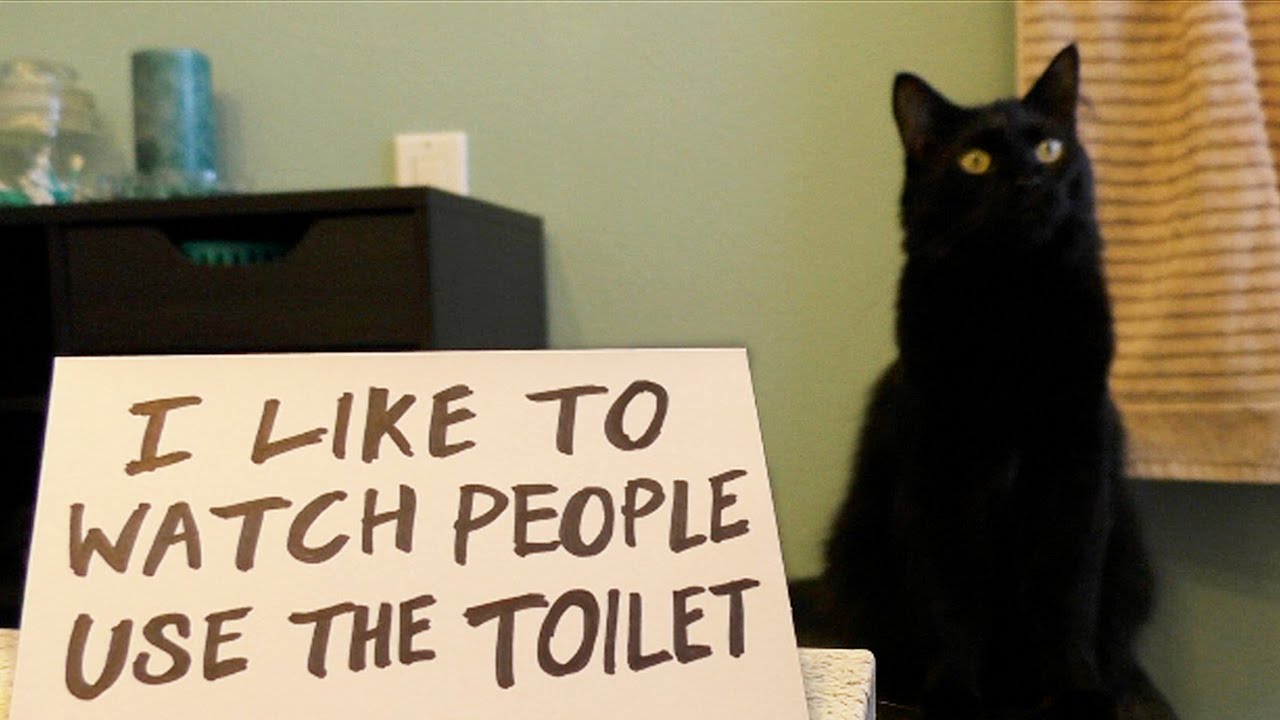
We talked about how we as humans also sometimes do things that drive other people crazy or that don’t reflect very well on us. I made a few “Pastor-Day-shaming” signs for myself to illustrate the point:
“I have full conversations with my cats. Regularly. Out loud.”
“I have managed to kill more than one cactus through neglect.”
“I cannot leave a craft store empty-handed.”
“I love cheese almost as much as I love Jesus.”
I also made a sign for Matthew the tax collector in our gospel reading: “I give my people’s money to the Romans. I take more money than I’m supposed to and I keep it for myself.” We talked about why people disliked tax collectors so much and why they were offended by the idea of anybody being nice to them.
But Jesus is kind to them. He chooses to sit and eat with them and spend time with them. He does this not because he thinks they’re the people who most deserve to get to hang out with him, but because they’re the people who need it most. He likens himself to a doctor, coming to care for the people who are sick, not the ones who are already healthy.
Jesus treats them with love because that’s just who Jesus is. And Jesus loves us the same way, no matter what we do.
I have to confess that patience is really not one of my virtues. The Holy Spirit certainly likes to test my patience on a regular basis, no matter how many times I test negative. One place this lack of patience particularly tends to manifest itself is whenever I’m driving. I often have very limited patience with other drivers on the road (it doesn’t help that I’m also often running late 😬). I get very judgy about how people drive, and about the various “sins” I see them committing.
Strangely enough, this is not an uncommon trait among clergy. A lot of other pastors I know drive with a lead foot and a fair amount of aggression. I suspect this is probably how we deal with some of our frustration and anxiety. We’re expected to be so nice all the time; the anonymity of driving gives us a chance to let off some steam. (For some unknown reason, for me this usually manifests as a lot of cursing in Spanish. 🤷🏻♀️😅)
It’s an easy thing to do behind the wheel. When you’re driving, it’s easy to forget that you’re dealing with other people. You’re not looking at people’s faces; you’re just seeing vehicles moving and reacting. So that means I’m not seeing, for example, that the slow-moving car I’m stuck behind is being driven by an elderly woman whose vision isn’t what it used to be, or that the vehicle that just cut in front of me is being driven by a nervous refugee kid who’s learning to drive for the first time. We just see the exterior – not the stories, not the faces, not the people underneath.
I remember one especially mortifying experience when I was in seminary in Chicago. I actually wasn’t even driving; I was walking down the sidewalk. But this car came driving the wrong way down a one-way street, made this very wide, dramatic U-turn right in front of me, and then drove back toward the direction they came from. And before I could stop myself, the words came spilling out of my mouth, like, “Learn to drive, *sshole!” And right at that moment, I realized that not only were their windows open, but I knew the people in the car – they were other seminary students; in fact, one of them was my upstairs neighbor!
I still feel embarrassed remembering this. But it’s the sort of thing that happens when we don’t see the humanity of the people we’re interacting with; only what’s on the outside, like the vehicle they’re driving.
There’s a similar dynamic playing out in the first part of our gospel reading for today. We have these religious authorities, the Pharisees, who are all up in arms when they see that Jesus and his disciples have chosen to break bread not with good, righteous people like them, but with tax collectors and sinners (oooooohhh). They’re seeing the labels, the categories of these people, not the humans behind them. And it’s kind of funny that now there’s even another layer of irony to reading this story – now it’s the label “Pharisee” that carries a sense of negative judgment and stigma.
This is just something that humans tend to do. We tend to group and label other people as a way of making sense of the world. It’s a kind of shortcut that helps us conserve energy as we navigate life. It’s also a kind of defense mechanism – by sorting people quickly into categories, we have an internal set of criteria for deciding how much of a risk each person is. It can make us feel safer. But this tendency toward categorizing others inevitably leads to exclusion, and it keeps us divided from one another.
This is exactly what we were talking about at our event this past Wednesday evening. We were fortunate to have trans author Ellie Krug come and present her “Gray Area Thinking” workshop, which was amazing and thought-provoking. She used her experience navigating the world as a trans woman as a lens to talk about all these different ways we categorize one another, and the ways we then attach meaning and assumptions and judgments to one another, based on those categories.
And she led us in this really impactful activity in which she invited us to consider the many labels that we ourselves carry and the ways they have affected us – whether that be age, gender, vocation, ethnic background, political leanings, and so on – all these different ways that we have of identifying ourselves and others. She invited us to think about which of these labels are most meaningful for us, which ones we would like to be known for – and also which ones have been used to hurt us or dismiss us.
Humans operate by these labels. But we see clearly in this gospel story that God, emphatically, does not.
God doesn’t look at the labels that we stick on each other; God doesn’t care about the boxes we shove each other into or what they say about us. Right away, we see this reflected just in the language that’s used to describe what’s happening. While the Pharisees complain about these “tax collectors” and “sinners,” Jesus, as he walks along, sees “a man called Matthew sitting at the tax-collection station.” He doesn’t see a tax collector; he sees a person, a person with a name, doing a job.
Jesus sees the people behind the labels. He sees the sickness, the brokenness in their souls in need of healing, and he responds with compassion. In fact, when the Pharisees ask him what the heck he thinks he’s doing, he paints himself as a doctor, coming not to visit the healthy, but to care for the sick. And, in truth, Jesus isn’t just talking to “Pharisees” any more than he’s just talking to “tax collectors”; he’s ministering to the people behind that label as well, modeling for them the kind of compassion they themselves are called to show.
And to be fair to the Pharisees, they have good reason to be upset with these folks Jesus chooses to dine with. Tax collectors were, in a way, traitors to their own people. They extracted money from their own people to send to their Roman overlords, and charged extra on top to line their own pockets. So they’re definitely not doing good, righteous things. But the Pharisees are also falling short in this respect, failing to show the kind of mercy and compassion that God calls them to.
And this is exactly what Jesus is trying to teach them. He says to them: “Go and learn what this means, ‘I desire mercy, not sacrifice.’ For I have not come to call the righteous but sinners.” “I desire mercy, not sacrifice.” Jesus is quoting this line almost verbatim from a couple of the prophets. Firstly and most directly, he’s quoting Hosea 6:6, which reads: “For I desire steadfast love and not sacrifice, the knowledge of God rather than burnt offerings.”
Jesus is also referencing a well-known passage from Micah 6:6-8: “’With what shall I come before the Lord and bow myself before God on high? Shall I come before him with burnt offerings, with calves a year old? Will the Lord be pleased with thousands of rams, with ten thousands of rivers of oil? Shall I give my firstborn for my transgression, the fruit of my body for the sin of my soul?’ He has told you, O mortal, what is good, and what does the Lord require of you but to do justice and to love kindness/mercy and to walk humbly with your God?”
The mention of “sacrifice” in these verses is essentially shorthand for right religious practice. Making sacrifices and burnt offerings and the like was historically a central part of Israelite religion. So what God is essentially saying here is: “I don’t care that you worship correctly or that you do righteous living perfectly. I care that you live with kindness and mercy and compassion for one another. That’s what I really want from you.
These are God’s priorities. And they are a direct reflection of who God is. God desires mercy from us because God is merciful. Jesus commands us to love one another as – and because – he first loves us. And that mercy and love is unfailing, no matter how many times we might screw up. God keeps desiring goodness and wholeness and abundant life for us. God keeps giving us new chances to get it right, helping us to overcome the brokenness that keeps us falling short.
God calls us to want the same for one another. God wants us to look past the labels, past the boxes. God wants us to peer through those windshields, and really SEE the people around us – see their struggles, see their fears, their hopes, their loves. And God especially wants us to learn to fully see the people we view as “other” in some way, to remember our shared humanity.
This is as important right now as it has ever been. And right now, it’s as difficult to do as it is important. There is so much anger and so much fear and distrust, especially in our country. There’s so much resentment seething over the way things have been going. And with national elections coming up this year, the messaging and public discourse is just amplifying all of these things, feeding into our fear and distrust and division. It just makes it harder and harder for us to see the people behind the ideologies and the arguments – especially when practically every issue feels like some kind of existential threat.
But it is absolutely imperative that we NEVER lose sight of the humanity of other people. Including – and especially – the people whose choices or actions or lifestyles we might find offensive or unacceptable. And yes, whoever you’re thinking of when I say these things, I mean that person too.
We don’t get to write anyone off. Ever.
Because God doesn’t write anyone off. Ever.
What we see again and again and again in the scriptures is that God’s foundational character is love. God loves each of us even at our most unlovable – because that’s who God is. And God calls us to treat all our neighbors with love and compassion and mercy in the same way – not because we think they deserve it, but because it’s who we are called to be.
Our task as the church is to help and encourage one another to live into this call – and that very much includes the clergy. At the very least, we can learn to take it down a notch on the road.
So I guess my take-away from this is that the next time I’m behind the wheel, when I start getting a little hot under the collar, I’ll try to stop and take a deep breath and ask myself that age-old question: “HWJD?” How Would Jesus Drive?


Leave a Reply