Making Space for Mystics and Madness

Here’s another bit of writing from one of my classes this semester, this one from the Pastoral Care and Mental Illness course I’ve been taking.  This particular course has had some interesting overlap with another of my classes: Desert Discipleship, which explores the legacy of the desert fathers and mothers of the early centuries of Christianity.  In this assignment, which I conceived as an article for a church newsletter, I propose a connection between schizophrenia and the legacy of St. Anthony.  Enjoy!


st-anthony-the-great-3St. Antony, also known as Anthony the Great, was a Christian monk who lived in Egypt in the third and fourth centuries. He renounced the wealth left to him by his parents and chose to live an ascetic life in the desert, fasting and meditating on Christ. Antony became a wise and famous figure of Egyptian monasticism, but more than anything, he was known for his battles with demons.

St. Athanasius, the fourth century bishop of Alexandria, described these battles in The Life of Antony, which quickly became one of the most popular books in Christian history. Many modern readers will find these accounts more than a little odd, but there was something about Antony’s life and his battles with the demons that earlier generations undeniably found compelling. Athanasius describes how Antony withdraws further and further into the desert, at one point enclosing himself in a deserted barracks and receiving stores of food only twice a year. Athanasius writes:

Those friends who came to see him, since he would not allow them to come inside, often remained outside day and night. They heard what sounded like mobs of people creating a ruckus and crashing around inside, letting loose their pitiful voices and crying out, “Get away from what belongs to us! What are you doing in the desert? You will not be able to endure our connivings!” Those outside at first thought some people… had gotten inside by means of ladders… but when they knelt down to look through a hole in the wall, they did not see anyone. (Athanasius, 2003, p. 89)

1an33__24635_1405404609_900_900Antony instructs his followers to be wary of these demonic voices, telling them that they fill one’s head with “filthy thoughts” and cause “apparitions,” that “they pretend to frighten us by changing their shapes and taking on the appearance of women, wild beasts, reptiles…” (Athanasius, 2003, p. 113)

Hundreds of people flocked to the desert to be taught by Antony, to the point that Athanasius writes that they “forcibly tore down his door and forced him to come out.” (Athanasius, 2003, p. 91) Reading this in the 21st century, I have a hard time imagining this happening in our day. Even though the Christian church has centuries of history and tradition of mysticism and mystery, I can’t imagine people rushing out to sit at the feet of anyone who heard voices and saw apparitions and warned others about demons putting thoughts into their heads today. Can you? If St. Antony lived today, many folks would probably be pretty quick to label him a schizophrenic. They would probably say that he was crazy. Continue reading “Making Space for Mystics and Madness”

Sermon: Faith in All the Wrong Places

Sunday, October 23, 2016
New Hope Lutheran Church, Aurora, IL

He also told this parable to some who trusted in themselves that they were righteous and regarded others with contempt: “Two men went up to the temple to pray, one a Pharisee and the other a tax collector. The Pharisee, standing by himself, was praying thus, ‘God, I thank you that I am not like other people: thieves, rogues, adulterers, or even like this tax collector. I fast twice a week; I give a tenth of all my income.’ But the tax collector, standing far off, would not even look up to heaven, but was beating his breast and saying, ‘God, be merciful to me, a sinner!’ I tell you, this man went down to his home justified rather than the other; for all who exalt themselves will be humbled, but all who humble themselves will be exalted.”

Luke 18:9-14

This week’s gospel text reads a little bit like a joke – a pharisee and a tax collector walk into a bar temple. But the punchline of this joke is deceptively tricky. Nowadays, we’re used to reading pharisees as hypocritical bigots and tax collectors as humbly repentant sinners; but the twist at the end of the story where the tax collector’s prayers are justified and the pharisee’s are not would have been more surprising to Jesus’ original hearers than it is to us. In contrast to the pharisee’s prayer thanking God that he is not like the tax collector, we know that the pharisee is the person that we are glad not to be like, right?

Ha! And there’s the punchline of the joke. It’s almost impossible to hear this story and not go away thinking something along the lines of, “God, I thank you that I am not like that pharisee!” As it turns out, we are every bit as judgmental as he is.

modern-phar-tc

It’s a disturbingly easy trap to fall into, and Jesus knows it. It almost seems to be an inherent part of being human that we categorize people into “us” and “them” groups, deciding who is in and who is out. This election season – which will finally end in a little over two weeks – has shown us clearly the depth of division in our country. And that division also shows up in our churches, too – not just between rival denominations, but in and among our own congregations. In our churches, we single out “those people who don’t give enough money” or “those people who don’t take good enough care of the worship space” or “those people who sure don’t act very Christian outside of church” or “those people who hardly ever come to church at all.” We draw lines between ourselves and other groups of people without even thinking about it. But the problem with that – as Jesus illustrates in this story – is that God always ends up on the other side of that line.

Continue reading “Sermon: Faith in All the Wrong Places”

Sermón: ¿Encontrará fe?

Domingo, 23 Octubre, 2016
Iglesia Luterana Nueva Esperanza, Aurora, ILthe-pharisee-and-the-tax-collector

Lucas 18:9-14
A algunos que, confiando en sí mismos, se creían justos y que despreciaban a los demás, Jesús les contó esta parábola: “Dos hombres subieron al templo a orar; uno era fariseo, y el otro, recaudador de impuestos. El fariseo se puso a orar consigo mismo: ‘Oh Dios, te doy gracias porque no soy como otros hombres —ladrones, malhechores, adúlteros— ni mucho menos como ese recaudador de impuestos. Ayuno dos veces a la semana y doy la décima parte de todo lo que recibo.’ En cambio, el recaudador de impuestos, que se había quedado a cierta distancia, ni siquiera se atrevía a alzar la vista al cielo, sino que se golpeaba el pecho y decía: ‘¡Oh Dios, ten compasión de mí, que soy pecador!’ Les digo que éste, y no aquél, volvió a su casa justificado ante Dios. Pues todo el que a sí mismo se enaltece será humillado, y el que se humilla será enaltecido.”

La lectura del evangelio para esta semana casi parece un chiste – un fariseo y un cobrador de impuestos entran en un bar… digo, un templo. Y es chistoso porque resulta que el fariseo es el que no se justifica, jajaja! Bueno, para nosotros, no es tan chistoso. Ya estamos acostumbrados a ver a los fariseos como hipócritas y a los cobradores de impuestos como pecadores arrepentidos. Pero en sus tiempos, los fariseos eran líderes respetados, conocidos por su sabiduría y su generosidad. Al contrario, los cobradores de impuestos – llamados “publicanos” – defraudaron a la comunidad para el benificio del imperio romano. Por lo tanto, el final de este cuento fue un giro inesperado para los oyentes originales de Cristo. Pero en nuestros tiempos, entendemos mejor este cuento y damos gracias nosotros que no somos como el fariseo, ¿verdad?

Ja! Y ahí está el chiste. Porque cada vez que leemos este cuento, pensamos entre nos, “Wow, gracias a Dios, que no soy como aquel fariseo!” Lamentablamente, parecemos todos al fariseo en nuestra tendencia a criticar y juzgar a los demás.

modern-phar-tcEs muy fácil caer en esta trampa, y Cristo se lo sabe. Por eso cuenta esta parábola. Casi parece una característica inevitable de ser humano: siempre queremos clasificar a los demás por grupos de “nosotros” y “ellos”; queremos decidir quien es acceptable y quien no. Durante esta elección – que, gracias a Dios, ya va a terminar en pocas semanas – hemos visto claramente las profundas divisiónes que existen en este país. Esa división también existe en nuestras iglesias, entre denominaciónes diferentes, y aún entre nuestras propias congregaciónes. En nuestras iglesias, nos quejamos de “aquellas personas que dan poco dinero” o “aquellas personas que no cuidan al santuario” o “aquellas personas que se comportan de una manera muy poca cristiana fuera de la iglesia” o “aquellas personas que casi nunca asisten a la misa.” Trazamos líneas entre nosotros, los buenos, y los demás casi sin pensarlo. Pero como Cristo demuestra en su cuento, el problema de hacer eso es que Dios casi siempre se queda al otro lado de la línea. Continue reading “Sermón: ¿Encontrará fe?”

What Becomes of Boasting?: A Body Positive Reformation Sermon

Read more of my body positive / fat liberation writings here.

Wednesday, April 27, 2016
“Encountering the Living Word” preaching course
Lutheran School of Theology at Chicago (LSTC)

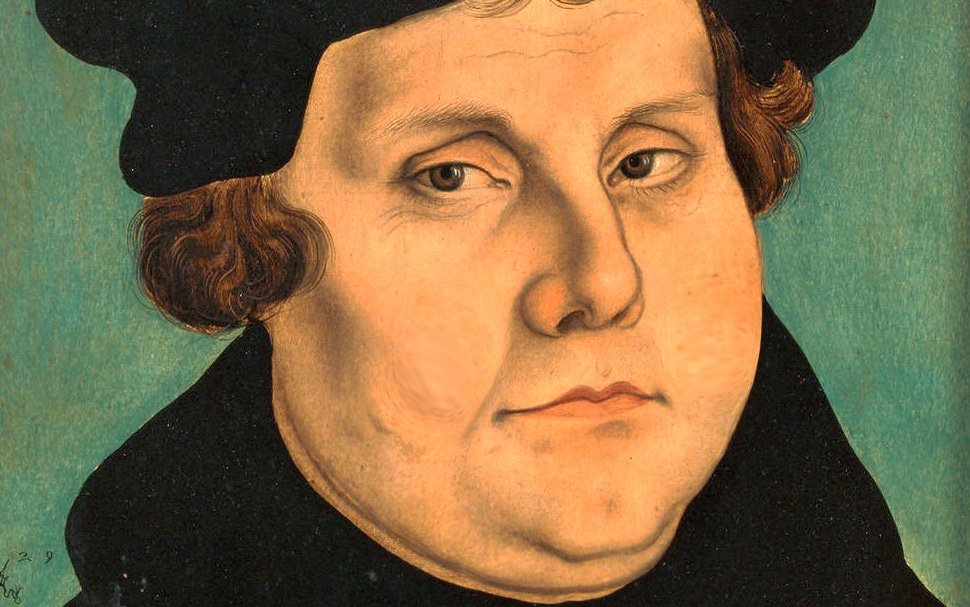
martin-luther chubby copy

Romans 3:19-28
Now we know that whatever the law says, it speaks to those who are under the law, so that every mouth may be silenced, and the whole world may be held accountable to God. For no human being will be justified in God’s sight by deeds prescribed by the law, for through the law comes the knowledge of sin.

But now, apart from law, the righteousness of God has been disclosed, and is attested by the law and the prophets, the righteousness of God through faith in Jesus Christ for all who believe. For there is no distinction, since all have sinned and fall short of the glory of God; they are now justified by God’s grace as a gift, through the redemption that is in Christ Jesus, whom God put forward as a sacrifice of atonement by his blood, effective through faith. God did this to show God’s righteousness, because in divine forbearance God had passed over the sins previously committed; it was to prove at the present time that God themself is righteous and that God justifies the one who has faith in Jesus.

Then what becomes of boasting? It is excluded. By what law? By that of works? No, but by the law of faith. For we hold that a person is justified by faith apart from works prescribed by the law.

I have to be honest: When I was assigned to preach a sermon for Reformation Sunday, I groaned a little on the inside. It’s not that I’m not proud of my Lutheran heritage or anything. I see the value in celebrating the dramatic ways in which God has renewed the church and more fully revealed to us God’s grace. And of course, it’s important to honor saints like Martin Luther, Philip Melanchthon, and others who have gone before us to be agents of renewal in the church.

But I can’t help but wonder whether, in commemorating the Reformation, we are acting as though God’s most important acts of renewing the church all happened in the past. By focusing on an act of reformation that happened nearly five hundred years ago, I wonder whether we are ignoring the ways in which God is still making the world new today. I worry that focusing on the transformative change that happened so long ago may be a means for protecting ourselves from the transformative change that God would wreak on us today. Continue reading “What Becomes of Boasting?: A Body Positive Reformation Sermon”

Brooding on Vipers: An Out of Season Advent Sermon

Wednesday, April 6, 2016
“Encountering the Living Word” preaching course
Lutheran School of Theology at Chicago (LSTC)

Matthew 3:1-12
In those days John the Baptist appeared in the wilderness of Judea, proclaiming, ‘Repent, for the kingdom of heaven has come near.’ This is the one of whom the prophet Isaiah spoke when he said,
‘The voice of one crying out in the wilderness:
“Prepare the way of the Lord,
make his paths straight.” ’
Now John wore clothing of camel’s hair with a leather belt around his waist, and his food was locusts and wild honey. Then the people of Jerusalem and all Judea were going out to him, and all the region along the Jordan, and they were baptized by him in the river Jordan, confessing their sins.Haiti-elsaiah-johnthebaptist

But when he saw many Pharisees and Sadducees coming for baptism, he said to them, ‘You brood of vipers! Who warned you to flee from the wrath to come? Bear fruit worthy of repentance. Do not presume to say to yourselves, “We have Abraham as our ancestor”; for I tell you, God is able from these stones to raise up children to Abraham. Even now the axe is lying at the root of the trees; every tree therefore that does not bear good fruit is cut down and thrown into the fire.
‘I baptize you with water for repentance, but one who is more powerful than I is coming after me; I am not worthy to carry his sandals. He will baptize you with the Holy Spirit and fire. His winnowing-fork is in his hand, and he will clear his threshing-floor and will gather his wheat into the granary; but the chaff he will burn with unquenchable fire.’

The violent language of wrath and destruction in this text is kind of surprising and off-putting. Unquenchable fire and axes are not themes we usually associate with our God of love. Less so during Advent. During Advent, the secular world is usually already in full-blown Christmas mode, and we – in our quiet Christian way – are preparing ourselves for the birth of sweet little baby Jesus.

What is John even so mad about in this text anyway? He’s hanging out in the wilderness, baptizing the huge crowds of people that are coming to him from every which way. I mean, he’s baptizing everybody. Why is it so shocking and upsetting then that the Pharisees and Sadducees are among the crowd as well? Why are they singled out and separated as being somehow worse or more sinful than the rest? Continue reading “Brooding on Vipers: An Out of Season Advent Sermon”

My seventh sermon: You Are What You Eat

11880528_1059250310766591_6314628572254871134_nGrace Lutheran Church
Saturday 8/15/15, Sunday 8/16/15

John 6:51-58
Ephesians 5:15-20
Psalm 34:9-14
Proverbs 9:1-6

I had to kind of chuckle a little bit when I read through the texts for today. You all lovingly sent me away to seminary so that I could gain some of the wisdom talked about in the lectionary for today. Now I feel like God has called me home to give you a report on how all that wisdom-acquiring is going!

Well, I have been learning a lot. This past summer in particular has been very formative for me. I just finished eleven weeks of CPE – Clinical Pastoral Education. Basically, I interned as a hospital chaplain on the north side of Chicago. I spent a lot of time sitting at the bedsides of cancer patients and palliative care patients and patients entering hospice care. I listened to their stories and their struggles and their fears about dying. I also had several opportunities to provide them with the sacrament of Holy Communion.

Remembering these experiences, it’s very poignant for me to read Jesus’ words about living bread in today’s gospel reading – “This is the bread that came down from heaven, not like that which your ancestors ate, and they died. But the one who eats this bread will live forever.” In the context of the hospital, the “living bread” of the Eucharist was very often juxtaposed with death and dying. In fact, many of the patients to whom I fed the Eucharist have since died. Jesus himself spoke these words about living bread on the eve of his own death. It makes me wonder a lot about this life that Jesus has promised and about this living bread that he tells us to eat. Continue reading “My seventh sermon: You Are What You Eat”

Daughter

Here is the fruit of my latest songwriting efforts:  “Daughter.”  It was inspired by a verse that I recently rediscovered, one that both haunted me and gave me hope during my transition from the Jehovah’s Witnesses to what ended up being a couple of mostly secular years:

“How long will you waver, O faithless daughter?  For the Lord has created a new thing on the earth…”  Jeremiah 31:22

It’s a verse that seems to fit all my wanderings in and out of organized religion, but it also seems timely given the conversations happening across the modern day church about the challenges it faces.  The verse preceding it even makes plain that the question is directed not at a single person, but to God’s people on earth:  “Return, O virgin Israel, return to these your cities.”

These are tough times for a model of organized religion that was built around a set of social assumptions that are no longer remotely accurate.  For those that cling to the outdated loveliness of this sinking ship, the future seems full of fear — emptying pews, mounting bills, and the looming end of church as we know it.  But we must learn to see through the fog of all these worries, and to see the church as God sees it — as the body of Christ, constantly being made new.  We are passing from one season to another and being renewed together — change is coming, whether we want it or not, but we have the choice to either shrink from it with fear and trepidation, or to seize it eagerly as a light of hope and a bright new chance to dive deep into God’s restorative work in the world.

Lyrics are below:

Continue reading “Daughter”

My second sermon: The Harvest is Plentiful

Here’s the sermon I preached over the past weekend at my home congregation.  And because they have my amazing, techie-wizard dad running things, they regularly record their worship and post the sermons online.  So now anyone (who is not me) can enjoy listening to me putting on my pastor-voice and delivering my sermon this past weekend!  It’s based on the following two texts:  Luke 10:1-11, 16-20; and Galatians 6:1-16

The script is below for anyone who’d like to read along (or just read).  Also, if you’re interested, you can read my first sermon here. Continue reading “My second sermon: The Harvest is Plentiful”

History of the harvest

This past weekend was full of history — personal history — for me.  I went up and spent a few days in my hometown, Coleridge, in northeast Nebraska.  Saturday night was the all-class reunion they have periodically, and also my ten year high school reunion — it’s amazing to see how people change and where they end up.  It’s a blessing to me to look back and see the path my own life has taken since then.  How much has changed.

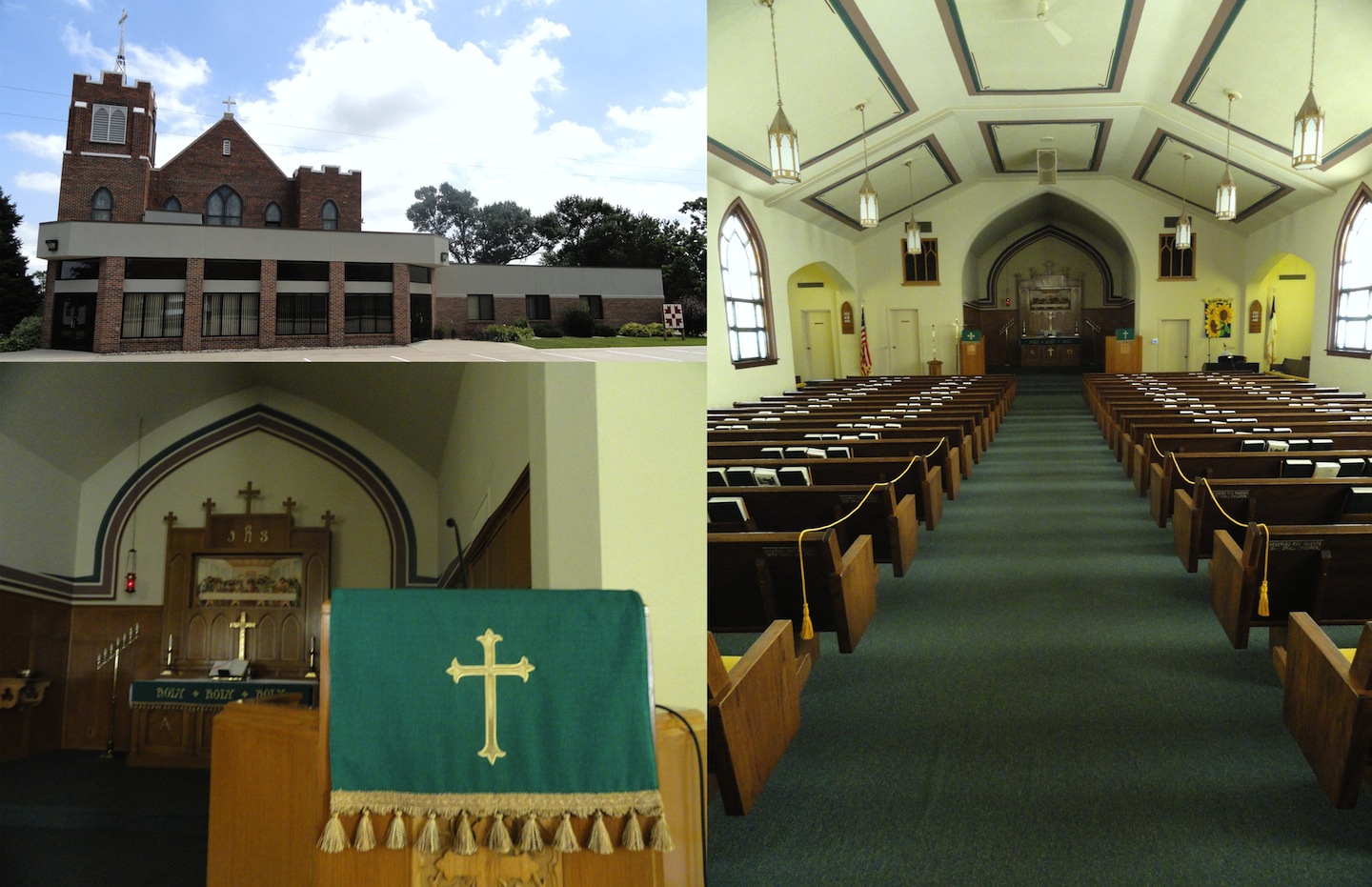
The other big reason I went home was actually to preach in my home church.  It was a little disconcerting at first to be standing on the other side of the pulpit I’ve been staring at for nearly three decades, addressing a congregation that’s known me since I was in diapers.  But it was thrilling, too, to be preaching in the very same church where my great-great-grandfather was pastor, and where generation after generation of my family has belonged since then.  Every time I set foot in that sanctuary, I feel the depth and richness of my own family history; and through it, I sense our connectedness to an even larger, older family — our Christian family through blood and faith.  Going home to Immanuel Lutheran always seems to ground me and helps me orient myself and find my place in the larger Christian story.

Even the text I preached on this weekend was a great reminder that the story is far from over.  We are still writing it, word by word, act by act.  In this weekend’s gospel reading, Jesus sent out the 70, commanding them to preach the good news of God’s kingdom come near, to pass along his peace and to heal the sick.  Jesus’s command doesn’t end with the 70 — he tells them, “the harvest is plentiful, but the laborers are few; therefore ask the Lord of the harvest to send out laborers into his harvest.”  We are the laborers.  When we go out in love, sharing the good things God has promised to us, we become part of this mission, this story, this history, too.

ILC pics

Why should I go to church?

I was sitting in the park knitting yesterday evening and having an imaginary conversation with a friend of mine.  I do this a lot, actually.  I’m not crazy or anything, but the conversations help me to sort of process my thoughts, and this conversation in particular is one I’ve more or less had — in reality — with a number of different people.

Anyhoo, this conversation was with a certain friend of mine — let’s call her… Cordelia?  Cordelia.  Like many of my friends and acquaintances, Cordelia isn’t a very religious person.  She may believe in something beyond the tangible world, but doesn’t necessarily buy into the organized religious aspect of spirituality.  In our conversation, she was a little uncomfortable and even semi-apologetic to me for this, knowing that I am very religious and somehow expecting that I would judge her or think less of her for not being “churched.”  I assured her that nothing could be further from the truth, and went on to observe that, in his letters, Paul lists faith among the different gifts of the Spirit, leaving open the suggestion that some (or many) people won’t have faith.  But we all have gifts and we are all moved by the same Spirit and I told Cordelia that I knew she had wonderful gifts, gifts I have personally seen her share with others to teach and nurture them and help them grow.  I told her that I believed that God created all of us and loves all of us no matter what we believe, and that nothing could be more pleasing to God than that God’s gifts be used for the good of others.  Then she asked me a question I didn’t know how to answer.  “Why should I go to church, then?”  Well… why should she go to church? Continue reading “Why should I go to church?”

Fear? Not!

Alleluia!  Sing to Jesus; his the scepter, his the throne; Alleluia!  his the triumph, his the victory alone. Hark!  The songs of peaceful Zion thunder like a mighty flood: “Jesus out of every nation has redeemed us by his blood.”

This is the first and last verse of hymn #392 in the ELW (Evangelical Lutheran Worship), which we sang last night at the observation of Christ’s ascension into heaven.  I like hymns that use this convention of repetition; the text strikes you a certain way when you sing it the first time, then the two or three verses in between expand and explore the theme and give the text a greater depth when you repeat it in the final verse.  More than anything, though, with this particular hymn, I was captivated by the last line:  “Jesus out of every nation has redeemed us by his blood.”  What a beautifully inclusive vision!  It speaks of grace that transcends the artificial boundaries of nations, politics, denominations, etc.  We are all one to Christ.  We are all one in Christ.  This is our calling as a church. Even our Gospel reading for this Sunday, John 17:20-26, reflects this call to universal oneness and love:

“I ask not only on behalf of these, but also on behalf of those who will believe in me through their word, that they may all be one. As you, Father, are in me and I am in you, may they also be in us, so that the world may believe that you have sent me. The glory that you have given me I have given them, so that they may be one, as we are one, I in them and you in me, that they may become completely one, so that the world may know that you have sent me and have loved them even as you have loved me…”

Following worship last night, I hung around in the atrium for a little while and found myself reading the bios of our 11 new members, posted on the bulletin board.  I was gratified and a little taken by surprise to see that over half of them specifically mentioned our refugee resettlement project as something they wanted to be involved with.  In retrospect, I shouldn’t have been surprised at all, since I’ve been working with these folks on the refugee resettlement committee, but it had never dawned on me that the committee is made up of new members, attracted to Grace by our sense of mission. This, to me, is an example of the very best kind of evangelism — in truth, the only kind of evangelism — the spreading of good news about something you truly believe in.  It goes much deeper than just trying to convince people that they should come to your church.  It’s inviting people to be a part of something that really matters, inviting them into works that reflect Christ’s glory and victory, like in the words of the hymn.   Continue reading “Fear? Not!”

Prayer 101

This is one of a couple of forthcoming posts inspired by the conversations at the candidacy retreat last weekend — it’s been a good week of rumination and contemplation.  One comment that particularly sparked my interest was about prayer — the speaker (I think it was Bishop Maas) said that he’d never really been taught how to pray.  It made me pause and consider my own prayer life, how I learned to pray.  I remember reading prayers in the bulletin growing up and memorizing table and bedtime prayers and the Lord’s Prayer, and struggling to master the Apostle’s Creed.  But I don’t remember anyone sitting down with me and saying, “Okay, this is how you pray.”  It was just words.

It’s a question my confirmation students have been raising a lot in the past few weeks as we’ve been exploring the Lord’s Prayer: “How do you pray?”  It’s a good question to ask.  We always end our confirmation lessons with a prayer; however, aside from one very vocal student who, sadly, no longer attends confirmation, none of the students has ever voluntarily (and barely involuntarily) prayed at the end of class.  I asked them one day how they could be so outspoken with questions and discussion during class, but then instantly clam up when it came time to pray.  They replied honestly, “we don’t know how to pray.”

Well, how do you pray?  Continue reading “Prayer 101”

Blog at WordPress.com.

Up ↑