My seventh sermon: You Are What You Eat

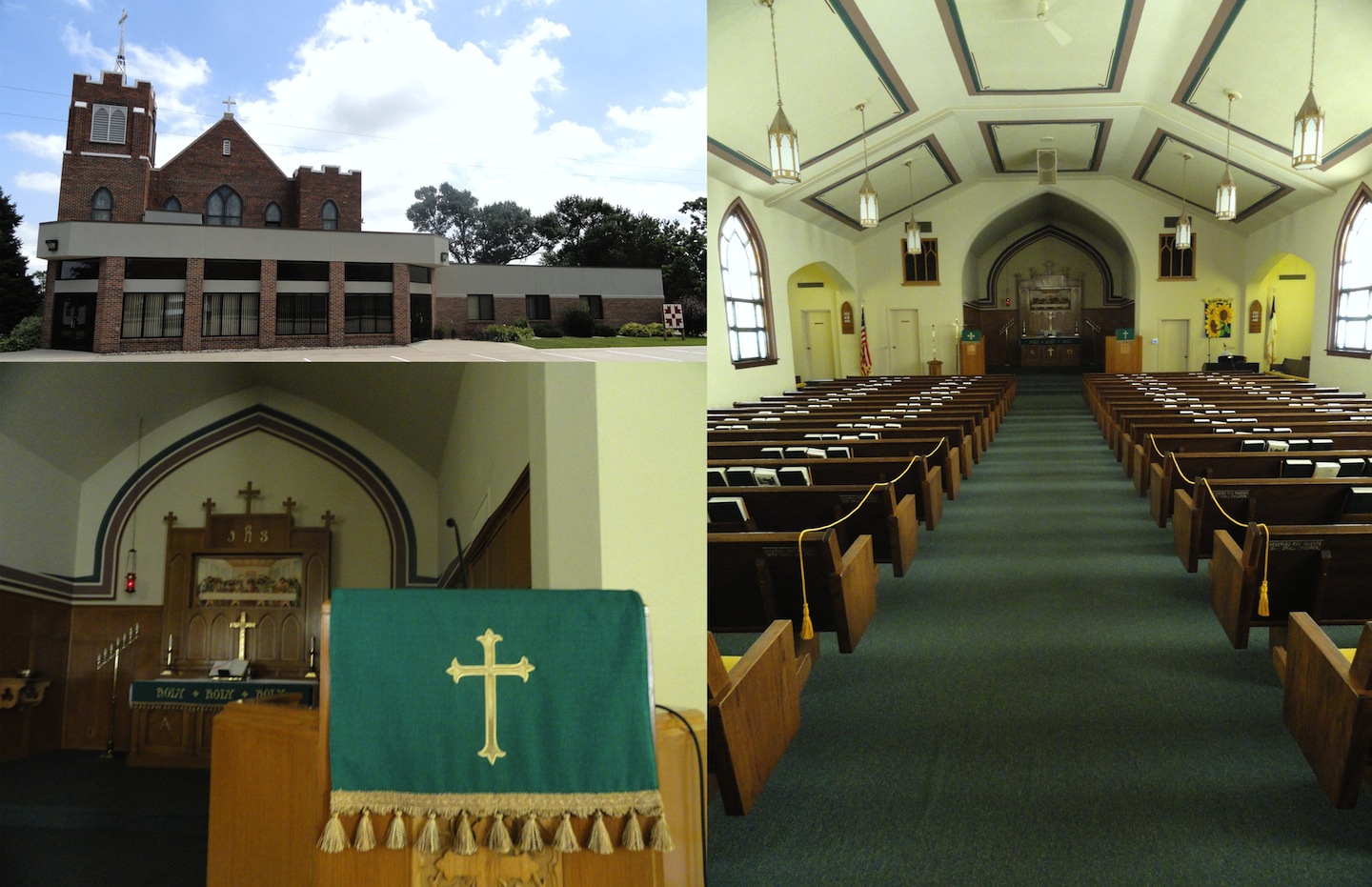
11880528_1059250310766591_6314628572254871134_nGrace Lutheran Church
Saturday 8/15/15, Sunday 8/16/15

John 6:51-58
Ephesians 5:15-20
Psalm 34:9-14
Proverbs 9:1-6

I had to kind of chuckle a little bit when I read through the texts for today. You all lovingly sent me away to seminary so that I could gain some of the wisdom talked about in the lectionary for today. Now I feel like God has called me home to give you a report on how all that wisdom-acquiring is going!

Well, I have been learning a lot. This past summer in particular has been very formative for me. I just finished eleven weeks of CPE – Clinical Pastoral Education. Basically, I interned as a hospital chaplain on the north side of Chicago. I spent a lot of time sitting at the bedsides of cancer patients and palliative care patients and patients entering hospice care. I listened to their stories and their struggles and their fears about dying. I also had several opportunities to provide them with the sacrament of Holy Communion.

Remembering these experiences, it’s very poignant for me to read Jesus’ words about living bread in today’s gospel reading – “This is the bread that came down from heaven, not like that which your ancestors ate, and they died. But the one who eats this bread will live forever.” In the context of the hospital, the “living bread” of the Eucharist was very often juxtaposed with death and dying. In fact, many of the patients to whom I fed the Eucharist have since died. Jesus himself spoke these words about living bread on the eve of his own death. It makes me wonder a lot about this life that Jesus has promised and about this living bread that he tells us to eat. Continue reading “My seventh sermon: You Are What You Eat”

My sixth sermon: Embarrassing Love

April 17, 2014
Maundy Thursday
Exodus 12:1-14
• (Psalm 116:1-2, 12-19)
1 Corinthians 11:23-26
John 13:1-17, 31b-35
Grace Lutheran Church, Lincoln

photo 2

Lord, are you going to wash my feet?”  We hear Peter’s question in this story and realize that he was pretty uncomfortable with what was happening — and he’s probably not the only one.  The disciples are all settled in for this Passover meal together — or pre-Passover meal, depending on which Gospel-writer you ask (more on that later) — when Jesus suddenly gets up from the table and does this thing absolutely none of them expects.  He kneels before each of them in turn with a basin of water and a towel and gently washes their feet.  For the society of the time, this is a scandalously out-of-place thing for Jesus to be doing — performing the work of a lowly slave.  And the disciples are kind of embarrassed by it.  Maybe some of you have experienced something like this for yourselves, if you’ve ever been to a church with a tradition of washing adults’ feet as well as children’s feet on Maundy Thursday.  It is a little uncomfortable.  It’s not what we come to church expecting to do, and it’s certainly not what the disciples expected from Jesus.  He is their Lord and Teacher, the long-awaited Messiah — he shouldn’t be on his knees washing their feet!  If anything, they should be washing his!  This is not at all how it’s supposed to go in Peter’s mind, and he is having none of it.  He declares, “You will never wash my feet.”   Continue reading “My sixth sermon: Embarrassing Love”

My fifth sermon (ish): Do. Love. Walk.

January 19, 2014
Middle School Gathering closing
Micah 6:8

All this weekend, you’ve all been getting to know each other and getting to do some really great stuff.  I heard about some of the service projects you did yesterday and about some of the really neat people you’ve gotten to talk to.  I hope it’s been a wonderful, and maybe eye-opening experience for all of you.

The theme of this weekend has centered around the verse Micah 6:8 and has been about exploring what it means to do justice, to love kindness, and to walk humbly with God.  This is really important stuff!  And the reason why we focus on it isn’t just that we all want to be nice people — it’s more than that.  These are the things that make us who we really are — they’re the things that set us apart as children of God. Continue reading “My fifth sermon (ish): Do. Love. Walk.”

My fourth sermon: Picking up Stitches

November 27, 2013
Thanksgiving Eve service
• Deuteronomy 26:1-11
• Psalm 100
• Philippians 4:4-9
• John 6:25-35
Grace Lutheran Church, Lincoln

Do you remember how awesome Thanksgiving was when you were a kid?  Well, I don’t know how it was for you, but for me, it was one of those days of the year when I got to stay home from school and tear around my grandparents’ house with my cousins and stuff myself silly with mashed potatoes and at least three kinds of dessert.  At school, we made hand-turkeys and learned the story of the “first” Thanksgiving — the legendary 17th century feast shared by pilgrims and native Americans.  The way we celebrated made life seem altogether wonderful, especially with the prospect of Christmas just around the corner.

As I’ve gotten older, I’ve noticed that, for me, the charm of the holiday has faded a little.  Don’t get me wrong, I still look forward to green bean casserole, pumpkin pie, and time with family — not necessarily in that order — but find I myself really turned off by certain aspects of the holiday.  For starters, there’s the mass consumerism that seems to have invaded every aspect of the whole holiday season.  It feels almost like Thanksgiving Day has been reduced to being Black Friday Eve, a superficial holiday wedged somewhere in between Halloween and Christmas.  It’s also hard to be comfortable spending a whole day feasting, surrounded by people I love, when I know that so many people will go hungry today and so many are lonely, or separated from the people they love.  Even the blessing of a day with family can bring its own tensions — for many people, the pressure of keeping up with tradition and expectation can really get in the way of just enjoying the day, let alone feeling gratitude.  And for those who have experienced the loss of loved ones, seeing those empty places around the table tends to make us think less about what we have and more about what we’ve lost.

These are all the things that swam into my head as I sat down to start writing this sermon — all my cynicism about the holiday season.  Then I read through the texts and Paul’s words from his letter to the Philippians leapt off of the page at me:  “Finally, beloved, whatever is true, whatever is honorable, whatever is just, whatever is pure, whatever is pleasing, whatever is commendable, if there is any excellence and if there is anything worthy of praise, think about these things.”  Oh.  Right.  Okay, Paul, fair enough — I suppose maybe I’m coming at this whole Thanksgiving thing from the wrong perspective. Continue reading “My fourth sermon: Picking up Stitches”

My third sermon: Kings in Unexpected Places

November 24, 2013
Christ the King Sunday
Luke 23:33-43
American Lutheran Church, Lincoln

Good morning!  As was mentioned earlier, I’m Day Hefner and I work for the Nebraska Synod office.  And I appreciate the opportunity to be here today to share a little bit with you about our work through Lutheran Metropolitan Ministries in Omaha.  To be honest, I’m a little new at this whole preaching thing — actually, this is the third sermon I’ve ever preached!  (I hope you like it!)

I’m still sort of wading my way out into the deep end of Lutheran theology.  So when I first read the Gospel text for today, after learning I’d be preaching on “Christ the King” or the “Reign of Christ” Sunday, I was a little perplexed.  I mean, yeah, it talks about Christ as a king, but it’s nothing like the image that a “king” brings to mind.  In this story, it’s a joke — a cruel mockery of the strong, conquering military leader that the Israelites had been hoping for.  This isn’t King Christ laying waste to enemies and reclaiming the promised land.  This isn’t Christ resurrected, victorious over the grave, laughing in the face of those who killed him.  This isn’t even Christ riding triumphantly into Jerusalem, knowing he’s going to be killed.  The image we’re given today of Christ the King is Christ crucified.  Christ weak, vulnerable, dying.  It’s heartbreaking.   Continue reading “My third sermon: Kings in Unexpected Places”

Daughter

Here is the fruit of my latest songwriting efforts:  “Daughter.”  It was inspired by a verse that I recently rediscovered, one that both haunted me and gave me hope during my transition from the Jehovah’s Witnesses to what ended up being a couple of mostly secular years:

“How long will you waver, O faithless daughter?  For the Lord has created a new thing on the earth…”  Jeremiah 31:22

It’s a verse that seems to fit all my wanderings in and out of organized religion, but it also seems timely given the conversations happening across the modern day church about the challenges it faces.  The verse preceding it even makes plain that the question is directed not at a single person, but to God’s people on earth:  “Return, O virgin Israel, return to these your cities.”

These are tough times for a model of organized religion that was built around a set of social assumptions that are no longer remotely accurate.  For those that cling to the outdated loveliness of this sinking ship, the future seems full of fear — emptying pews, mounting bills, and the looming end of church as we know it.  But we must learn to see through the fog of all these worries, and to see the church as God sees it — as the body of Christ, constantly being made new.  We are passing from one season to another and being renewed together — change is coming, whether we want it or not, but we have the choice to either shrink from it with fear and trepidation, or to seize it eagerly as a light of hope and a bright new chance to dive deep into God’s restorative work in the world.

Lyrics are below:

Continue reading “Daughter”

Wit and witness

I’ve been reading the book “Christianity After Religion” by Diana Butler-Bass — a book I highly recommend to anyone interested in religion or religious trends — and among the many things that have struck me so far is the following quote: “…some Christians are very comfortable defining themselves as adherents to a way of life modeled by Jesus rather than adherents to a particular doctrine or creed.”

It brings to my mind something I’ve alluded to previously but never really written about: my time with Jehovah’s Witnesses. I think it’s something I’m finally ready to start writing about. Despite the many, many issues I take with their theology, I think that there are many things about their religious community — and, more to the point, their way of life — really worth contemplating.

To give a brief bit of background, I encountered a group of JW missionaries during my years in the Dominican Republic. The small pueblo where I spent the first two years of my time there was home to a fledgling JW congregation being developed by a number of missionaries, mainly from the US and Canada, also England, Denmark, and perhaps another European country or two I’m forgetting now. Right off the bat, we found lots of common ground in our respective experience and worldviews and quickly became friends. I was already immersed in a personal study of the Bible and grew particularly close to two young women — one from Canada and another from England — who graciously offered to open their studies to me.

I was fascinated by the things they had to say and by the new perspectives they brought to the study of scripture. They encouraged me to consider scriptural passages and many of the basic ideas of faith I’d absorbed over the years in a very different light. The result was enlightening, unsettling, and even disturbing, and the questions the experience raised have taken me a long while to digest, but ultimately, I think that this sort of uprooting of my faith was beneficial to me, as it freed me to re-pot myself in much more fertile soil.

What most drew me to their community is something for which I still hold them in deep respect; namely, that they embodied precisely what Butler-Bass describes in the quote above: adherence to a way of life modeled by Jesus. (They are, of course, also adherents of a very strict set of doctrines and creeds, to a degree that becomes un-Jesus-like in its implementation. I wish to make clear that I am decidedly not a proponent of becoming a Jehovah’s Witness.) What I mean by this is that they take the Gospel very seriously. The message it contains of a new kingdom of love and salvation is one that — if allowed — must necessarily change the way we live and the way we see our place in the world. Continue reading “Wit and witness”

To be kind

three things

Inspired by Evi’s blog to do some images with quotes.

In the English conversation groups I facilitate throughout the week, I often have students draw questions out of a bowl in order to spark conversation and just have fun.  Everyone in the circle — including me — goes around and takes a turn to answer each question, which may be about their pets or their hobbies or about fun trips they took, and so on.  During one class, someone drew the question, “What is your philosophy of life?”  It certainly sparked a lively discussion, and while there were many interesting answers (some more profound than others), this was mine:  to always be kind.

My second sermon: The Harvest is Plentiful

Here’s the sermon I preached over the past weekend at my home congregation.  And because they have my amazing, techie-wizard dad running things, they regularly record their worship and post the sermons online.  So now anyone (who is not me) can enjoy listening to me putting on my pastor-voice and delivering my sermon this past weekend!  It’s based on the following two texts:  Luke 10:1-11, 16-20; and Galatians 6:1-16

The script is below for anyone who’d like to read along (or just read).  Also, if you’re interested, you can read my first sermon here. Continue reading “My second sermon: The Harvest is Plentiful”

History of the harvest

This past weekend was full of history — personal history — for me.  I went up and spent a few days in my hometown, Coleridge, in northeast Nebraska.  Saturday night was the all-class reunion they have periodically, and also my ten year high school reunion — it’s amazing to see how people change and where they end up.  It’s a blessing to me to look back and see the path my own life has taken since then.  How much has changed.

The other big reason I went home was actually to preach in my home church.  It was a little disconcerting at first to be standing on the other side of the pulpit I’ve been staring at for nearly three decades, addressing a congregation that’s known me since I was in diapers.  But it was thrilling, too, to be preaching in the very same church where my great-great-grandfather was pastor, and where generation after generation of my family has belonged since then.  Every time I set foot in that sanctuary, I feel the depth and richness of my own family history; and through it, I sense our connectedness to an even larger, older family — our Christian family through blood and faith.  Going home to Immanuel Lutheran always seems to ground me and helps me orient myself and find my place in the larger Christian story.

Even the text I preached on this weekend was a great reminder that the story is far from over.  We are still writing it, word by word, act by act.  In this weekend’s gospel reading, Jesus sent out the 70, commanding them to preach the good news of God’s kingdom come near, to pass along his peace and to heal the sick.  Jesus’s command doesn’t end with the 70 — he tells them, “the harvest is plentiful, but the laborers are few; therefore ask the Lord of the harvest to send out laborers into his harvest.”  We are the laborers.  When we go out in love, sharing the good things God has promised to us, we become part of this mission, this story, this history, too.

ILC pics

Why should I go to church?

I was sitting in the park knitting yesterday evening and having an imaginary conversation with a friend of mine.  I do this a lot, actually.  I’m not crazy or anything, but the conversations help me to sort of process my thoughts, and this conversation in particular is one I’ve more or less had — in reality — with a number of different people.

Anyhoo, this conversation was with a certain friend of mine — let’s call her… Cordelia?  Cordelia.  Like many of my friends and acquaintances, Cordelia isn’t a very religious person.  She may believe in something beyond the tangible world, but doesn’t necessarily buy into the organized religious aspect of spirituality.  In our conversation, she was a little uncomfortable and even semi-apologetic to me for this, knowing that I am very religious and somehow expecting that I would judge her or think less of her for not being “churched.”  I assured her that nothing could be further from the truth, and went on to observe that, in his letters, Paul lists faith among the different gifts of the Spirit, leaving open the suggestion that some (or many) people won’t have faith.  But we all have gifts and we are all moved by the same Spirit and I told Cordelia that I knew she had wonderful gifts, gifts I have personally seen her share with others to teach and nurture them and help them grow.  I told her that I believed that God created all of us and loves all of us no matter what we believe, and that nothing could be more pleasing to God than that God’s gifts be used for the good of others.  Then she asked me a question I didn’t know how to answer.  “Why should I go to church, then?”  Well… why should she go to church? Continue reading “Why should I go to church?”

If Captain Planet wrote praise songs…

They might sound kind of like the one I just wrote.  Haha.  All through the Easter season, there’s been one piece of the communion liturgy at church that really stirs me up whenever I hear it:

“O God, you are Breath: send your Spirit on this meal. O God, you are Bread: feed us with yourself. O God, you are Wine: warm our hearts and make us one. O God, you are Fire: transform us with hope. O God most majestic, O God most motherly, O God our strength and our song, you show us a vision of a tree of life with fruits for all and leaves that heal the nations. Grant us such life, the life of the Father to the Son, the life of the Spirit of our risen Savior, life in you, now and forever. Amen.”

I think it’s such beautiful and moving imagery.  It’s a great reminder to always be on the lookout for God in all things, to catch glimpses of God’s spirit as it moves through the world with an infectious and mischievous delight, stirring our hearts up to love.  Anyhoo, once again, I found myself on a test day in class with a pen and a scrap of paper and words that began to flow through my brain.  This is what came out.  I’ll be the first to admit that I’m not a great songwriter, but hope you enjoy it anyway.  The lyrics are also posted below.


Continue reading “If Captain Planet wrote praise songs…”

Fear? Not!

Alleluia!  Sing to Jesus; his the scepter, his the throne; Alleluia!  his the triumph, his the victory alone. Hark!  The songs of peaceful Zion thunder like a mighty flood: “Jesus out of every nation has redeemed us by his blood.”

This is the first and last verse of hymn #392 in the ELW (Evangelical Lutheran Worship), which we sang last night at the observation of Christ’s ascension into heaven.  I like hymns that use this convention of repetition; the text strikes you a certain way when you sing it the first time, then the two or three verses in between expand and explore the theme and give the text a greater depth when you repeat it in the final verse.  More than anything, though, with this particular hymn, I was captivated by the last line:  “Jesus out of every nation has redeemed us by his blood.”  What a beautifully inclusive vision!  It speaks of grace that transcends the artificial boundaries of nations, politics, denominations, etc.  We are all one to Christ.  We are all one in Christ.  This is our calling as a church. Even our Gospel reading for this Sunday, John 17:20-26, reflects this call to universal oneness and love:

“I ask not only on behalf of these, but also on behalf of those who will believe in me through their word, that they may all be one. As you, Father, are in me and I am in you, may they also be in us, so that the world may believe that you have sent me. The glory that you have given me I have given them, so that they may be one, as we are one, I in them and you in me, that they may become completely one, so that the world may know that you have sent me and have loved them even as you have loved me…”

Following worship last night, I hung around in the atrium for a little while and found myself reading the bios of our 11 new members, posted on the bulletin board.  I was gratified and a little taken by surprise to see that over half of them specifically mentioned our refugee resettlement project as something they wanted to be involved with.  In retrospect, I shouldn’t have been surprised at all, since I’ve been working with these folks on the refugee resettlement committee, but it had never dawned on me that the committee is made up of new members, attracted to Grace by our sense of mission. This, to me, is an example of the very best kind of evangelism — in truth, the only kind of evangelism — the spreading of good news about something you truly believe in.  It goes much deeper than just trying to convince people that they should come to your church.  It’s inviting people to be a part of something that really matters, inviting them into works that reflect Christ’s glory and victory, like in the words of the hymn.   Continue reading “Fear? Not!”

Prayer 101

This is one of a couple of forthcoming posts inspired by the conversations at the candidacy retreat last weekend — it’s been a good week of rumination and contemplation.  One comment that particularly sparked my interest was about prayer — the speaker (I think it was Bishop Maas) said that he’d never really been taught how to pray.  It made me pause and consider my own prayer life, how I learned to pray.  I remember reading prayers in the bulletin growing up and memorizing table and bedtime prayers and the Lord’s Prayer, and struggling to master the Apostle’s Creed.  But I don’t remember anyone sitting down with me and saying, “Okay, this is how you pray.”  It was just words.

It’s a question my confirmation students have been raising a lot in the past few weeks as we’ve been exploring the Lord’s Prayer: “How do you pray?”  It’s a good question to ask.  We always end our confirmation lessons with a prayer; however, aside from one very vocal student who, sadly, no longer attends confirmation, none of the students has ever voluntarily (and barely involuntarily) prayed at the end of class.  I asked them one day how they could be so outspoken with questions and discussion during class, but then instantly clam up when it came time to pray.  They replied honestly, “we don’t know how to pray.”

Well, how do you pray?  Continue reading “Prayer 101”

Getting grounded

“My heart overflows with noble words;
to the king I must speak the song I have made!”
Psalm 45:1

What an amazing, exciting, and wonderfully grace-filled few days it’s been!  I just got back from a candidacy retreat at my favorite place in the world — Camp Carol Joy Holling — and I can feel myself just bursting at the seams with gratitude and joy.

I got to meet many more members of the candidacy committee — the folks who walk alongside those who are considering a call to ministry and make the decision on whether they are a good fit for the role.  I also met several other candidates further along in the journey, most at various stages of seminary.  We heard several presentations around the inspiring theme of being “grounded in Grace,” talking about self-care and setting boundaries and sinking our roots deep into love.  And I found myself fascinated just listening to the conversations going on around the table!  To hear the ways that people talk about church and about evangelism and mission and stewardship and all of these different things was just totally enthralling to me. Continue reading “Getting grounded”

God, by any other name

How well do you know the Lord’s Prayer?  If you’ve found your way here, I’d be willing to bet you’ve at least heard it, if you don’t know it by heart:

Our Father in Heaven,
Hallowed be your name.
Your kingdom come;
Your will be done
On earth as it is in Heaven.
Give us today our daily bread
And forgive us our sins,
As we forgive those who sin against us.
Save us from the time of trial
And deliver us from evil.
For the kingdom, the power, and the glory are yours,
Now and forever.
Amen.

In the last few weeks, my confirmands and I have been exploring this prayer, taking it slowly, line by line, to see what Jesus was getting at when he told us to pray this way (Matthew 6:9-13; Luke 11:2-4).  This morning, we discussed the second line: “Hallowed be your name.”  Think about it for a minute.  What do we really mean when we say this?  Continue reading “God, by any other name”

Things That Matter x 2

One really exciting project that I have helped start through my church is a young adult faith discussion group in Lincoln’s Near South neighborhood, called Things That Matter.  We have a diverse group of folks that is by no means limited to church-goers, or even to Christians — our participants have included atheists, practicing Jews, spiritual-but-not-religious folks, Christians of many flavors, and others who wander in.  We meet every Sunday evening at 5:00 at the Meadowlark Cafe to talk about a variety of topics.  From our facebook page:

“Things That Matter” is an open forum for young adults to talk about just that — the things that matter — especially where these things intersect with faith and religious expression. All are welcome here, regardless of faith, background, gender, orientation, disorientation, or whether you’re an innie or an outie.  Bring your questions and your conversation!  Invite your friends!

As it turns out, we are not the only (or the first) “Things That Matter” floating around in the area.  “Things That Matter” is also the name of a podcast produced jointly by Nebraska Lutheran Campus Ministries and the Nebraska Synod of the ELCA.  When the other Things That Matter folks got wind of our group and its allegedly stolen name, they decided to investigate further by interviewing my pastor and me on the podcast.  You can listen to the result here.

Entrance essay for candidacy

I will be continuing to post some of the things I’ve already written; I hope to get around to creating new content for this blog.  What I’m posting here is the essay I had to write as part of the first step of candidacy — it outlines the major chapters of my “call story” and gives some insight into why I chose to begin this process in the first place.

Entrance Essay

“My brothers and sisters, whenever you face trials of any kind, consider it nothing but joy, because you know that the testing of your faith produces endurance; and let endurance have its full effect, so that you may be mature and complete, lacking in nothing.”  James 1:2-4

Faith has always been an integral part of my life, but my relationship with religion has been a little complicated.  Continue reading “Entrance essay for candidacy”

My first sermon: Believe and You Just Might See

April 6-7, 2013
John 20:19-31 — “Doubting” Thomas

Do you know how many stars are in our galaxy?  If I told you that there are 100s of billions of stars just in our galaxy alone, would you believe me?  You probably would, right? (And you should, because it’s true!)  What if I told you that for every person on earth, there are about 1.5 million ants?  Maybe a little sketchier, but I think you’d still believe me.  But, if I told you that there was wet paint on that wall over there, you’d all have to get up and go touch it to believe me.

It’s kind of a human trait — we want to see things for ourselves.  We can’t touch the stars or all of the trillions of ants on earth — and don’t have much of a stake in these things anyway — but wet paint is something we can see — and, more importantly, it’s something we can accidentally get all over our clothes — so if we can check that it’s there, we won’t be satisfied until we do.  We’re a lot like Thomas in that way, wanting to see for himself that Jesus really had come back from the dead.  Can you blame him?  The other 10 disciples had gotten to actually see Jesus, but here was Thomas, receiving this extraordinary news, and being asked to just accept it all at face value.  Without checking.  Without seeing.  I don’t know about you all, but I would be at least a little skeptical, too.

So why do we give Thomas such a hard time for having doubts? Continue reading “My first sermon: Believe and You Just Might See”

Blog at WordPress.com.

Up ↑