
Sunday, October 23, 2016
New Hope Lutheran Church, Aurora, IL
He also told this parable to some who trusted in themselves that they were righteous and regarded others with contempt: “Two men went up to the temple to pray, one a Pharisee and the other a tax collector. The Pharisee, standing by himself, was praying thus, ‘God, I thank you that I am not like other people: thieves, rogues, adulterers, or even like this tax collector. I fast twice a week; I give a tenth of all my income.’ But the tax collector, standing far off, would not even look up to heaven, but was beating his breast and saying, ‘God, be merciful to me, a sinner!’ I tell you, this man went down to his home justified rather than the other; for all who exalt themselves will be humbled, but all who humble themselves will be exalted.”
Luke 18:9-14
This week’s gospel text reads a little bit like a joke – a pharisee and a tax collector walk into a bar temple. But the punchline of this joke is deceptively tricky. Nowadays, we’re used to reading pharisees as hypocritical bigots and tax collectors as humbly repentant sinners; but the twist at the end of the story where the tax collector’s prayers are justified and the pharisee’s are not would have been more surprising to Jesus’ original hearers than it is to us. In contrast to the pharisee’s prayer thanking God that he is not like the tax collector, we know that the pharisee is the person that we are glad not to be like, right?
Ha! And there’s the punchline of the joke. It’s almost impossible to hear this story and not go away thinking something along the lines of, “God, I thank you that I am not like that pharisee!” As it turns out, we are every bit as judgmental as he is.
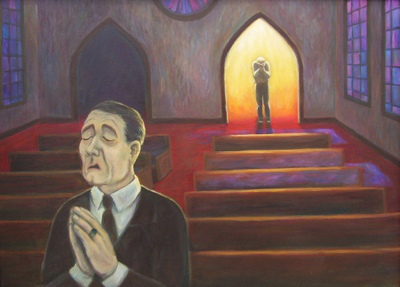
It’s a disturbingly easy trap to fall into, and Jesus knows it. It almost seems to be an inherent part of being human that we categorize people into “us” and “them” groups, deciding who is in and who is out. This election season – which will finally end in a little over two weeks – has shown us clearly the depth of division in our country. And that division also shows up in our churches, too – not just between rival denominations, but in and among our own congregations. In our churches, we single out “those people who don’t give enough money” or “those people who don’t take good enough care of the worship space” or “those people who sure don’t act very Christian outside of church” or “those people who hardly ever come to church at all.” We draw lines between ourselves and other groups of people without even thinking about it. But the problem with that – as Jesus illustrates in this story – is that God always ends up on the other side of that line.
Continue reading “Sermon: Faith in All the Wrong Places”


 Then Jesus told them a parable about their need to pray always and not to lose heart. He said, “In a certain city there was a judge who neither feared God nor had respect for people. In that city there was a widow who kept coming to him and saying, ‘Grant me justice against my opponent.’ For a while he refused; but later he said to himself, ‘Though I have no fear of God and no respect for anyone, yet because this widow keeps bothering me, I will grant her justice, so that she may not wear me out by continually coming.’” And the Lord said, “Listen to what the unjust judge says. And will not God grant justice to his chosen ones who cry to him day and night? Will he delay long in helping them? I tell you, he will quickly grant justice to them. And yet, when the Son of Man comes, will he find faith on earth?”



 I read a really beautiful story in the news this week. A six-year-old boy from New York named Alex
  The Syrian boy’s name was Omran Daqueesh, and many of you have probably seen


 Sunday, August 14, 2016








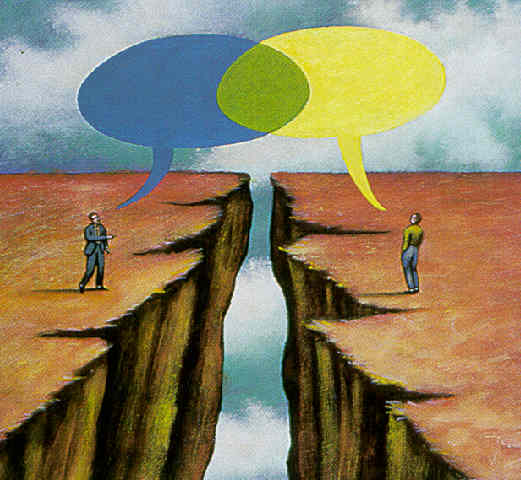
 It’s election year in America, and maybe you’re “feeling the Bern” or you want “change we can believe in” or maybe you just want to “make America great again.” On the other hand, maybe you’re already fed up with an election that sometimes feels more like a three ring circus. Wherever you may be with this election, I imagine that on some level, like me, you feel a sense of incompleteness about our political system. Our politics have become so polarized and dysfunctional that it often seems like politicians are more intent on beating one another than on meeting the needs of the people.



 This is the Day