New Bra

Sunday, January 24, 2021
St. John’s Lutheran Church, Schuyler, NE
Third Sunday after Epiphany
watch this service online (readings start around 12:03; sermon starts around 17:34)
Our gospel reading for today tells one of those old familiar stories that we know so well that we’ve kind of stopped noticing what an odd little story it actually is. Jesus is walking by the Sea of Galilee, where he comes across some people fishing – “for they were fishermen,” as Mark helpfully tells us. Jesus stops, looks at them, and simply says, “Hey, follow me, and I will make you fish for people.”
Now, you or I would probably have some follow up questions to an invitation like that – questions like: “Uhh, who are you?” and “What do you mean, ‘fish for people’?? Pretty sure I don’t have the right kind of bait for that,” and also “Where exactly are we going?”
But neither Simon and Andrew nor James and John ask any such questions. Mark writes: “Jesus said to them, ‘Follow me, and I will make you fish for people.’ And immediately they left their nets and followed him.” And there is no further conversation about it; they just go. Granted, part of this suddenness may just be due to the style of Mark’s gospel – Mark’s in a hurry to get the story out and doesn’t always worry a whole lot about going into detail. But even in the other gospel accounts of Jesus calling the first disciples, there’s still not much more of a back and forth than this. Jesus calls, and Simon, Andrew, James, and John leave everything behind – their boats, their nets, their livelihood, even James and John’s father Zebedee! They decide on the spot to become disciples of this guy who just came walking along and issued that simple invitation: Follow me.

Sunday, January 17, 2021
St. John’s Lutheran Church, Schuyler, NE
Second Sunday after Epiphany
watch this service online (readings start around 15:27; sermon starts around 24:49)
image source
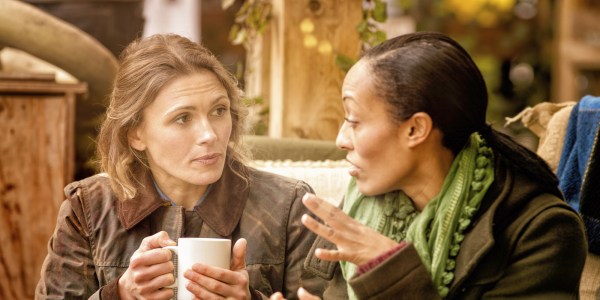
One of the most powerful acts of love I have ever received did not feel like love at all while it was happening to me. It came in the form of a very difficult conversation that a friend had with me during my first year of college. This friend was another student in the music department who was a few years older than me, and she warned me that I was starting to develop a reputation for being kind of arrogant and full of myself.
I had come to college out of a very small, K-12 school – there were only 17 kids in my graduating class! And being good at music was a big part of my identity – it was my thing (not only did I win the senior musician award my senior year, I was the only person who was even eligible for it that year, lol). I was kind of used to being hot stuff, the lead singer on things. But when I got to college, even though it was a relatively small university, I was suddenly surrounded by lots of people who were the best singers from their schools – and they came from schools that were a lot bigger and better funded than mine.
It was extremely intimidating. And I think I developed that sense of arrogance and pridefulness as a kind of defense mechanism, to hide that underneath it there was this profound insecurity and a loss of a sense of identity. And so I didn’t want to believe what my friend was saying to me at first – how could I possibly be coming across as arrogant when that wasn’t at all how I felt on the inside? But she repeated back to me some of the things she had heard me say, and I heard my own pridefulness come through those words loud and clear. It was a painfully humbling experience.
And as hard as it was for me to hear what she had to say to me, I can’t imagine how hard it must have been for her to say it. It’s one thing to call out someone you don’t like for their poor behavior – but to call out someone you care about for the way they’re behaving is much, much harder. And my friend did it for my benefit, pointing out that my defensiveness and ego were pushing people away and making it hard for me to make more friends in the department. That hard conversation helped me let down my walls a little bit and connect more deeply and authentically with other people, many of whom I’m still friends with to this day. And it was humbling to realize after the fact that she chose to be so brutally honest with me because she cared enough about her friendship with me to say the hard thing. I’m grateful for the courage and care she showed in telling me the truth.
Sunday, January 10, 2021
St. John’s Lutheran Church, Schuyler, NE
Baptism of Our Lord
watch this service online (readings start around 13:43; sermon starts around 20:00)
image source
Even though there was a lot of disappointment for many of us this past holiday season, for me there was at least one really exciting thing that happened. And that’s that I became a godparent for the first time! No one had ever asked me to be a godparent before and I’m really excited about it!
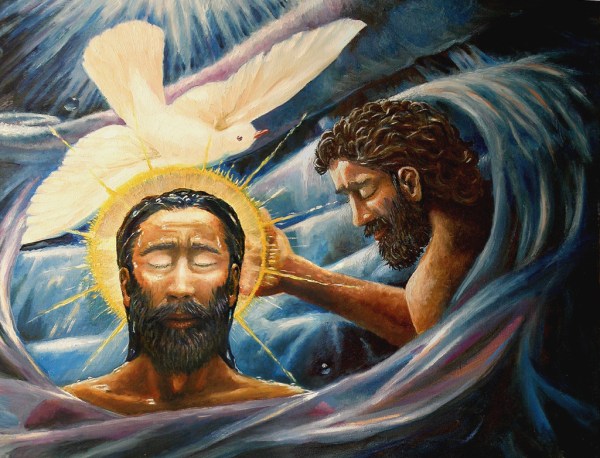
I’m sure many of you remember our friends Pastor Allison and Deacon Timothy Siburg and their little daughter Caroline. Well, Caroline became a big sister back in October when little baby Cora came into the world – she was actually born on Reformation Sunday (a very Lutheran baby!). And on Christmas Day, baby Cora was baptized into the body of Christ at Salem Lutheran Church in Fontanelle.

I wasn’t able to be there in person, unfortunately, but I participated in worship over Facebook Live. I got to witness the baptism and I made the promises that sponsors are called to make: to nurture the newly baptized in their faith and to help them live into the covenant of baptism and in communion with the church. With all the assembly gathered there in person and online, I renounced the powers of sin and evil that draw us away from God; I confessed my belief through the words of the Creed. And after the presider (my friend Heidi) poured water over little Cora’s head, baptizing her in the name of the Father and of the Son and of the Holy Spirit, we got to my favorite part of the baptismal rite. Pastor Heidi made the sign of the cross on Cora’s forehead and said to her: “Cora, precious child of God, you have been sealed by the Holy Spirit and marked with the cross of Christ forever.”
Continue reading “Sermon: Sealed for More than Freshness”
Sunday worship, January 3, 2021
Second Sunday after Christmas / Epiphany Sunday
Service of Lessons and Carols
Watch this service below. You can also follow along in the digital bulletin.
Continue reading “Service of Lessons and Carols”
A poem for New Year’s Eve 2020.
Continue reading “Twilight of the Year”
In case you’re looking for a place to worship this Christmas Eve, I’d like to extend to you an invitation to worship with us! Some clergy friends and I got together to record a service at a church in the area and we’d love for you to join us. There will be music and scripture and candlelight and — God willing — a bit of sacred space to encounter anew the wonder of the incarnation.
The video premieres here on our public Facebook page at 6pm Central on December 24, 2020 (no need to have an account to be able to watch it).
And you can follow along with the digital bulletin here on our website.
Merry Christmas to you! And blessings to you and yours this holiday season.

The Longest Night service — along with the similar “Blue Christmas” service — is a tradition in the church that seems especially relevant this year. It’s a service traditionally held on the winter solstice — the shortest day and longest night of the year — to recognize that the holidays are not a joyful time for everyone, to make space for the feelings of grief and loneliness and longing we may be carrying, and to proclaim that Christ is every bit as present in the darkness as in the light and celebration.
There are probably many more slickly produced versions of this service available online, especially this year. But here’s my humble offering — a simple little service of song, scripture, and poetry at sunset in my backyard with some candles and a smoky little fire. May it be a moment of peace and blessing for those who could use it.
Continue reading “Longest Night”
Sunday worship, December 20, 2020
Fourth Sunday of Advent
Watch this service below. You can also follow along in the digital bulletin.
Continue reading “Fourth Sunday of Advent”
Sunday, December 13, 2020
St. John’s Lutheran Church, Schuyler, NE
Third Sunday of Advent
watch this service online (readings start around 18:50; sermon starts around 25:35)
image source
Today is the Third Sunday of Advent, a day in the church year that is traditionally known as “Gaudete Sunday” or the Sunday of Joy. And no matter how you might actually be feeling as you come to worship this morning (or whenever you’re watching/reading this!), I think it’s important for us to spend some time lifting up joy this Advent season.
This has been a long and difficult and, for some of us, a deeply painful year; and it’s culminated in a holiday season full of disappointments and a rising death toll. But focusing on joy doesn’t mean we have to paste on a fake smile and try to pretend these things haven’t been happening. Real joy is actually something much deeper. Catholic theologian and author Henri Nouwen describes it well; he writes:
Continue reading “Sermon: Joy and Surprise”Joy is the experience of knowing that you are unconditionally loved and that nothing — sickness, failure, emotional distress, oppression, war, or even death — can take that love away. Joy is not the same as happiness. We can be unhappy about many things, but joy can still be there because it comes from the knowledge of God’s love for us.
Henri Nouwen
Sunday, December 6, 2020
St. John’s Lutheran Church, Schuyler, NE
Second Sunday of Advent
watch this service online (readings start around 16:58; sermon starts around 23:54)
image source
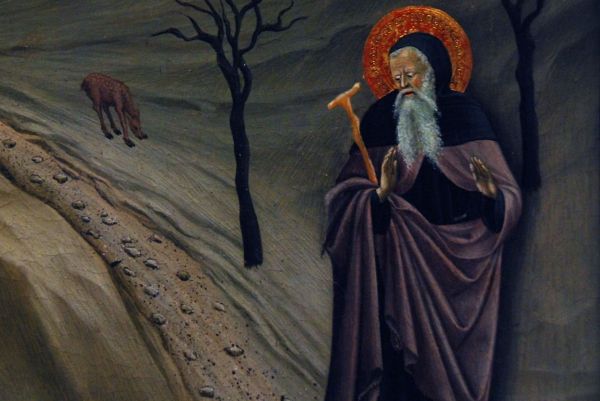
One of the most surprising and engaging classes I got to take while I was in seminary was a course called Desert Discipleship. In this class, we spent time studying the lives and teachings of the ancient desert fathers and mothers who lived in the deserts of northern Africa and the Middle East. These were followers of Christ from some of the earliest centuries of Christianity. They were ordinary people whose deep faith led them to live in extraordinary ways.
One of the first and most famous of these people was Anthony the Great, whose life became an inspiration and example that many others chose to follow. Anthony was born into a wealthy family in Egypt. But instead of carrying on his family’s wealthy lifestyle, Anthony decided to follow the advice that Jesus gives to the young rich man in the gospels: he sold everything that he had and he gave all the money away to the poor.
Anthony then went out into the wilderness, out into the deserts of Egypt, to take up a simple, ascetic lifestyle. He fasted and prayed and wrestled with temptation and spent his every waking moment focused on Christ. It’s probably pretty hard for any of us to imagine doing something like that with our own lives! And even for other people living at the time, Anthony’s way of life in the desert was strange, to say the least.
It gets even stranger the longer you look at the place and the context where Anthony lived. If you look at satellite imagery of Egypt, to this day, you can instantly spot where the “wilderness” is. There’s one narrow green ribbon that runs the length of Egypt – the Nile River, flowing from south to north. But everywhere else – something like 90% of the country – is inhospitable desert. In class, we looked at photos of the desert and of the cities all along the river, with their green crops and irrigation systems. Even up close, you can see a clear line between where that cultivated green strip ends and the desert begins.

Sunday, November 29, 2020
St. John’s Lutheran Church, Schuyler, NE
First Sunday of Advent
watch this service online (readings start around 19:45; sermon starts around 26:57)
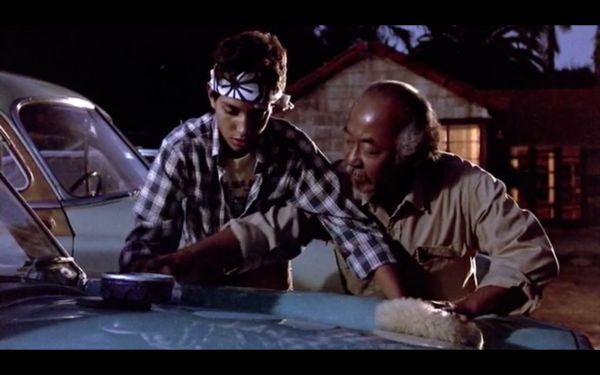
In the classic 80s movie The Karate Kid, a teenager named Daniel LaRusso moves to a new city with his mom, where he meets a local handyman: Mr. Miyagi. Mr. Miyagi saves Daniel from getting the snot beaten out of him by a local gang of karate-loving teenagers. Daniel watches as Miyagi single-handedly defeats the entire gang with ease, and afterward he begs Mr. Miyagi to teach him karate so he can defend himself against the bullies.
After some initial reluctance, Mr. Miyagi agrees to teach Daniel. Daniel shows up at Miyagi’s place, ready and raring to learn some kick-butt karate moves. But he’s completely taken aback when the first thing Miyagi does instead is hand him a sponge and point him toward a dusty car. Daniel spends several days doing chores around Miyagi’s place: Miyagi has him wash and wax his cars; he has him paint a fence, sand a floor, and even paint his house.
By the end of the fourth day, Daniel is understandably fed up with this so-called “training.” He feels like Mr. Miyagi has just tricked him into doing a bunch of household chores for him instead of teaching him anything. So Daniel angrily tells Miyagi that he’s done. But before he can storm off, Miyagi calls him back. And in one of the most famous scenes of the movie, Miyagi asks Daniel to show him the motions of the chores he’s been doing: “Show me wax on” “Show me wax off” “Show me sand the floor” “Show me paint the fence” Miyagi then unleashes a flurry of punches and kicks at Daniel, and he blocks every single one with these repetitive moves that he has learned.
By having Daniel repeat these motions over and over again in the chores he assigned him, Miyagi actually teaches him how to do these defensive moves he needs – through the power of muscle memory.
Muscle memory is one of the most fascinating pieces of how we learn. As humans, both our bodies and our brains are very trainable – the more we repeat a thought or an action, the more it becomes ingrained and instinctual. Muscle memory is how you learn to play a musical instrument or dance or play a sport really well. It’s how you know how to do everyday things like tie your shoes or drive a car or make your favorite recipe. You do it over and over and over again until you can do it without consciously thinking about it – until it becomes part of who you are. That way, when you see an untied shoe or a G Major 7th chord or an elderly Japanese man who’s trying to punch you, you don’t have to think about your response; you act on whatever your muscle memory has learned to do.

Wednesday, November 25, 2020
Thanksgiving Eve
Watch this service below.
Continue reading “Thanksgiving Eve Service”
While they were there, the time came for her to deliver her child. And she gave birth to her firstborn son and wrapped him in bands of cloth, and laid him in a manger, because there was no place for them in the inn.
Luke 2:6-7
Every year, I see the bright, sparkling lights and beautiful decorations starting to appear around this time; Christmas-themed variants of popular candies start chasing Halloween-themed candies off of store shelves; holiday movies start appearing by the dozens on Netflix; and it seems I hear the strains of Christmas carols just about everywhere I go. This year especially, after such a long, dark, difficult year, it seems like folks started bringing out their holiday trappings even earlier than usual – small wonder, with so many of us stuck at home! And while I am still – and will probably always be – a staunch defender of the season of Advent, I’m also feeling the desire for a little extra festivity this year myself. I think it’s important this year to celebrate (safely!) in the ways we can, to distract ourselves and take a break from carrying all the stress we’ve been carrying, if only for a little while.
Yet there is deeper goodness to be found beyond these things. Every year, in the midst of all the nice, shiny, pretty holiday things we love, we also read this story from Luke 2 – a story which, despite being depicted in countless adorable Christmas pageants, is actually not very nice or shiny or pretty at all. More likely, it was dark and dirty and loud and crowded and confusing. Back in Luke 1, Mary received an angelic visit, announcing that she will give birth to the savior of all humankind; she celebrates with her cousin Elizabeth, who is also expecting an angel-announced miracle baby; Mary and Zechariah both have musical numbers; it’s all very exciting.
But in Luke 2, Mary and Joseph are abruptly forced to make a 90 mile journey from their home on foot while Mary is in her ninth month of pregnancy, about ready to pop, and she ends up giving birth in a strange city while more than likely holed up in a crowded house with her in-laws and all their animals. It’s impossible to know what Mary had planned or envisioned it would look like giving birth to the savior of all humankind, but I’m guessing that this was not it.

Sunday, November 22, 2020
St. John’s Lutheran Church, Schuyler, NE
Reign of Christ
watch this service online (readings start around 15:48; sermon starts around 23:38; fair warning: our mic system has been on the fritz and the sound is pretty crappy)
(Full disclosure: this sermon is an adaptation of one I preached while on internship)
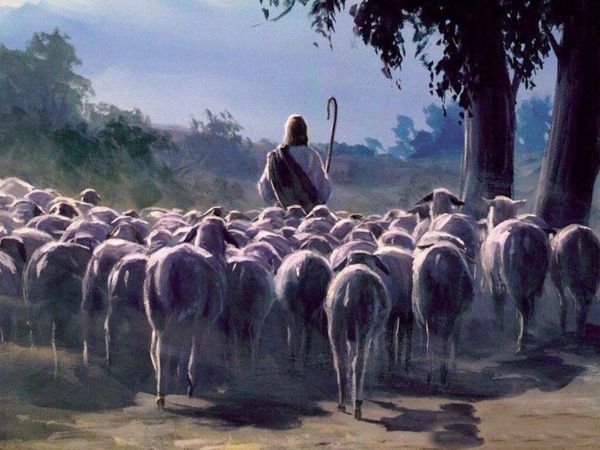
There is a LOT going on in in our texts for this morning, and some of it can be a bit difficult to process. Today is Reign of Christ Sunday, and fittingly, we have these lovely images of God as the compassionate shepherd looking after the flock, of Christ as a king who cares for the “least of these.” This is the kind of ruler that I think most of us imagine God to be. But then alongside these images, we also read all this other harsh language that’s full of judgment and destruction.
The contrast is especially sharp in our gospel reading. This passage from Matthew is the only detailed account of the last judgment to be found anywhere in the New Testament – but even so, it’s definitely left an impression on the popular Christian imagination.
I can imagine that many of you, like me, grew up in religious households where you were raised with the fear of hell. As a kid, I remember being frightened with the idea of eternal torment, and I can remember seeing images of the last judgment, of sheep and goats going off to either side of the throne. I suppose it’s an image that people kind of glom onto because it seems very tidy and clear and black and white, even if it is horrible. And it allows us to think of God’s reign in more human terms, in ways that we can wrap our heads around.
In one sense, it’s kind of appealing, isn’t it? It’s satisfying to imagine God telling off all the people who have wronged us, casting them into eternal fire where they’ll get what they deserve and we won’t have to deal with them anymore. Especially in the aftermath of such a brutally divisive election, when we have all been left with hurt and anger and a deeply polarized nation, these feelings of emnity and antagonism are running strong. And I fully admit these feelings in my own self – if I’m being honest with myself, I can certainly think of a few goats that I’d personally like to see get barbecued. I’d be willing to bet you can too.
Sunday, November 15, 2020
St. John’s Lutheran Church, Schuyler, NE
Twenty-Fourth Sunday after Pentecost
watch this service online (readings start around 16:24; sermon starts around 25:08)
image source
I was thankful to get to take a little bit of time off last Sunday and during the week leading up to it. I really needed to just get away for a bit and recharge. And one of the ways I ended up recharging was by attending a retreat all last weekend up at the St. Benedict Center. It was a retreat centered on a practice called “BioSpiritual Focusing.” And I hadn’t planned to preach about it this weekend – but then I read these texts, and even as somewhat harsh as they are, they are rich with all these themes of waiting and of being awake and attentive, and it really started to resonate with what I experienced at this retreat.
You’re probably wondering: “Biospiritual focusing – what the heck is that??” And that was actually my initial reaction too, when I saw it advertised in St. Ben’s newsletter. But then I read the description and realized that it was actually something I was exposed to a little bit in seminary.
Broadly speaking, the idea of biospiritual focusing is that there is wisdom held in our bodies. As western people of faith – especially as Lutherans – we have a tendency to be theologians only from the neck up, as they say. For us, faith is usually more about what we believe than about how we live it out. But Christianity is actually deeply incarnational; it’s a deeply embodied religion. Especially around this time of year, as we draw closer to Advent and Christmas, it’s all about celebrating God in the flesh. So the purpose of biospiritual focusing is to help us to experience God in our flesh, in our own bodies.
The focusing practice itself is actually pretty simple. It starts by allowing yourself to grow quiet, inside and out – closing your eyes, if it helps. Then you work on noticing whatever sensations you might experiencing in your body – pain or tightness, or whatever – and ask yourself, “What is taking up space inside of me right now?” What feelings or pains or sensations are most prominent in my body right now? You identify whichever one of these feelings is strongest and then you, well, focus on it. Without trying to analyze it or to make sense of it or to make it go away, you just sit with that feeling and let yourself feel it fully. And eventually, you invite this feeling – or sensation or pain or whatever – to tell you more. You let it connect to memories or images or other feelings and embrace whatever comes. And at the end, you sit with your body as a loving presence and give thanks for whatever it has revealed to you.





 This is the Day

