Sermón: Renunciando el renunciar

ash_weds_cross-1“Domingo de Ceniza” / “Ash Sunday”
5 Marzo, 2017 / March 5, 2017
First Lutheran Church of Logan Square

Mateo 6:1-6, 16-21
Matthew 6:1-6, 16-21

Hoy, empezamos el tiempo de la Cuaresma por observar el Miércoles de Ceniza – o en este caso, el Domingo de Ceniza. La Cuaresma es un tiempo de arrepentimiento, en que renovamos nuestra devoción a la vida de fe. Pero para muchas personas, este tiempo se ha convertido en un tiempo de abnegación solamente. Ha vuelto a ser un tiempo de castigarnos a nosotros mismos y de sentirnos culpables por fallar en vivir vidas perfectas. Igual que los “hipócritas” en nuestro evangelio para hoy, muchos de nosotros pasamos la Cuaresma orando y ayunando – tal vez renunciamos al azúcar o chocolate o a otras cosas que nos gustan. Pero a veces puede ser fácil perder la razón *porque* hacemos estas cosas.

Tal vez ustedes no. Pero yo sé que para mi, ha sido difícil. Por muchos años, mi práctica cuaresmal ha sido renunciar algún tipo de comida. He renunciado al azúcar y al soda y carbohídratos. El año pasado, para la Cuaresma, comí sólo verduras crudas y nada más. Fue muy poco saludable. Y siendo honesta, lo que quería hacer en realidad era continuar mi resolución del Año Nuevo de bajar de peso.

Aunque intentaba convencerme a mi misma que lo hacía para Dios, la verdad es que lo hacía para mi y para quedar bien con los demás. Como los hipócritas en nuestro texto, me preocupaba más por lo que pensaban los demás que por lo que pensaba Dios. Para mi, la Cuaresma no era un tiempo de arrepentirme y volver a Dios, sino un tiempo de castigarme. Continue reading “Sermón: Renunciando el renunciar”

Sermon: Breaking the Cycle

ash_cross(Early) Sermon for Ash Wednesday
February 22, 2017
“Sermon Design and Delivery” course
LSTC

Matthew 6:1-6, 16-21
“Beware of practicing your righteousness before others in order to be seen by them; for then you have no reward from your Father in heaven.

“So whenever you give alms, do not sound a trumpet before you, as the hypocrites do in the synagogues and in the streets, so that they may be praised by others. Truly I tell you, they have received their reward. But when you give alms, do not let your left hand know what your right hand is doing, so that your alms may be done in secret; and your Father who sees in secret will reward you.

“And whenever you pray, do not be like the hypocrites; for they love to stand and pray in the synagogues and at the street corners, so that they may be seen by others. Truly I tell you, they have received their reward. But whenever you pray, go into your room and shut the door and pray to your Father who is in secret; and your Father who sees in secret will reward you.

“And whenever you fast, do not look gloomy, like the hypocrites, for they disfigure their faces so as to show others that they are fasting. Truly I tell you, they have received their reward. But when you fast, annoint your head and wash your face, so that your fasting may be seen not by others but by your Father who is in secret; and your Father who sees in secret will reward you.

“Do not store up for yourselves treasures on earth, where moth and rust destroy and where thieves break in and steal; but store up for yourselves treasures in heaven, where neither moth nor rust consumes and where thieves do not break in and steal. For where your treasure is, there your heart will be also.

“Do not be like the hypocrites,” Jesus warns us in our gospel text for today. Unfortunately, it seems like there’s plenty of hypocrisy to go around these days – especially if you’re attuned to what’s happening in our country’s political discourse. Politicians and public figures claim to be pro-life, while adamantly supporting the death penalty and opposing gun regulation, despite tens of thousands of gun-related deaths annually. Others claim to be advocates for a quality public education system while proposing plans to dismantle the entire Department of Education. Still others are doing everything in their power to slam the door on refugees and other immigrants seeking safety and opportunity, while ignoring their own families’ personal – and recent – histories of immigration. Hypocrisy is the bread and butter of our world. Continue reading “Sermon: Breaking the Cycle”

Sermon: On Baptists and Prophets

Dr. Martin Luther King Jr. Day
Sunday, February 15, 2017
First Lutheran Church of Logan Square

1918-004-16347ac7johnthebaptistpreaching

John 1:29-42
The next day he saw Jesus coming toward him and declared, “Here is the Lamb of God who takes away the sin of the world! This is he of whom I said, ‘After me comes a man who ranks ahead of me because he was before me.’ I myself did not know him; but I came baptizing with water for this reason, that he might be revealed to Israel.” And John testified, “I saw the Spirit descending from heaven like a dove, and it remained on him. I myself did not know him, but the one who sent me to baptize with water said to me, ‘He on whom you see the Spirit descend and remain is the one who baptizes with the Holy Spirit.’ And I myself have seen and have testified that this is the Son of God.” The next day John again was standing with two of his disciples, and as he watched Jesus walk by, he exclaimed, “Look, here is the Lamb of God!”

The two disciples heard him say this, and they followed Jesus. When Jesus turned and saw them following, he said to them, “What are you looking for?” They said to him, “Rabbi” (which translated means Teacher), “where are you staying?” He said to them, “Come and see.” They came and saw where he was staying, and they remained with him that day. It was about four o’clock in the afternoon. One of the two who heard John speak and followed him was Andrew, Simon Peter’s brother. He first found his brother Simon and said to him, “We have found the Messiah” (which is translated Anointed). He brought Simon to Jesus, who looked at him and said, “You are Simon son of John. You are to be called Cephas” (which is translated Peter).

(I never finished translating this sermon, nor got to preach it, as I was quite sick for several weeks)

Today, we celebrate the legacy of a great leader and prophet – a visionary who led a movement that forever transformed his nation. His name was John the Baptist. Just kidding. We are, of course, talking about Dr. Martin Luther King Jr.

However, it does seem profoundly fitting that we should celebrate Dr. King’s life and legacy with a reading about the prophet John. In many ways, Dr. King was a prophet very much in the line of biblical prophets like John: Continue reading “Sermon: On Baptists and Prophets”

Sermon: Hope in the Dark

africa-baby-jesus-refugee-egyptPrimer domingo de Navidad /
First Sunday after Christmas
Domingo 1 enero, 2017 /
Sunday, January 1, 2017
Iglesia Luterana Nueva Esperanza /
New Hope Lutheran Church
Aurora, IL

Mateo 2:13-23 / Matthew 2:13-23

Merry Christmas! Today’s gospel reading seems a little jarring and out of place on the first Sunday of this joyous season of Christmas. After our celebration of angelic hosts and jubilant shepherds, this passage from Matthew feels like a rude awakening. It’s like Joseph, being woken up in the middle of the night by the angel of the Lord – “Get up! Get up, Joseph, and flee for your lives!”

When I first read this text, I immediately thought of the millions of refugee children out in the world right now. Some of them, like Jesus and his family, have been able to flee their countries, and then struggled to find a welcome in other, safer places. But many others are like the young children slaughtered by King Herod – victims of violence and poverty.Al-Azraq Refugee Camp Marks A year Of Housing Syrian Refugees

This text is a stark reminder that, no matter how bright and shining our Christmas celebration may be, the world is still full of darkness and tragedy. Civil war still rages on in places like Syria and South Sudan. Gang violence and corruption drive people north from Central America and Mexico, seeking safety. And even here, where we are relatively sheltered, homelessness and economic inequality abound, and disease, addiction, and death destroy the people we love. Continue reading “Sermon: Hope in the Dark”

Sermon: Signs of the Kingdom

john_the_baptist_in_prison_350Third Sunday of Advent /
Tercer Domingo de Adviento
December 11, 2016 /
11 de diciembre, 2016
First Lutheran Church of Logan Square

Matthew 11:2-11 / Mateo 11:2-11

In our Gospel reading for today, John asks Jesus a question that I find really surprising: “Are you the guy we’ve been waiting for, or should we keep waiting for someone else?” I mean, this is John. The. Baptist. If anyone knows who Jesus really is, shouldn’t it be this guy? You’d think that seeing the heavens cracked open and a dove descending on Jesus and then hearing the voice of God when he baptized Jesus would be pretty convincing proof that Jesus is the Messiah.

But John had hit some really hard times. I mean really hard. After a wildly successful prophetic career, he made the wrong people angry and wound up in prison. And prison in the days of the Roman Empire wasn’t quite like prison is now. Most Roman prison sentences ended one of two ways: with exile, or with execution.

Last week, we heard John’s fiery preaching from the banks of the Jordan; he declared that one was coming who would baptize with the Holy Spirit and with fire! This one would separate the wheat from the chaff and take an axe to the trees that no longer produced fruit! John was waiting for a powerful savior who would liberate his oppressed people. But when Jesus started his ministry, it wasn’t what John expected. There was no fire, no axes. There wasn’t even any wheat, except for the bread that Jesus kept breaking and sharing with everyone.

And so John wondered – “Has my whole ministry been in vain? Did I devote my life to the wrong thing?” Continue reading “Sermon: Signs of the Kingdom”

Grandes promesas: un sermón para el Día de los Santos Muertos de la Reforma-Halloween


img_5634
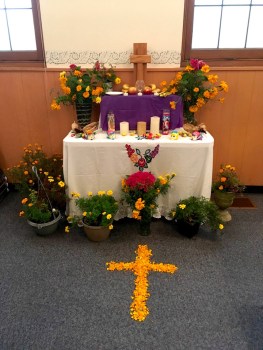
El altar para el Día de los Muertos en la iglesia luterana Nueva Esperanza

Domingo de Todos los Santos
(Según la predicadora)

Domingo de la Reformación
(Según el director de música)

Domingo 24 después de Pentecostés
(Según la secretaria/liturgista)

Domingo, 30 de octubre, 2016
(Según todos)

Iglesia Luterana Nueva Esperanza, Aurora, IL

Daniel 7:1-3, 15-18
Salmo 149
Efesios 1:11-23
Lucas 6:20-31

.

Las dos semanas que vienen están llenas de días muy importantes y emocionantes. Mañana, la iglesia Luterana celebrará el aniversario de la Reformación, en que Martín Lutero reformó la iglesia Catolica y creó la iglesia Luterana. El día siguiente, la iglesia global celebrará el Día de Todos los Santos, como observamos hoy, y el día después de eso, claro, celebraremos el Día de los Muertos. Además, en la semana que viene, habrá una elección histórica en la cual se decidirá quienes serán los líderes del país por los cuatro años que vienen. ¡Hay muchas cosas!

Pero hoy, me gustaría empezar mis reflecciónes con el día que tal vez menos esperaban: Halloween Continue reading “Grandes promesas: un sermón para el Día de los Santos Muertos de la Reforma-Halloween”

Promises, Promises: An All Saints of los Muertos Reformation-Ween Sermon

img_5634
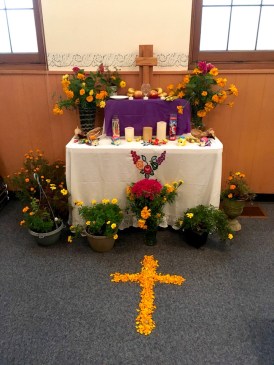
New Hope’s beautiful Day of the Dead altar

All Saints Sunday
(according to the preacher)

Reformation Sunday
(according to the music director)

24th Sunday after Pentecost
(according to the secretary/liturgist)

Sunday, October 30, 2016
(according to everyone)

New Hope Lutheran Church, Aurora, IL

Daniel 7:1-3, 15-18
Psalm 149
Ephesians 1:11-23
Luke 6:20-31

The next couple of weeks are packed with momentous and exciting events. Tomorrow, the Lutheran church marks the 499th anniversary of the Reformation. The day after that, the global church marks All Saint’s Day, and the day after that, we celebrate the Day of the Dead. And next week, our country will hold a historic presidential election in which we will decide our leaders for the next four years or more. There’s a lot going on!

But I’d actually like to start off today talking about an upcoming day you probably didn’t expect to hear about from the pulpit: Halloween. Continue reading “Promises, Promises: An All Saints of los Muertos Reformation-Ween Sermon”

Sermon: Faith in All the Wrong Places

Sunday, October 23, 2016
New Hope Lutheran Church, Aurora, IL

He also told this parable to some who trusted in themselves that they were righteous and regarded others with contempt: “Two men went up to the temple to pray, one a Pharisee and the other a tax collector. The Pharisee, standing by himself, was praying thus, ‘God, I thank you that I am not like other people: thieves, rogues, adulterers, or even like this tax collector. I fast twice a week; I give a tenth of all my income.’ But the tax collector, standing far off, would not even look up to heaven, but was beating his breast and saying, ‘God, be merciful to me, a sinner!’ I tell you, this man went down to his home justified rather than the other; for all who exalt themselves will be humbled, but all who humble themselves will be exalted.”

Luke 18:9-14

This week’s gospel text reads a little bit like a joke – a pharisee and a tax collector walk into a bar temple. But the punchline of this joke is deceptively tricky. Nowadays, we’re used to reading pharisees as hypocritical bigots and tax collectors as humbly repentant sinners; but the twist at the end of the story where the tax collector’s prayers are justified and the pharisee’s are not would have been more surprising to Jesus’ original hearers than it is to us. In contrast to the pharisee’s prayer thanking God that he is not like the tax collector, we know that the pharisee is the person that we are glad not to be like, right?

Ha! And there’s the punchline of the joke. It’s almost impossible to hear this story and not go away thinking something along the lines of, “God, I thank you that I am not like that pharisee!” As it turns out, we are every bit as judgmental as he is.

modern-phar-tc

It’s a disturbingly easy trap to fall into, and Jesus knows it. It almost seems to be an inherent part of being human that we categorize people into “us” and “them” groups, deciding who is in and who is out. This election season – which will finally end in a little over two weeks – has shown us clearly the depth of division in our country. And that division also shows up in our churches, too – not just between rival denominations, but in and among our own congregations. In our churches, we single out “those people who don’t give enough money” or “those people who don’t take good enough care of the worship space” or “those people who sure don’t act very Christian outside of church” or “those people who hardly ever come to church at all.” We draw lines between ourselves and other groups of people without even thinking about it. But the problem with that – as Jesus illustrates in this story – is that God always ends up on the other side of that line.

Continue reading “Sermon: Faith in All the Wrong Places”

Sermón: ¿Encontrará fe?

Domingo, 23 Octubre, 2016
Iglesia Luterana Nueva Esperanza, Aurora, ILthe-pharisee-and-the-tax-collector

Lucas 18:9-14
A algunos que, confiando en sí mismos, se creían justos y que despreciaban a los demás, Jesús les contó esta parábola: “Dos hombres subieron al templo a orar; uno era fariseo, y el otro, recaudador de impuestos. El fariseo se puso a orar consigo mismo: ‘Oh Dios, te doy gracias porque no soy como otros hombres —ladrones, malhechores, adúlteros— ni mucho menos como ese recaudador de impuestos. Ayuno dos veces a la semana y doy la décima parte de todo lo que recibo.’ En cambio, el recaudador de impuestos, que se había quedado a cierta distancia, ni siquiera se atrevía a alzar la vista al cielo, sino que se golpeaba el pecho y decía: ‘¡Oh Dios, ten compasión de mí, que soy pecador!’ Les digo que éste, y no aquél, volvió a su casa justificado ante Dios. Pues todo el que a sí mismo se enaltece será humillado, y el que se humilla será enaltecido.”

La lectura del evangelio para esta semana casi parece un chiste – un fariseo y un cobrador de impuestos entran en un bar… digo, un templo. Y es chistoso porque resulta que el fariseo es el que no se justifica, jajaja! Bueno, para nosotros, no es tan chistoso. Ya estamos acostumbrados a ver a los fariseos como hipócritas y a los cobradores de impuestos como pecadores arrepentidos. Pero en sus tiempos, los fariseos eran líderes respetados, conocidos por su sabiduría y su generosidad. Al contrario, los cobradores de impuestos – llamados “publicanos” – defraudaron a la comunidad para el benificio del imperio romano. Por lo tanto, el final de este cuento fue un giro inesperado para los oyentes originales de Cristo. Pero en nuestros tiempos, entendemos mejor este cuento y damos gracias nosotros que no somos como el fariseo, ¿verdad?

Ja! Y ahí está el chiste. Porque cada vez que leemos este cuento, pensamos entre nos, “Wow, gracias a Dios, que no soy como aquel fariseo!” Lamentablamente, parecemos todos al fariseo en nuestra tendencia a criticar y juzgar a los demás.

modern-phar-tcEs muy fácil caer en esta trampa, y Cristo se lo sabe. Por eso cuenta esta parábola. Casi parece una característica inevitable de ser humano: siempre queremos clasificar a los demás por grupos de “nosotros” y “ellos”; queremos decidir quien es acceptable y quien no. Durante esta elección – que, gracias a Dios, ya va a terminar en pocas semanas – hemos visto claramente las profundas divisiónes que existen en este país. Esa división también existe en nuestras iglesias, entre denominaciónes diferentes, y aún entre nuestras propias congregaciónes. En nuestras iglesias, nos quejamos de “aquellas personas que dan poco dinero” o “aquellas personas que no cuidan al santuario” o “aquellas personas que se comportan de una manera muy poca cristiana fuera de la iglesia” o “aquellas personas que casi nunca asisten a la misa.” Trazamos líneas entre nosotros, los buenos, y los demás casi sin pensarlo. Pero como Cristo demuestra en su cuento, el problema de hacer eso es que Dios casi siempre se queda al otro lado de la línea. Continue reading “Sermón: ¿Encontrará fe?”

Sermon: Resistance is Futile

Sunday, October 16, 2016
Zion Lutheran Church in Franklin, NE

Luke 18:1-8
persistent-widow-crooked-judgeThen Jesus told them a parable about their need to pray always and not to lose heart. He said, “In a certain city there was a judge who neither feared God nor had respect for people. In that city there was a widow who kept coming to him and saying, ‘Grant me justice against my opponent.’ For a while he refused; but later he said to himself, ‘Though I have no fear of God and no respect for anyone, yet because this widow keeps bothering me, I will grant her justice, so that she may not wear me out by continually coming.’” And the Lord said, “Listen to what the unjust judge says. And will not God grant justice to his chosen ones who cry to him day and night? Will he delay long in helping them? I tell you, he will quickly grant justice to them. And yet, when the Son of Man comes, will he find faith on earth?”


Good morning! Thank you all for the opportunity to be here with you this morning. It’s great to get to come back and preach in my home state of Nebraska.

My name is Day Hefner and I’m a seminarian at the Lutheran School of Theology in Chicago. I just started my third year of classes, and I’m looking forward to finishing up my seminary education on internship next year.

It’s been an interesting journey going through the candidacy process along with other seminarians in Chicago and Nebraska and all over. I’ve gotten the chance to hear many people tell their different stories of how they each ended up where they are, of how they decided to become candidates for ministry in the ELCA.

And even though each person’s story is unique and different, a lot of them tend to share one similar narrative, which is this: “You know, I’ve been feeling a call for years, and I’ve done my best to ignore it – but God is so darn persistent that, well, here I am.” Continue reading “Sermon: Resistance is Futile”

Sermon: Extreme Landscaping and the Divine Chore

Sunday, October 2, 2022
St. John’s Lutheran Church, Schuyler, NE
Seventeenth Sunday after Pentecost
watch this service online (readings start around 30:54; sermon starts around 37:00)

(Sunday, October 2, 2016)
(St. Andrew Lutheran Church, West Chicago)

Our gospel reading for this morning is really an odd little text. It starts off in a familiar way, with Jesus talking about faith the size of a mustard seed – but then it follows that part up with this kind of bizarre, uncomfortable little story about slavery. In fact, this whole little section of Luke – from the first verse of chapter 17 to the tenth – seems kind of randomly stuck together, like Luke didn’t know what else to do with all of these extra sayings of Jesus he’d collected, so he just sort of stuck them here.

This is one of those texts that takes a little time and a little digging to fully appreciate. And back in seminary, when I had a lot more time for that sort of thing, I went pretty in depth writing this sermon that I’m preaching today – so, fair warning: it’s about to get nerdy!

Continue reading “Sermon: Extreme Landscaping and the Divine Chore”

Sermón: Paisajismo extremo y el deber divino

Domingo, 2 de Octubre, 2016
Iglesia Luterana San Andrés, West Chicago

cropped-screen-shot-2013-02-27-at-4-44-57-pm2

Lucas 17:5-10

Entonces los apóstoles le dijeron al Señor: “¡Aumenta nuestra fe!”

“Si ustedes tienen una fe tan pequeña como un grano de mostaza,” les respondió el Señor,” podrían decirle a este árbol: ‘Desarráigate y plántate en el mar,’ y les obedecería.

“Supongamos que uno de ustedes tiene un esclavo que ha estado arando el campo o cuidando las ovejas. Cuando el esclavo regresa del campo, ¿acaso se le dice: ‘Ven en seguida a sentarte a la mesa’?  ¿No se le diría más bien: “Prepárame la comida y cámbiate de ropa para atenderme mientras yo ceno; después tú podrás cenar”?  ¿Acaso se le darían las gracias al esclavo por haber hecho lo que se le mandó?  Así también ustedes, cuando hayan hecho todo lo que se les ha mandado, deben decir: “Somos esclavos inútiles; no hemos hecho más que cumplir con nuestro deber.”

Hay un par de textos muy raros en nuestro evangelio para el día de hoy. El primero contiene un dicho muy conocido de Cristo – de tener una fe tan pequeña como un grano de mostaza – pero luego, Cristo lo sigue con una parábola bien rara que se trata de la esclavitud. De hecho, toda esta sección del evangelio de Lucas – desde el primer versículo del capítulo 17 hasta el décimo – parece un poco rara. Es como si Lucas se quedara con todos estos dichos de Cristo y no sabía que hacer con ellos, y entonces los puso todos juntos aquí en este capítulo y dijo “perfecto.” Nuestra lectura para hoy empieza en el quinto versículo, pero antes que eso, Jesús habla de todavía otros temas, de la importancia del perdón y de apoyarnos unos a otros en la fe en vez de hacer que los demás se tropiezen. Continue reading “Sermón: Paisajismo extremo y el deber divino”

Sermon: Minding the Gap

6a00d83451dccb69e200e54f7a24618834-800wiDomingo, 25 de Septiembre, 2016
Sunday, September 25, 2016
First Lutheran Church of Logan Square

Lucas 16:19-31: Lázaro y el rico
Luke 16:19-31: Lazarus and the rich man

Leí una historia muy bella en las noticias esta semana. Un niño de 6 años que se llama Alex escribió una carta a Presidente Obama, pidiéndole que buscara el niño sirio que vió en las noticias, para que viniera a Nueva York a ser su hermano.

screen-shot-2016-10-03-at-12-42-16-amI read a really beautiful story in the news this week. A six-year-old boy from New York named Alex wrote a letter to President Obama, asking him if the little Syrian boy he saw on the news could come be his brother and become part of his family.

El niño sirio se llamaba Omran Daqueesh; me imagino que muchos de ustedes han visto las fotos y video de él. Sobrevivió un bombardeo en Alepo, y su imagen ha vuelto a representar el sufrimiento en Siria.

gettyimages-591717242_custom-1a8d26cd3bddd5b0167e441ab8c156e2e0688413-s800-c85The Syrian boy’s name was Omran Daqueesh, and many of you have probably seen the photos and video of him – he survived an airstrike in Aleppo, and his image has become the face of the suffering in Syria.

En el video, se ve a Omran en una ambulancia, cubierto de polvo y sangre, con sus piececitos descalzos en la orilla de la silla, mientras se oye los gritos de los demás intentando rescatar a otras personas de los escombros.

In the video, Omran stares out of the back of an ambulance, covered in dust and blood, his tiny bare feet dangling just over the edge of the seat, while in the darkness around him, people are shouting to one another in Arabic as they scramble to rescue other people from the piles of rubble.

El video en que Alex lee su carta es muy diferente. Está sentado en la mesa, limpio y bien vestido, en una casa tranquila, llena de libros, jugetes, y fotos de familia. Su existencia está miles de millas lejos de la de Omran, y tan diferente como se pueda imaginar.

The video that shows Alex reading his letter is strikingly different. In it, he sits at a table, clean and neatly dressed, in a nice house that is quiet and filled with books, toys, and photos of family. His life is thousands of miles removed from Omran’s, and about as different from it as you could possibly get.

Por lo tanto, la reacción de Alex fue increíble cuando vió ese video. Cuando vió a un niño sangriento y sucio sentado en una ambulancia, no sintió ni miedo ni disgusto. Sintió amor.

That’s what makes it amazing that, when Alex saw footage of the bombed-out neighborhood in Aleppo, when he saw this dirty, bloodied boy being placed in the back of an ambulance, he didn’t feel fear or disgust. He felt love. Continue reading “Sermon: Minding the Gap”

Sermon: Practicing Joy

Sunday, September 11, 2016
St. Andrew Lutheran Church, West Chicago

prodigal-son

Luke 15:1-10
Now all the tax collectors and sinners were coming near to listen to Jesus. And the Pharisees and the scribes were grumbling and saying, “This fellow welcomes sinners and eats with them.”

So he told them this parable: “Which one of you, having a hundred sheep and losing one of them, does not leave the ninety-nine in the wilderness and go after the one that is lost until he finds it? When he has found it, he lays it on his shoulders and rejoices. And when he comes home, he calls together his friends and neighbors, saying to them, ‘Rejoice with me, for I have found my sheep that was lost.’ Just so, I tell you, there will be more joy in heaven over one sinner who repents than over ninety-nine righteous persons who need no repentance.

“Or what woman having ten silver coins, if she loses one of them, does not light a lamp, sweep the house, and search carefully until she finds it? When she has found it, she calls together her friends and neighbors, saying, ‘Rejoice with me, for I have found the coin that I had lost.’ Just so, I tell you, there is joy in the presence of the angels of God over one sinner who repents.”

Good morning! It’s wonderful to be here again with you all at St. Andrew. After being away for so many months, it seems kind of fitting that today’s gospel story is about lost sheep!

I’d like to do a kind of silly interactive thing this morning, if you’ll indulge me. One thing you might have noticed in our gospel text is that there is a lot of celebration! So in my sermon, whenever you hear the word “rejoice” or “rejoicing,” I want you all to do a little rejoicing! Let’s practice it right now. “Rejoice!” Excellent.

The two parables Jesus tells today in our gospel reading – about the lost sheep and the lost coin – are actually part of a set of three parables that make up the 15th chapter of Luke. The third parable is one you probably know very well: the story of the prodigal son, who wastes his inheritance and is later forgiven by his father.

I want to talk about these three parables together, because they share this common theme of something or someone who was lost being found again. And at the end of each story, there is a whole lot of rejoicing! When the shepherd finds his sheep and the woman finds her coin, they each call out to their friends and neighbors to celebrate, and the prodigal son’s father is so overjoyed by his return that his son can hardly get a word in edgewise! Continue reading “Sermon: Practicing Joy”

Sermón: Practicar la alegría

Sábado/Domingo, 10/11 Septiembre, 2016
Iglesia Luterana San Andrés, West Chicago

prodigal-son

Lucas 15:1-10
Muchos recaudadores de impuestos y pecadores se acercaban a Jesús para oírlo, de modo que los fariseos y los maestros de la ley se pusieron a murmurar, “Este hombre recibe a los pecadores y come con ellos.”

Él entonces les contó esta parábola: “Supongamos que uno de ustedes tiene cien ovejas y pierde una de ellas. ¿No deja las noventa y nueve en el campo, y va en busca de la oveja perdida hasta encontrarla? Y cuando la encuentra, lleno de alegría la carga en los hombros y vuelve a la casa. Al llegar, reúne a sus amigos y vecinos, y les dice, ‘Alégrense conmigo; ya encontré la oveja que se me había perdido.’ Les digo que así es también en el cielo: habrá más alegría por un solo pecador que se arrepienta, que por noventa y nueve justos que no necesitan arrepentirse.

“O supongamos que una mujer tiene diez monedas de plata y pierde una. ¿No enciende una lámpara, barre la casa y busca con cuidado hasta encontrarla? Y cuando la encuentra, reúne a sus amigas y vecinas, y les dice, ‘Alégrense conmigo; ya encontré la moneda que se me había perdido.’ Les digo que así mismo se alegra Dios con sus ángeles por un pecador que se arrepiente.

Buenos días! Es una gran placer estar de nuevo con ustedes aquí en San Andrés. Después de pasar tantos meses afuera de esta congregación, me parece muy apropiado que nuestro evangelio para hoy se trata de una oveja perdida!

Hoy, me gustaría hacer algo un poco diferente, si me lo permiten. Me imagino que notaron que en esta lectura, hay mucha celebración! Entonces, lo que quiero que hagan es que cada vez que diga algo de “alegría” o de alguien “alegrarse,” quiero que ustedes mismos se alegren! Vamos a practicarlo ahorita. “Alegrénse!” Muy bien.

Cristo cuenta dos parábolas en nuestro evangelio para hoy – de una oveja perdida y una moneda de plata perdida. De hecho, este capítulo de Lucas tiene tres parábolas de Cristo que tienen temas comunes. La tercera parábola es una que muchos conocen: la del hijo perdido, el que desperdicia su herencia y luego está perdonado por su padre.

Quiero hablar de estas tres parábolas juntas, aunque no nos toca la tercera. Las tres se tratan de cosas o personas perdidas que luego están encontradas. Al final de cada parábola hay mucha alegría! Cuando el pastor encuentra a su oveja y la mujer su moneda, los dos invitan a todos sus amigos y vecinos a celebrar con ellos. Y el padre del hijo perdido está tan emocionado que ha vuelto su hijo que casi ni lo deja hablar. Continue reading “Sermón: Practicar la alegría”

Sermon: Costly Journeys

Sunday, September 4, 2016 / Domingo, 4 Septiembre, 2016
First Lutheran Church of Logan Square

Luke 14:25-33 / Lucas 14:25-33

walk-2021_1920

Classes are starting up again this week at my seminary, LSTC. And to get ready, I’ve been busy calculating loans and scholarships and the cost of another year in school. It’s a lot to consider.

Estoy por empezar mi tercer año de clases en mi seminario, la Escuela Luterana de Teología en Chicago. Para prepararme, he calculado prestamos y becas y el costo de tomar otro año de clases.

Before I first came to Chicago, I had to sit down – like the man wanting to build a tower in today’s gospel text – and estimate the cost of seminary, to see whether I had enough to complete it: the tens of thousands of dollars to cover tuition, books, rent and utilities, food and gas, and all the moving around I would have to do. Following a call to seminary is an expensive undertaking, and not one to take on without first considering the cost.

Antes de mudarme a Chicago, tenía que sentarme a calcular el costo del seminario – igual que el hombre en nuestro texto que quería construir una torre – para ver si tuviera suficiente para terminarlo: decenas de miles de dolares para cubrir la matrícula, libros, renta, utilidades, comida y gas, además de tres mudanzas. Es caro seguir una llamada al seminario, y por lo tanto hay que considerar primero el costo. Continue reading “Sermon: Costly Journeys”

Sermon: Divided We Stand

BLM_LetterheadSunday, August 14, 2016
New Hope Lutheran Church, Aurora, IL

Luke 12:49-56
“I came to bring fire to the earth, and how I wish it were already kindled!  I have a baptism with which to be baptized, and what stress I am under until it is completed!  Do you think that I have come to bring peace to the earth? No, I tell you, but rather division!  From now on five in one household will be divided, three against two and two against three;  they will be divided: father against son and son against father, mother against daughter and daughter against mother, mother-in-law against her daughter-in-law and daughter-in-law against mother-in-law.”

He also said to the crowds, “When you see a cloud rising in the west, you immediately say, ‘It is going to rain’; and so it happens.  And when you see the south wind blowing, you say, ‘There will be scorching heat’; and it happens.  You hypocrites! You know how to interpret the appearance of earth and sky, but why do you not know how to interpret the present time?

There are quite a few pastors out of town this week, following the ELCA Churchwide Assembly in New Orleans. And I imagine that a lot of them are probably thinking the same thing right about now: “Thank God I don’t have to preach on this text this weekend!”

These eight verses from Luke are among the most challenging verses of the entire New Testament. The harsh and divisive language that Jesus uses doesn’t really match up with the way that most of us tend to think about him. I mean, Jesus is the Prince of Peace, the Good Shepherd who gathers all the sheep together into his fold, even sheep that don’t belong to his fold, uniting them all in the one family of his father. This is the savior who healed the sick and told us to love one another. So what’s the deal with this text? Was Jesus just having a bad day? Continue reading “Sermon: Divided We Stand”

Sermón: La división que nos une

BLM_LetterheadDomingo, 14 Agosto, 2016
Iglesia Luterana Nueva Esperanza, Aurora, IL

Lucas 12:49-56
“He venido a traer fuego a la tierra, y ¡cómo quisiera que ya estuviera ardiendo!  Pero tengo que pasar por la prueba de un bautismo, y ¡cuánta angustia siento hasta que se cumpla!  ¿Creen ustedes que vine a traer paz a la tierra? ¡Les digo que no, sino división!  De ahora en adelante estarán divididos cinco en una familia, tres contra dos, y dos contra tres.  Se enfrentarán el padre contra su hijo y el hijo contra su padre, la madre contra su hija y la hija contra su madre, la suegra contra su nuera y la nuera contra su suegra.”

Luego añadió Jesús, dirigiéndose a la multitud:“Cuando ustedes ven que se levanta una nube en el occidente, en seguida dicen: ‘Va a llover,’ y así sucede.  Y cuando sopla el viento del sur, dicen: ‘Va a hacer calor,’ y así sucede.  ¡Hipócritas! Ustedes saben interpretar la apariencia de la tierra y del cielo. ¿Cómo es que no saben interpretar el tiempo actual?”

Muchos pastores están ausentes este fin de semana para asistir a la asamblea de la iglesia Luterana en Louisiana. Me imagino que muchos de ellos están pensando la misma cosa en este momento: “Gracias a Dios que no tengo que predicar sobre este texto!”

Estos ocho versículos de San Lucas están entre los más difíciles del Nuevo Testamento. No estamos acostombrados a escuchar palabras tan severas y divisivas de nuestro Señor Jesús. Lo vemos siempre como el Príncipe de Paz, el buen Pastor que junta a las gentes. Es el Salvador que sana a los enfermos y manda que nos amemos. ¿Qué pasa con este texto? ¿Puede que Cristo estuviera de mal humor? Continue reading “Sermón: La división que nos une”

Sermon: Knock Knock

Sunday, July 24, 2016
New Hope Lutheran Church, Aurora, IL

windows-and-doors copy

Luke 11:1-13
Jesus was praying in a certain place, and after he had finished, one of his disciples said to him, “Lord, teach us to pray, as John taught his disciples.” He said to them, “When you pray, say:

Father, hallowed be your name.
Your kingdom come.
Give us each day our daily bread.
And forgive us our sins,
for we ourselves forgive everyone indebted to us.
And do not bring us to the time of trial.”

And he said to them, “Suppose one of you has a friend, and you go to him at midnight and say to him, ‘Friend, lend me three loaves of bread; for a friend of mine has arrived, and I have nothing to set before him.’ And he answers from within, ‘Do not bother me; the door has already been locked, and my children are with me in bed; I cannot get up and give you anything.’ I tell you, even though he will not get up and give him anything because he is his friend, at least because of his persistence he will get up and give him whatever he needs.

“So I say to you, Ask, and it will be given you; search, and you will find; knock, and the door will be opened for you. For everyone who asks receives, and everyone who searches finds, and for everyone who knocks, the door will be opened. Is there anyone among you who, if your child asks for a fish, will give a snake instead of a fish? Or if the child asks for an egg, will give a scorpion? If you then, who are evil, know how to give good gifts to your children, how much more will the heavenly Father give the Holy Spirit to those who ask him!”

I love this image of God as a loving parent in this passage from Luke. God is generous and compassionate and eager to give good gifts to God’s children. And Jesus shows that not even the best and most devoted of human parents can come close to caring about their children as much as God, our heavenly Father, cares about us. All we have to do is ask, Jesus says, and it will be given to us. Search, and we will find.

Of course, in reading this text, we don’t want to reduce God to an ATM or some kind of magic genie. It’s not like God’s going to pop out and grant us three wishes if we rub the chalice or something. But God does hear us when we pray. And God is responsive to our prayers – like with Abraham, in our Old Testament reading – but it’s not always easy to understand or accept the responses our prayers receive. Continue reading “Sermon: Knock Knock”

Sermón: Orando sin cesar

Domingo, 24 Julio, 2016
Iglesia Luterana Nueva Esperanza, Aurora, IL

Lucas 11:1-13Julius-Caesar-Find-Dutch-Battle-Site-Where-Roman-Emperor-Killed-150000-People
Un día estaba Jesús orando en cierto lugar. Cuando terminó, le dijo uno de sus discípulos: —Señor, enséñanos a orar, así como Juan enseñó a sus discípulos. Él les dijo: —Cuando oren, digan:

“Padre,
santificado sea tu nombre.
Venga tu reino.
Danos cada día nuestro pan cotidiano.
Perdónanos nuestros pecados,
porque también nosotros perdonamos a todos los que nos ofenden.
Y no nos metas en tentación.”

Supongamos —continuó— que uno de ustedes tiene un amigo, y a medianoche va y le dice: “Amigo, préstame tres panes, pues se me ha presentado un amigo recién llegado de viaje, y no tengo nada que ofrecerle.” Y el que está adentro le contesta: “No me molestes. Ya está cerrada la puerta, y mis hijos y yo estamos acostados. No puedo levantarme a darte nada.” Les digo que, aunque no se levante a darle pan por ser amigo suyo, sí se levantará por su impertinencia y le dará cuanto necesite.

Así que yo les digo: Pidan, y se les dará; busquen, y encontrarán; llamen, y se les abrirá la puerta. Porque todo el que pide, recibe; el que busca, encuentra; y al que llama, se le abre.

¿Quién de ustedes que sea padre, si su hijo le pide un pescado, le dará en cambio una serpiente? ¿O si le pide un huevo, le dará un escorpión? Pues si ustedes, aun siendo malos, saben dar cosas buenas a sus hijos, ¡cuánto más el Padre celestial dará el Espíritu Santo a quienes se lo pidan!

Me encanta este imagen que nos presenta Lucas: de Dios como un padre cariñoso. Dios es generoso y compasivo y quiere darnos cosas buenas a nosotros sus hijos. Y Jesús demuestra que nuestro padre celestial ama aún más a nosotros, sus hijos, que cualquier de los padres humanos más devotos. Solo hay que pedir, nos dice Jesús, y se nos dará. Buscamos, y encontraramos.

Claro, hay que tener cuidado cuando hablamos de este texto, porque no queremos reducirle a Dios a un cajero automático o un mago. Dios no aparece de repente con su varita mágica para cumplir nuestros deseos. Pero Dios sí nos oye cuando oramos. En nuestra lectura del antiguo testamento, vimos que Dios escuchó y respondió a las oraciones de Abrahán. Dios también responde a nuestras oraciónes, pero a veces puede ser difícil entender, ni menos acceptar, las respuestas que nos da nuestro padre celestial. Continue reading “Sermón: Orando sin cesar”

What Becomes of Boasting?: A Body Positive Reformation Sermon

Read more of my body positive / fat liberation writings here.

Wednesday, April 27, 2016
“Encountering the Living Word” preaching course
Lutheran School of Theology at Chicago (LSTC)

martin-luther chubby copy

Romans 3:19-28
Now we know that whatever the law says, it speaks to those who are under the law, so that every mouth may be silenced, and the whole world may be held accountable to God. For no human being will be justified in God’s sight by deeds prescribed by the law, for through the law comes the knowledge of sin.

But now, apart from law, the righteousness of God has been disclosed, and is attested by the law and the prophets, the righteousness of God through faith in Jesus Christ for all who believe. For there is no distinction, since all have sinned and fall short of the glory of God; they are now justified by God’s grace as a gift, through the redemption that is in Christ Jesus, whom God put forward as a sacrifice of atonement by his blood, effective through faith. God did this to show God’s righteousness, because in divine forbearance God had passed over the sins previously committed; it was to prove at the present time that God themself is righteous and that God justifies the one who has faith in Jesus.

Then what becomes of boasting? It is excluded. By what law? By that of works? No, but by the law of faith. For we hold that a person is justified by faith apart from works prescribed by the law.

I have to be honest: When I was assigned to preach a sermon for Reformation Sunday, I groaned a little on the inside. It’s not that I’m not proud of my Lutheran heritage or anything. I see the value in celebrating the dramatic ways in which God has renewed the church and more fully revealed to us God’s grace. And of course, it’s important to honor saints like Martin Luther, Philip Melanchthon, and others who have gone before us to be agents of renewal in the church.

But I can’t help but wonder whether, in commemorating the Reformation, we are acting as though God’s most important acts of renewing the church all happened in the past. By focusing on an act of reformation that happened nearly five hundred years ago, I wonder whether we are ignoring the ways in which God is still making the world new today. I worry that focusing on the transformative change that happened so long ago may be a means for protecting ourselves from the transformative change that God would wreak on us today. Continue reading “What Becomes of Boasting?: A Body Positive Reformation Sermon”

Brooding on Vipers: An Out of Season Advent Sermon

Wednesday, April 6, 2016
“Encountering the Living Word” preaching course
Lutheran School of Theology at Chicago (LSTC)

Matthew 3:1-12
In those days John the Baptist appeared in the wilderness of Judea, proclaiming, ‘Repent, for the kingdom of heaven has come near.’ This is the one of whom the prophet Isaiah spoke when he said,
‘The voice of one crying out in the wilderness:
“Prepare the way of the Lord,
make his paths straight.” ’
Now John wore clothing of camel’s hair with a leather belt around his waist, and his food was locusts and wild honey. Then the people of Jerusalem and all Judea were going out to him, and all the region along the Jordan, and they were baptized by him in the river Jordan, confessing their sins.Haiti-elsaiah-johnthebaptist

But when he saw many Pharisees and Sadducees coming for baptism, he said to them, ‘You brood of vipers! Who warned you to flee from the wrath to come? Bear fruit worthy of repentance. Do not presume to say to yourselves, “We have Abraham as our ancestor”; for I tell you, God is able from these stones to raise up children to Abraham. Even now the axe is lying at the root of the trees; every tree therefore that does not bear good fruit is cut down and thrown into the fire.
‘I baptize you with water for repentance, but one who is more powerful than I is coming after me; I am not worthy to carry his sandals. He will baptize you with the Holy Spirit and fire. His winnowing-fork is in his hand, and he will clear his threshing-floor and will gather his wheat into the granary; but the chaff he will burn with unquenchable fire.’

The violent language of wrath and destruction in this text is kind of surprising and off-putting. Unquenchable fire and axes are not themes we usually associate with our God of love. Less so during Advent. During Advent, the secular world is usually already in full-blown Christmas mode, and we – in our quiet Christian way – are preparing ourselves for the birth of sweet little baby Jesus.

What is John even so mad about in this text anyway? He’s hanging out in the wilderness, baptizing the huge crowds of people that are coming to him from every which way. I mean, he’s baptizing everybody. Why is it so shocking and upsetting then that the Pharisees and Sadducees are among the crowd as well? Why are they singled out and separated as being somehow worse or more sinful than the rest? Continue reading “Brooding on Vipers: An Out of Season Advent Sermon”

Feet are Gross: A Maundy Thursday Sermon

Maundy Thursday / Jueves Santo
March 24, 2016 / 24 Marzo, 2016
Saint Andrew Lutheran Church/Iglesia Luterana San Andrés
John 13:1-17, 31b-35 / San Juan 13:1-17, 31b-35
(English & Español)

12472454_1172194672820964_9037225417404386415_n

This semester at seminary, I’ve been taking a preaching class, and last week, one of my classmates – Denise – preached a really awesome sermon about this evening’s gospel text. She focused on Jesus’ act of washing his disciples’ feet, but what really stuck with me about Denise’s sermon was that she didn’t just preach it; she actually took off her robe, poured water into a basin, and made it very clear that she had every intention of actually washing our feet.

That kind of freaked me out a little bit. I mean, baring your feet and letting someone else touch them is awkward under the best of circumstances – but in my case, I actually have a skin infection on both of my feet and one of my toenails that’s kind of embarrassing and gross (in fact, it’s actually really hard to even admit it here), so I was mortified by the idea of taking off my shoes and socks and showing my gross feet to everyone.

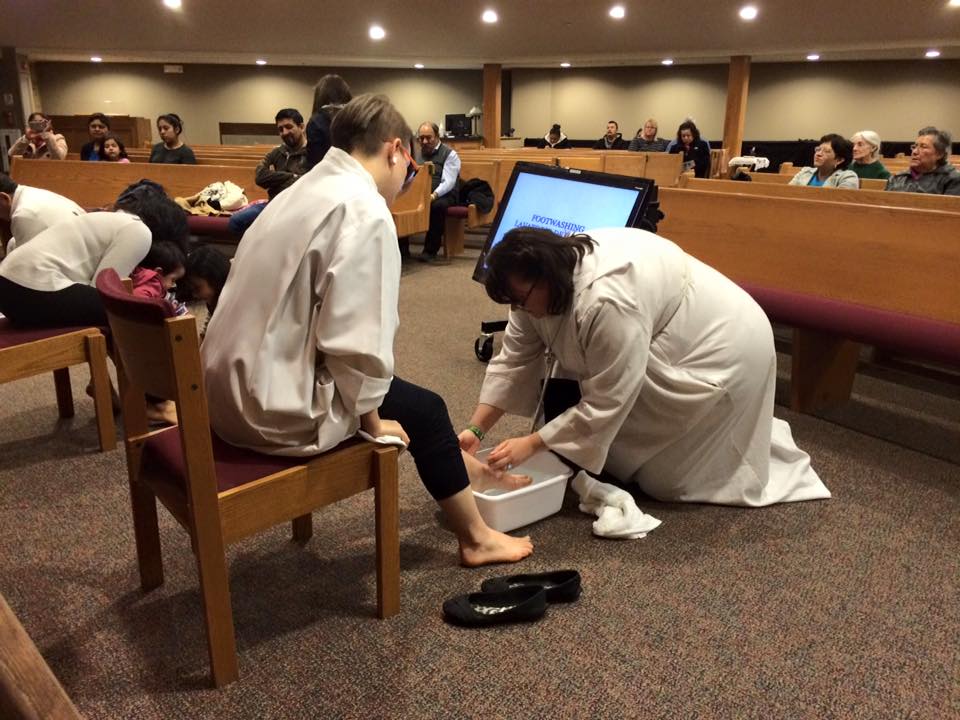
In our gospel story, the disciples – especially Simon Peter – were also a little put off by Jesus’ act of footwashing. Obviously, we don’t know whether any of them suffered from any sort of skin infection, but after roaming around the streets of Jerusalem and the Judean countryside in sandals, it’s a pretty safe bet that their feet didn’t exactly smell like roses. It’s understandable when Peter declares to Jesus, “You will never wash my feet.” Continue reading “Feet are Gross: A Maundy Thursday Sermon”

Sermon: Prisoners of Hope

Wednesday, March 2, 2016
“Encountering the Living Word” preaching course
Lutheran School of Theology at Chicago (LSTC)

Zechariah 9:9-12
Rejoice greatly, O daughter Zion!
    Shout aloud, O daughter Jerusalem!
Lo, your king comes to you;
    triumphant and victorious is he,
humble and riding on a donkey,
    on a colt, the foal of a donkey.
10 He will cut off the chariot from Ephraim
    and the war-horse from Jerusalem;
and the battle bow shall be cut off,
    and he shall command peace to the nations;
his dominion shall be from sea to sea,
    and from the River to the ends of the earth.
11 As for you also, because of the blood of my covenant with you,
    I will set your prisoners free from the waterless pit.
12 Return to your stronghold, O prisoners of hope;
    today I declare that I will restore to you double.


Visual AIDSIt’s election year in America, and maybe you’re “feeling the Bern” or you want “change we can believe in” or maybe you just want to “make America great again.” On the other hand, maybe you’re already fed up with an election that sometimes feels more like a three ring circus. Wherever you may be with this election, I imagine that on some level, like me, you feel a sense of incompleteness about our political system. Our politics have become so polarized and dysfunctional that it often seems like politicians are more intent on beating one another than on meeting the needs of the people. Continue reading “Sermon: Prisoners of Hope”

Blog at WordPress.com.

Up ↑